How to Rank in Perplexity (It Doesn't Work Like Google)
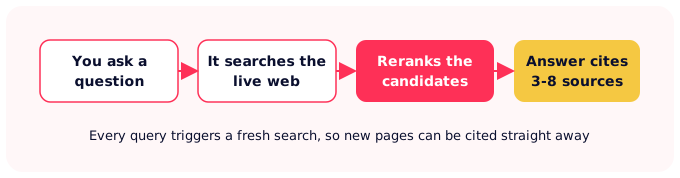
"Ranking" in Perplexity is an impossible goal, because Perplexity doesn't really rank anything. The model answers a question, then shows you the handful of pages it pulled that answer from.
Those are the citations, and getting onto that short list is the whole game. Most answers show three to eight of them, and each one is a clickable link.
So "ranking in Perplexity" is fundamentally different from climbing a results page, and advice that reads like recycled Google tactics from 2019 won't help you make a difference. This guide covers how Perplexity picks its sources, the content and technical changes that move your citation share, and how to check whether any of it is working.
How Perplexity actually works (and why Google habits only get you halfway)
Perplexity runs on retrieval-augmented generation. Instead of answering from a frozen training snapshot, it searches the live web for every query, gathers candidate pages, and only then writes an answer that cites the pages it used. That is why fresh, well-structured content can show up in its answers almost immediately, with no training cycle to wait for.
Who gets cited?
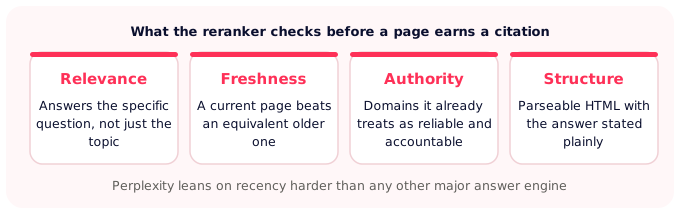
Retrieval is not one step. Candidate pages pass through a reranking pipeline that checks a few things before any of them earns a citation:
- Relevance: does the page answer the specific question, not just mention the topic.
- Freshness: Perplexity leans on recency harder than any other major answer engine, so a current page usually beats an equivalent older one on the same query.
- Authority: it favours domains it already treats as reliable, the kind with named authors and editorial accountability.
- Structure: clean, parseable HTML with the answer stated plainly, not buried three scrolls down.
What is Perplexity looking for?
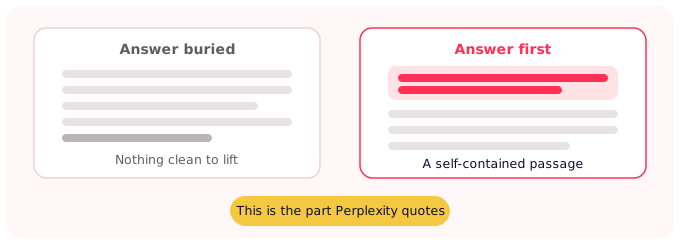
Perplexity is hunting for the specific sentence or paragraph that answers the question, then attributing it. If you optimise a whole page as one undifferentiated blob, you give the model nothing clean to lift. Write in self-contained chunks that each make sense on their own.
Steps to rework your content for Perplexity
The single most useful habit is to put the answer in the first sentence or two, then explain.
1. Lead with the answer
State it plainly at the top: the definition, the number, the yes or no. Keep the context, caveats and colour for after. If a reader (or a model) can get the gist from your opening lines, you have done the hardest part.
2. Give it structure it can parse
Descriptive headings, short paragraphs, lists where a list earns its place, and tables for comparisons. A tidy FAQ block or a one-line definition is exactly the shape Perplexity likes to quote. Structure is not decoration here; it is how the model finds the answer inside your page.
3. Target question-shaped, long-tail queries
Perplexity's users skew toward specific, research-style questions rather than one-word terms. Write your headings as the questions people actually type.
Technical basics (so PerplexityBot can read you)
None of the content work matters if Perplexity can't fetch your pages in the first place.
Let the right crawlers in
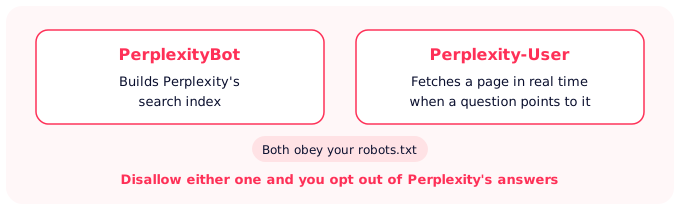
Perplexity uses two user agents: PerplexityBot, which builds its search index, and Perplexity-User, which fetches a page in real time when someone's question points to it. Both read the robots.txt rules you set, and Perplexity lists the exact tags on its official crawler documentation.
Disallow either one and you are opting out of its answers, so a quick scan of your robots.txt for a stray rule is worth doing before anything else.
Make pages fast and crawlable
Standard technical SEO still carries weight. A page that is indexed, quick to load and free of duplicate-content confusion is easier for any crawler to process, and easier for Perplexity to trust. Keep your sitemap current so new pages get discovered quickly rather than sitting unseen for weeks.
Add structured data
Schema markup (Article, FAQPage, HowTo) helps Perplexity parse what each part of your page is meant to do. It is a supporting signal rather than a magic switch, but it is cheap to add and it removes ambiguity. If you are starting from scratch, our guide to structured data for SEO covers which types are worth the effort.
Keep content fresh
Perplexity weights recency, so updating and republishing pages that are still relevant is one of the higher-leverage things you can do. A genuinely refreshed guide, not a date change, can re-enter answers quickly, which rewards teams who maintain their best content instead of publishing and forgetting.
Build the authority Perplexity already trusts
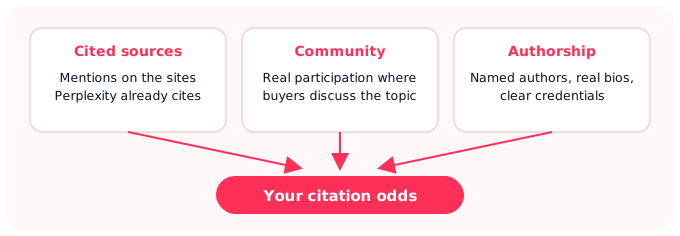
Perplexity reaches for domains it recognises as credible, so a good share of your citation odds is decided off your own site. That off-site footprint is the same one that drives AI brand visibility across every answer engine, not just this one.
Earn mentions on sources it already cites
References and placements on established, editorially accountable sites raise your standing with the reranker. Getting cited by the pages Perplexity cites is slower than on-page work, but it compounds, and it is hard for a competitor to copy quickly.
Show up in the community conversation
Community platforms, Reddit in particular, show up often in Perplexity's answers for opinion and recommendation queries. Real, non-promotional participation in the places your buyers already discuss the topic can put you in front of the retriever in a way a landing page never will.
Make your authorship legible
Named authors, real bios and clear credentials give the reranker the experience and expertise signals it looks for. An anonymous page competing against one with a credited expert tends to lose the slot.
The mistakes that keep you out of the answer
We've covered some of these throughout the article, but here's a quick, scannable list to keep handy before you lose more citations:
- Blocking PerplexityBot or Perplexity-User in robots.txt, usually by accident.
- Burying the answer under a long intro, or behind a paywall the crawler can't pass.
- Thin or generic content that adds nothing the already-cited sources don't say.
- No real structure: no clear headings, no lists, one long wall of text.
- Chasing head terms instead of the specific questions Perplexity's users actually ask.
How to tell if Perplexity is actually citing you
You can run your questions in Perplexity, read the source panel and see if your domain shows up. Then check GA4 for referral traffic from perplexity.ai. This manual method works, but it gives you a snapshot that doesn't scale and misses the mentions that never get a click. It is the same gap that makes AI search monitoring a recurring job rather than a one-off audit.
SEOcrawl AI turns that one-off audit into a live signal. Our Perplexity prompt tracking runs your prompts on a schedule and logs every URL Perplexity cites, each one stored with its full prompt and a timestamp, so you can replay any answer from weeks ago and see how its sources shifted.
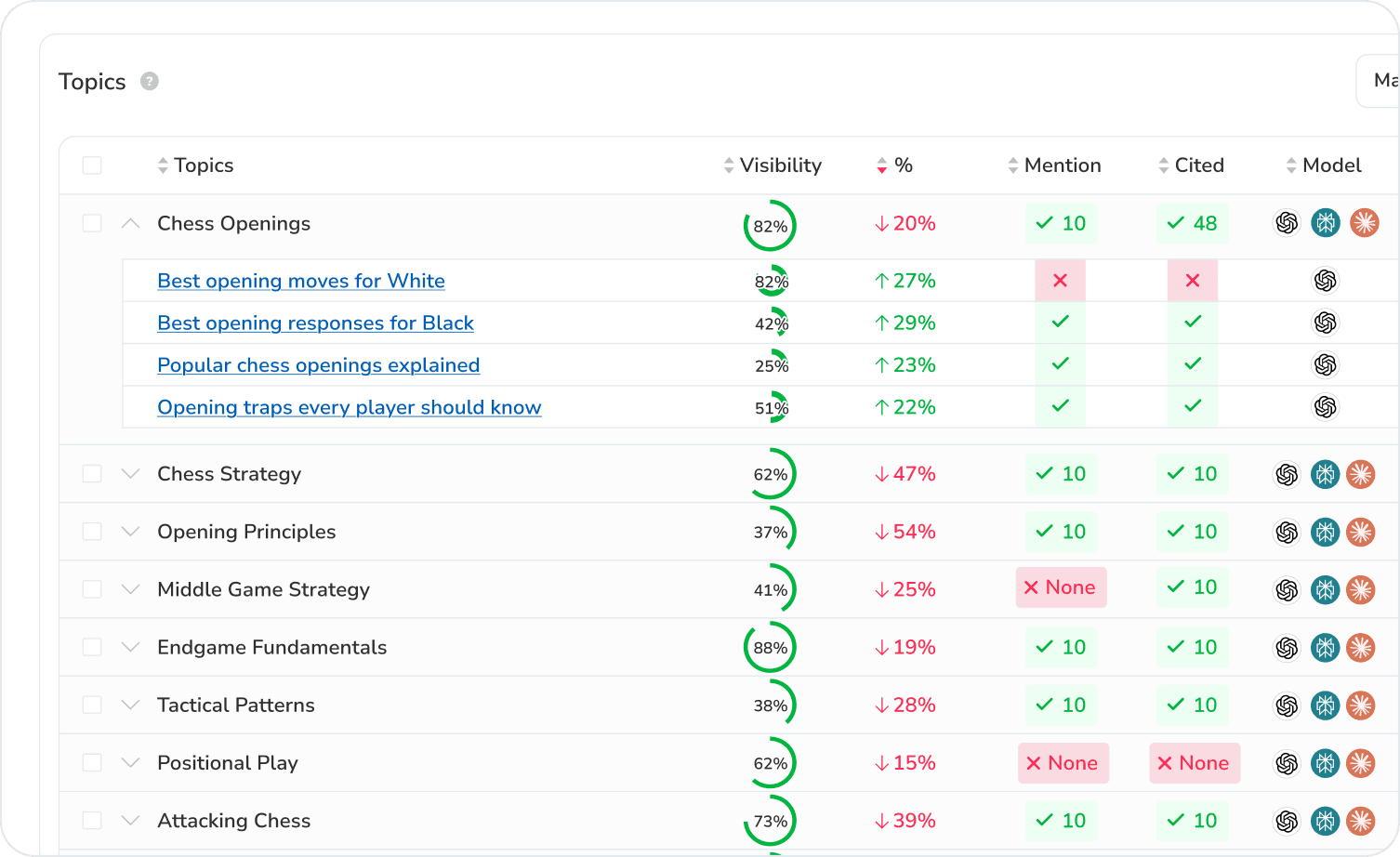
On the same screen you see your share of citations against the competitors that matter, and exactly which competitor URLs Perplexity is sending your buyers to instead of you.
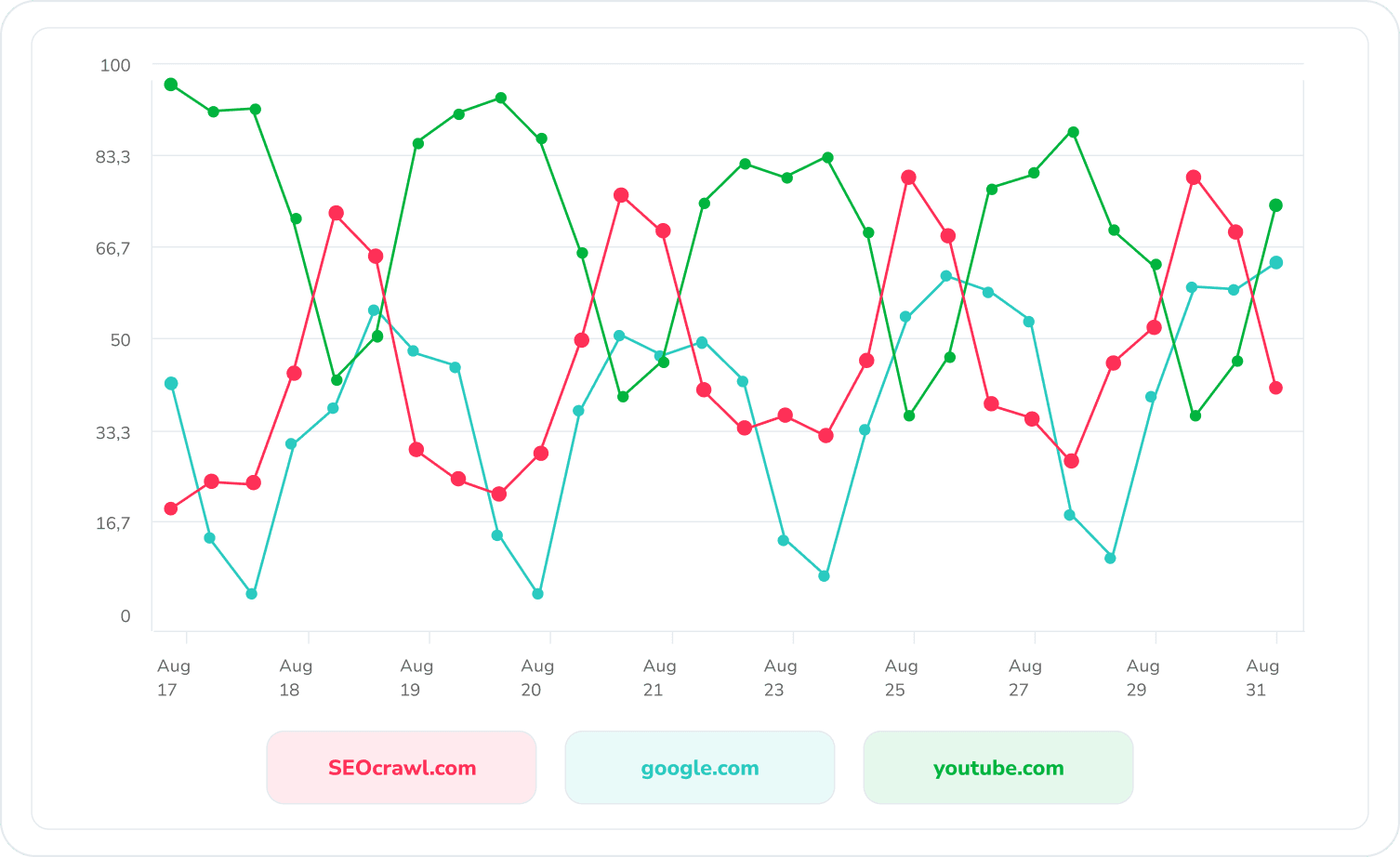
The moment your brand drops out of an answer, or a competitor's citation share climbs, you get an alert the day it happens, not at the end-of-month review.
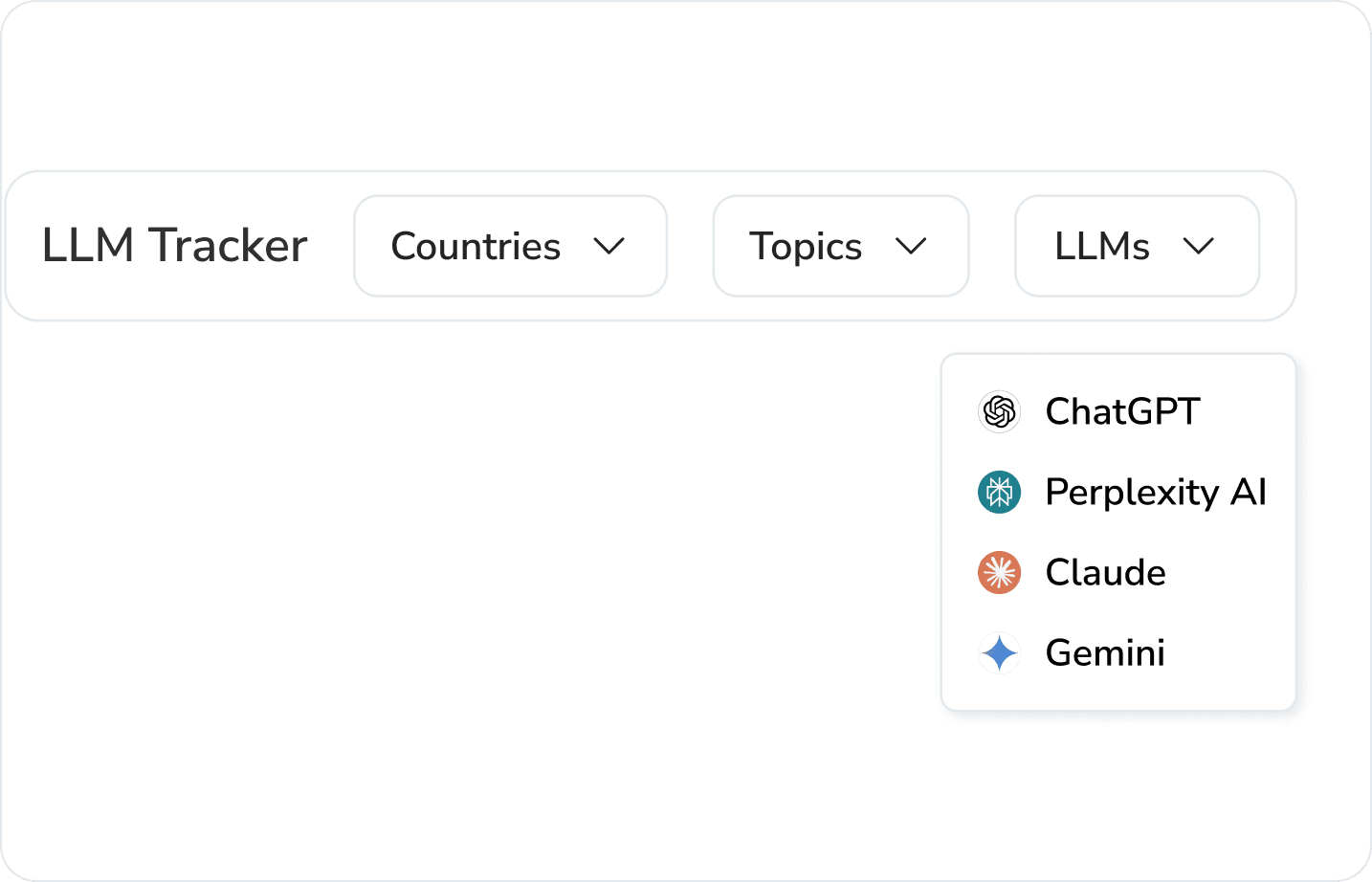
Toggle the same prompt set across Perplexity, ChatGPT, Claude and Gemini to spot the answers where one engine already cites you and another does not.
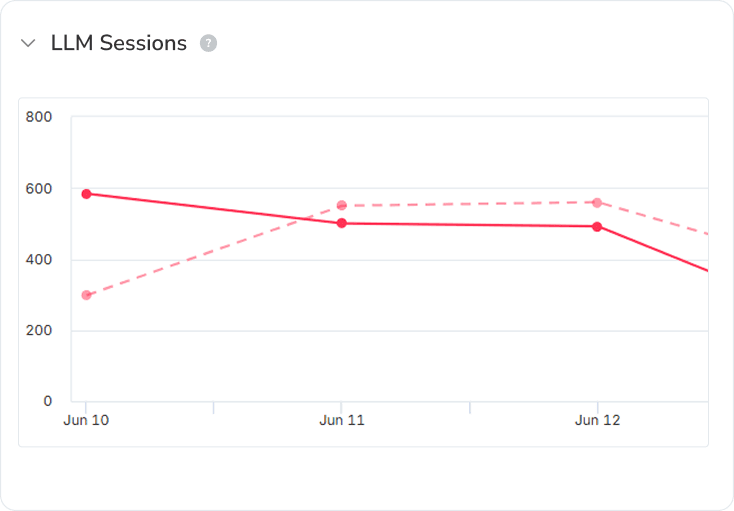
The AI Tracker then connects those mentions to real GA4 sessions and conversions, so you answer both questions at once: am I in the answer, and is it sending traffic?
FAQs
Does traditional SEO still help you rank in Perplexity?
Partly. Crawlability, domain authority and backlinks all carry over, since Perplexity retrieves from the live web. What is new is the emphasis on answer-first phrasing, structure it can extract, and freshness. Treat solid SEO as the foundation and layer GEO tactics on top.
How does Perplexity decide which sources to cite?
It retrieves candidate pages for your query, then reranks them on relevance, freshness, authority and structure before writing an answer that cites the ones it used. Pages that state the answer plainly and come from trusted domains have the best odds.
Can I stop Perplexity from crawling my site?
Yes. You can disallow PerplexityBot and Perplexity-User in robots.txt, following the tags on Perplexity's official crawler page. The trade-off is that you also remove yourself from its answers.
How long does it take to get cited after publishing?
There is no fixed timeline. It depends on how soon Perplexity crawls the page and whether your content beats the sources it currently cites. A current sitemap plus genuinely fresh, well-structured content shortens the wait.
Does schema markup help?
It helps Perplexity parse your content's structure and intent, which supports citation, though it is not a guaranteed ranking factor on its own. FAQPage, Article and HowTo are the useful types for most pages.
Is ranking in Perplexity the same as ranking in ChatGPT or Google's AI Overviews?
The principles overlap (authority, structure, credible authorship), but each engine retrieves sources differently. ChatGPT, for example, leans on Bing's index, which is why ranking in ChatGPT has its own checklist. A single GEO approach improves your odds across all of them, which is more efficient than optimising one engine at a time.
What kind of content gets cited most in Perplexity?
Direct how-to guides, clear definitions, comparison pages and FAQ-rich content, especially anything that answers a specific question in its opening lines.
How can I check whether Perplexity is citing me?
Search your target queries in Perplexity and look for your domain in the source panel, then confirm referral traffic in GA4. To track it continuously across prompts and competitors, use a prompt-tracking tool such as SEOcrawl AI's Perplexity tracker. The same approach works for ChatGPT brand mentions and every other engine you care about.
Author: David Kaufmann

I've spent the last 10+ years completely obsessed with SEO — and honestly, I wouldn't have it any other way.
My career hit a new level when I worked as a senior SEO specialist for Chess.com — one of the top 100 most visited websites on the entire internet. Operating at that scale, across millions of pages, dozens of languages, and one of the most competitive SERPs out there, taught me things no course or certification ever could. That experience changed my perspective on what great SEO really looks like — and it became the foundation for everything I've built since.
From that experience, I founded SEO Alive — an agency for brands that are serious about organic growth. We're not here to sell dashboards and monthly reports. We're here to build strategies that actually move the needle, combining the best of classical SEO with the exciting new world of Generative Engine Optimization (GEO) — making sure your brand shows up not just in Google's blue links, but inside the AI-generated answers that ChatGPT, Perplexity, and Google AI Overviews are delivering to millions of people every single day.
And because I couldn't find a tool that handled both of those worlds properly, I built one myself — SEOcrawl AI, an enterprise SEO intelligence platform that brings together rankings, technical audits, backlink monitoring, crawl health, and AI brand visibility tracking all in one place. It's the platform I always wished existed.
Discover more content about this author
On-page SEO is everything you control on a page: content, title, meta description, headings, URL, images and internal links. Here is a checklist element by element, an audit process and what changes with AI Overviews and AI Mode.