AI Search Monitoring: What It Is and How to Track Your Brand in LLMs
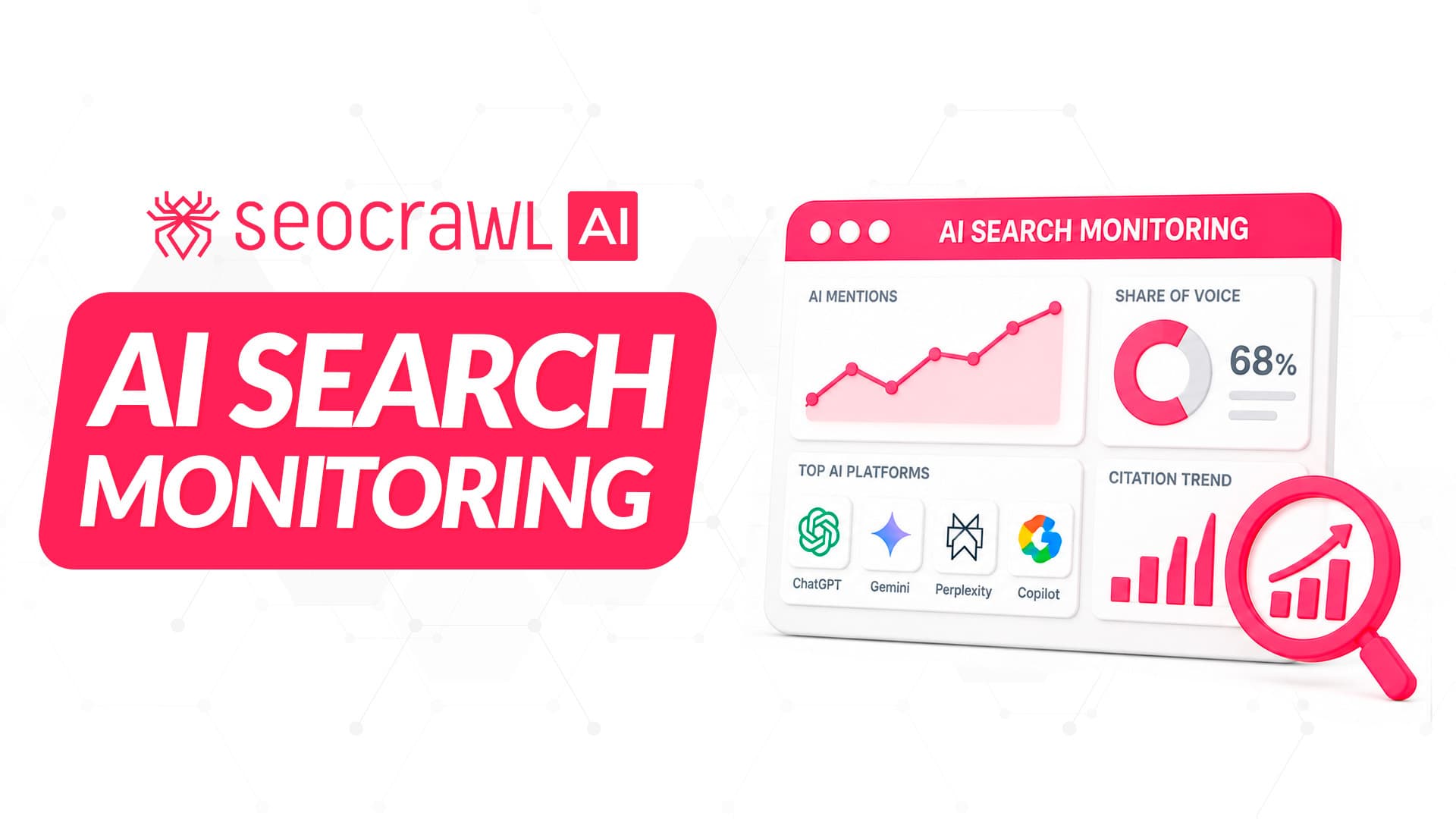
AI search monitoring is the practice of tracking how and whether your brand appears in responses generated by large language models (like ChatGPT, Claude, Gemini, Perplexity, Copilot) across a defined set of prompts relevant to your category, products, or use cases.
It's the AI equivalent of rank tracking. Instead of measuring where your page sits in a Google SERP, you're measuring whether your brand gets cited, recommended, or mentioned when someone asks an AI assistant a question your potential customers are likely to ask.
How AI search monitoring works
The best way is automated prompt testing. A monitoring tool runs a set of predefined and custom prompts against one or more LLMs on a recurring schedule, logs the full responses, and tracks whether your brand appears. If ChatGPT is your main focus, our guide on ChatGPT brand mentions drills into tracking that one model.
Unlike a Google rank, which is relatively stable and query-specific, AI responses are probabilistic. The same prompt can produce different outputs across sessions, model versions, and geographies.
That's why frequency and consistency matter more than any single response and also why manual spot-checking isn't a substitute for automated tracking at scale.
Why LLM visibility has become essential in 2026
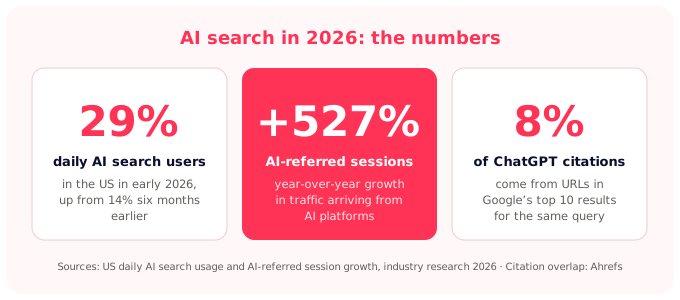
Looking at the numbers tells the whole story. Daily AI search users in the US reached 29% in late 2025, up from 14% just six months earlier. AI-referred sessions grew 527% year-over-year.
And yet Ahrefs research found that only 8% of ChatGPT citations come from URLs in Google's top 10 results for the same query. Your organic rankings and your AI visibility are almost entirely separate problems.
For brands looking to grow online, this creates a new risk: LLM invisibility. A company can rank on page one of Google and still never be recommended by an AI assistant to the users who are most likely to convert.
4 key metrics to track
These are the metrics that actually drive decisions.
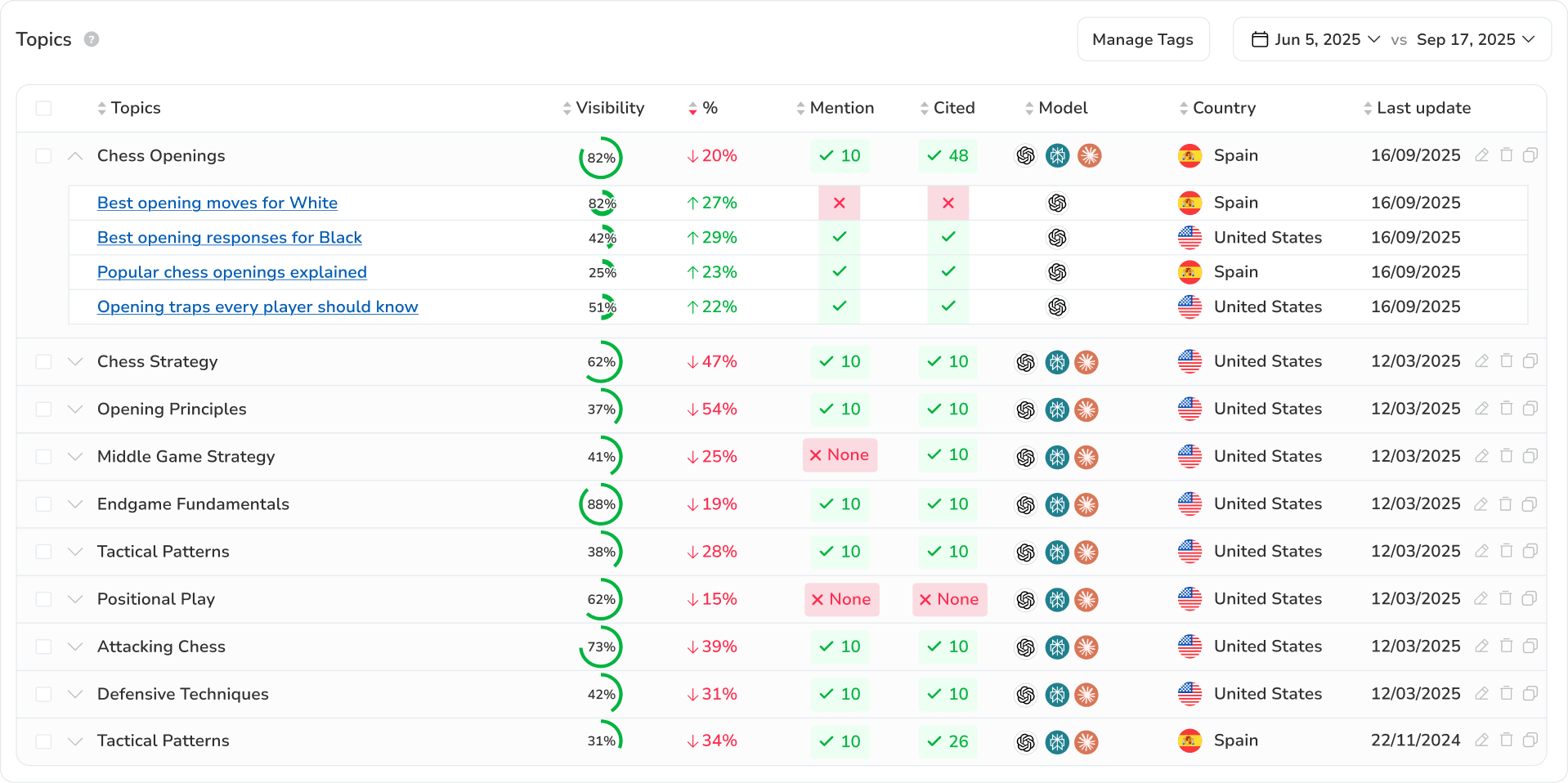
Prompt tracking: Which prompts surface your brand, which don't, and how does that change over time? Prompt-level tracking gives you full transparency and lets you compare how your visibility shifts across dates, models, and markets.
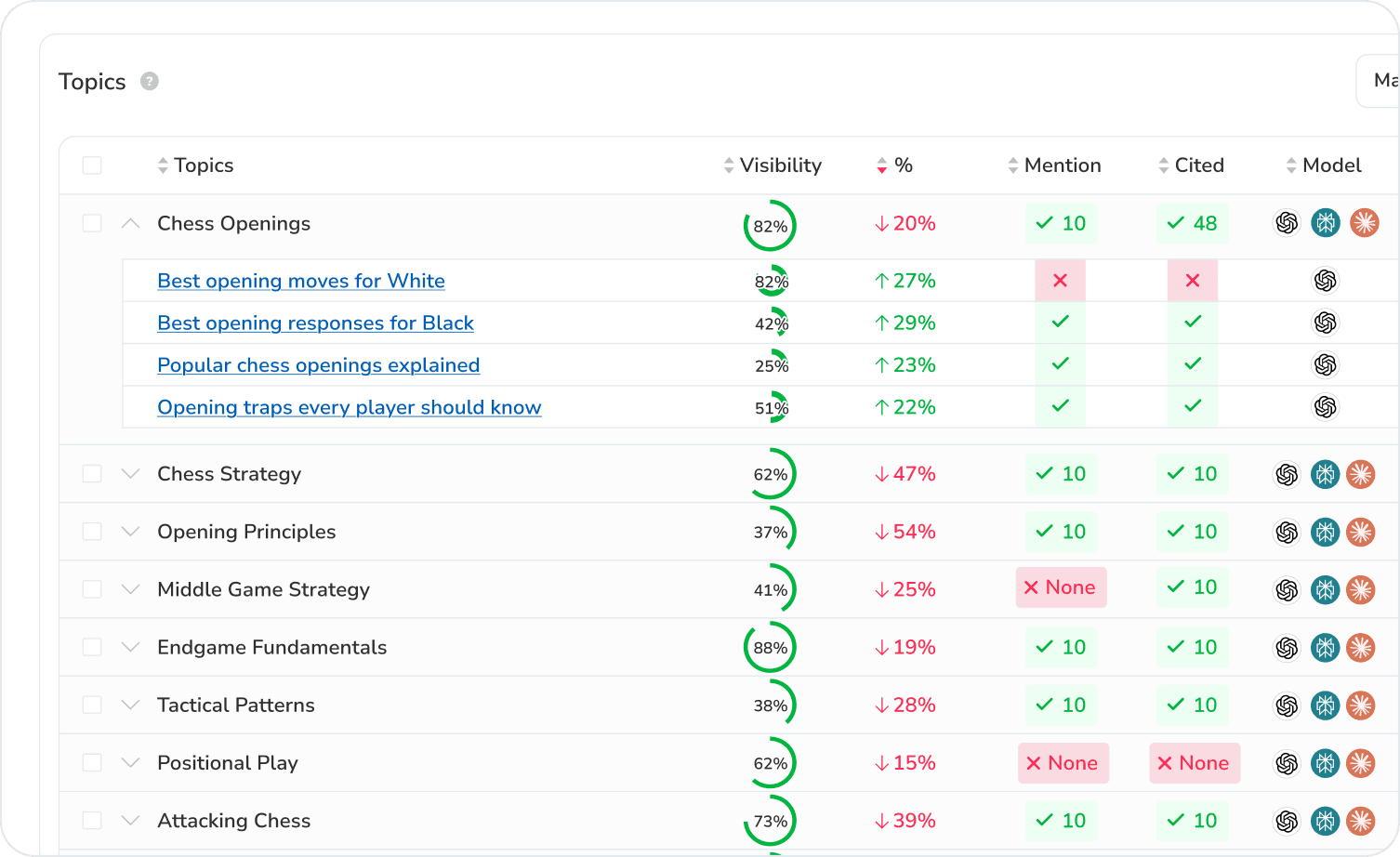
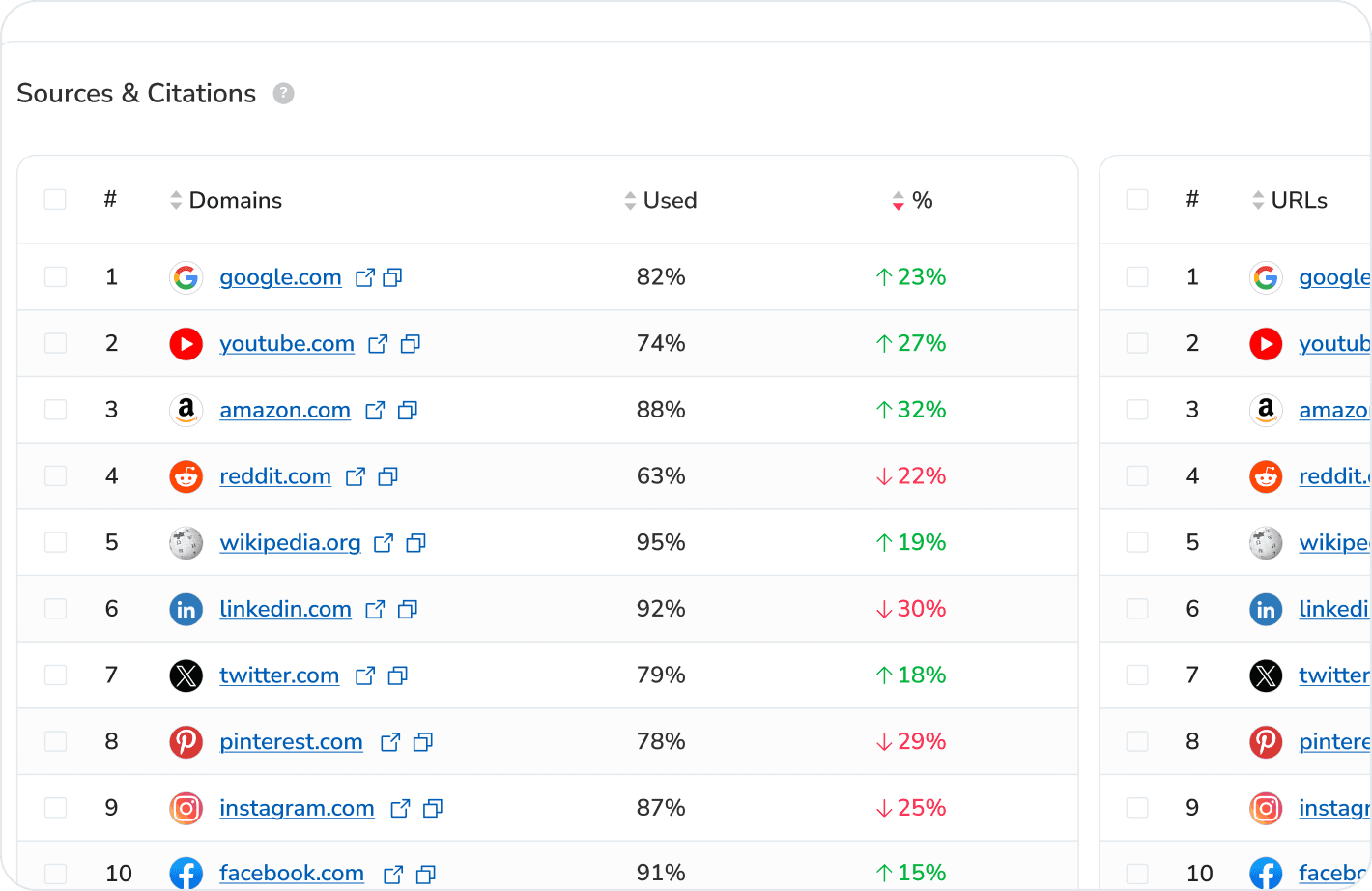
Citation analysis: You need to know which of your pages are being cited, how often, and for which topics. A page that's never cited is an optimization opportunity, and a page that's cited consistently across multiple LLMs is a signal of what's working.
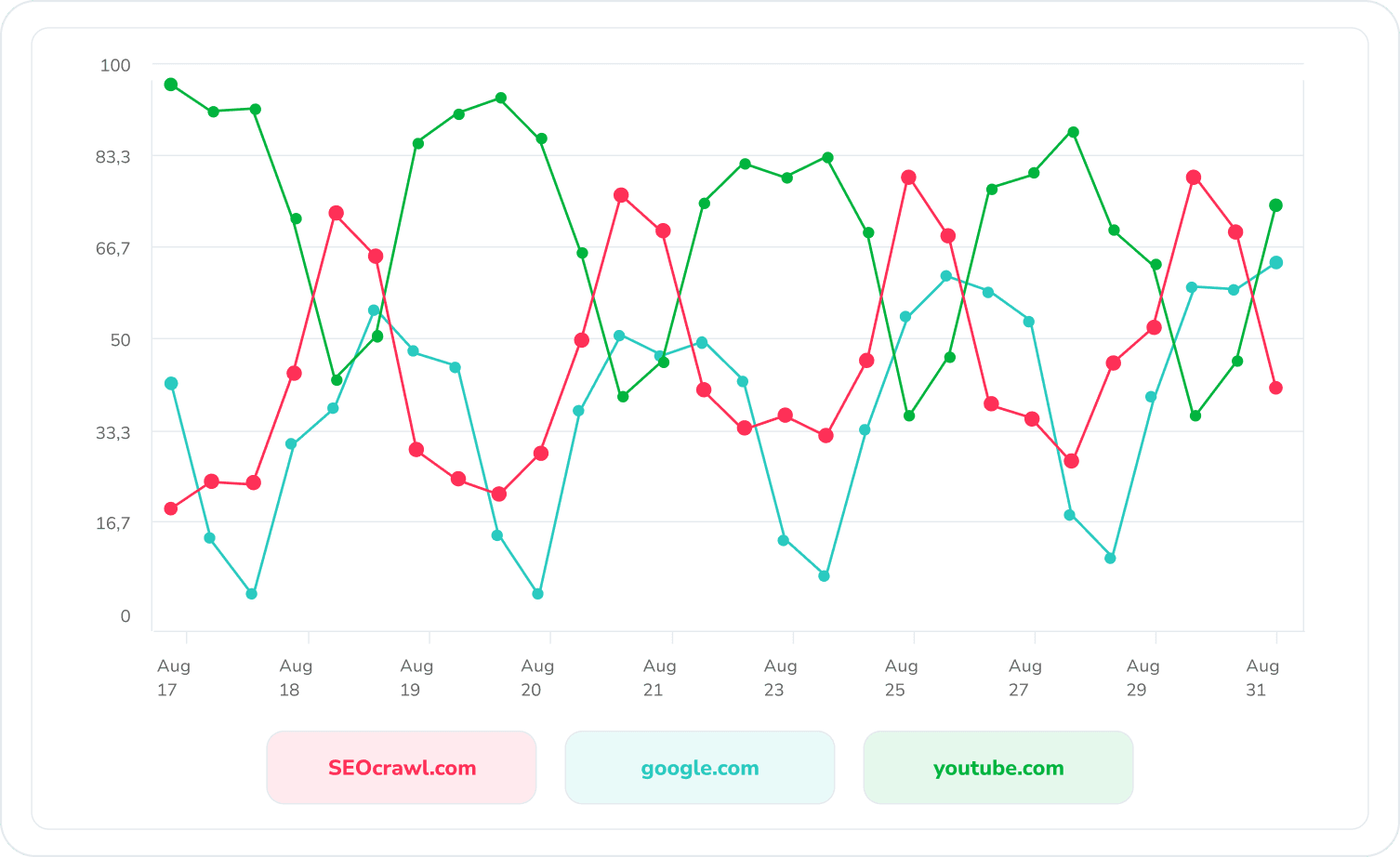
Share of voice: Knowing you appear in 40% of relevant prompts tells you very little if you don't know your competitors might be appearing in 70%. AI share of voice measures how your brand presence compares to named competitors across the same prompt set, broken down by LLM and market.
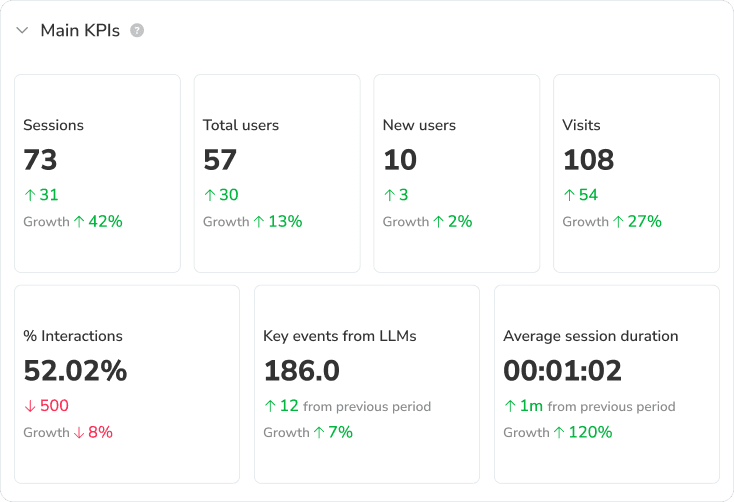
Traffic attribution: If your brand is being cited by LLMs, some of those users will follow up on your site. Tracking the traffic that originates from AI platforms (separate from organic search) lets you connect monitoring data to actual revenue impact.
AI search monitoring tools
Free LLM monitoring options
The most accessible starting point is manual prompt testing.
Open ChatGPT, Claude, or Perplexity in an incognito window and run the category-level questions your potential customers are likely to ask:
- What are the best [your category] tools?
- Compare [your product] vs alternatives
- Recommend a [your service] for [use case].
Run each prompt multiple times across separate sessions. The responses will vary, so a single test is unreliable. Document what comes back: whether your brand appears, in what position, with what framing, and which competitors show up alongside you.
Enterprise AI search monitoring with SEOcrawl AI
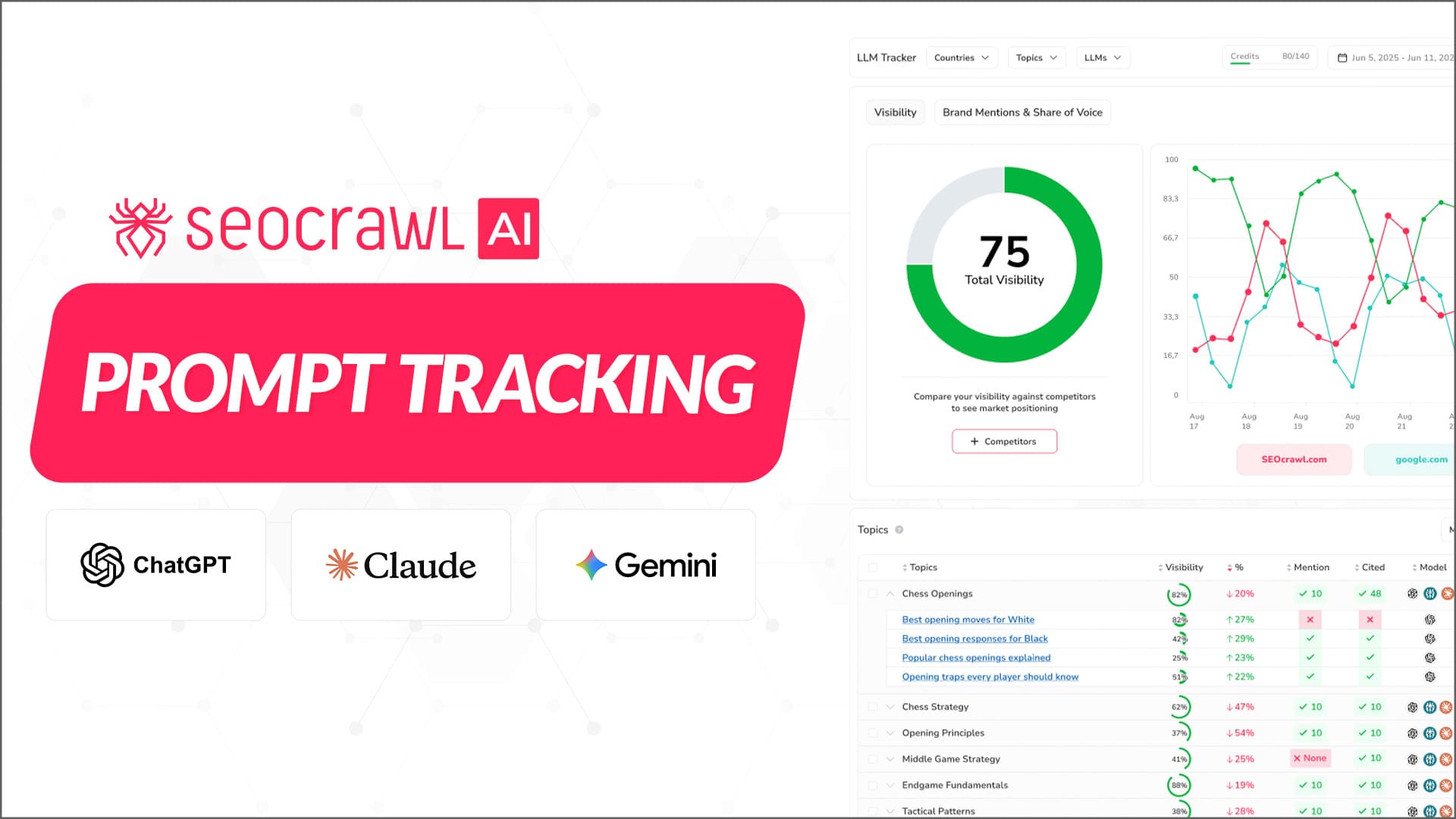
SEOcrawl AI's Prompt Tracker automates everything manual testing can't. It runs hundreds of prompts daily across ChatGPT, Claude, Gemini, Perplexity, and Copilot.
We track your AI Visibility Score, compare your share of voice against competitors, and drill into which URLs get cited and why. You can filter the results by market, topic, or LLM to find exactly where you're winning and where you're not.
Every prompt is logged in full, with compare mode to track shifts over time. And if the default prompt set doesn't cover your specific use case, you can add your own.
For agencies managing multiple clients, SEOcrawl AI's Prompt Tracking supports multi-project management and white-label reporting. You can run AI search monitoring at scale across your entire portfolio from a single dashboard.
FAQs
What is AI search monitoring?
The practice of tracking how and whether your brand appears in responses generated by LLMs across a defined set of prompts. It's the AI equivalent of rank tracking, and it has become essential over the past year.
How is AI search monitoring different from traditional SEO tracking?
Traditional SEO tracking measures your position on a SERP. AI search monitoring measures whether your brand is cited or recommended inside an AI-generated answer. The signals, platforms, and metrics are almost entirely separate. A page that ranks #1 on Google may never appear in a ChatGPT response, and vice versa.
Which AI platforms should I monitor?
ChatGPT, Google Gemini, and Claude are the main ones to start with. Each has a different user base, retrieval approach, and citation behavior, and your visibility can vary significantly across them.
What is share of voice in AI search?
Share of voice measures how often your brand appears in AI-generated responses compared to named competitors, across the same set of test prompts. It's the competitive metric that tells you whether you're winning or losing ground in AI search.
Can I track AI mentions for free?
Yes. You can do it manually by running prompts in incognito mode across AI platforms. It's useful for a quick audit, but doesn't scale. For consistent, automated tracking with trend data and competitive benchmarking, you need a dedicated tool.
How often do AI search results change?
With AI, results change frequently and unpredictably. Your visibility can shift with model updates, new training data, and changes in cited sources. That's why recurring automated monitoring is the most accurate approach.
Does AI search monitoring work for agencies managing multiple clients?
Yes. Purpose-built tools like SEOcrawl AI support multi-project management and white-label reporting, so agencies can monitor AI visibility across their entire client portfolio from a single dashboard and deliver branded reports.
Author: David Kaufmann

I've spent the last 10+ years completely obsessed with SEO — and honestly, I wouldn't have it any other way.
My career hit a new level when I worked as a senior SEO specialist for Chess.com — one of the top 100 most visited websites on the entire internet. Operating at that scale, across millions of pages, dozens of languages, and one of the most competitive SERPs out there, taught me things no course or certification ever could. That experience changed my perspective on what great SEO really looks like — and it became the foundation for everything I've built since.
From that experience, I founded SEO Alive — an agency for brands that are serious about organic growth. We're not here to sell dashboards and monthly reports. We're here to build strategies that actually move the needle, combining the best of classical SEO with the exciting new world of Generative Engine Optimization (GEO) — making sure your brand shows up not just in Google's blue links, but inside the AI-generated answers that ChatGPT, Perplexity, and Google AI Overviews are delivering to millions of people every single day.
And because I couldn't find a tool that handled both of those worlds properly, I built one myself — SEOcrawl AI, an enterprise SEO intelligence platform that brings together rankings, technical audits, backlink monitoring, crawl health, and AI brand visibility tracking all in one place. It's the platform I always wished existed.
Discover more content about this author
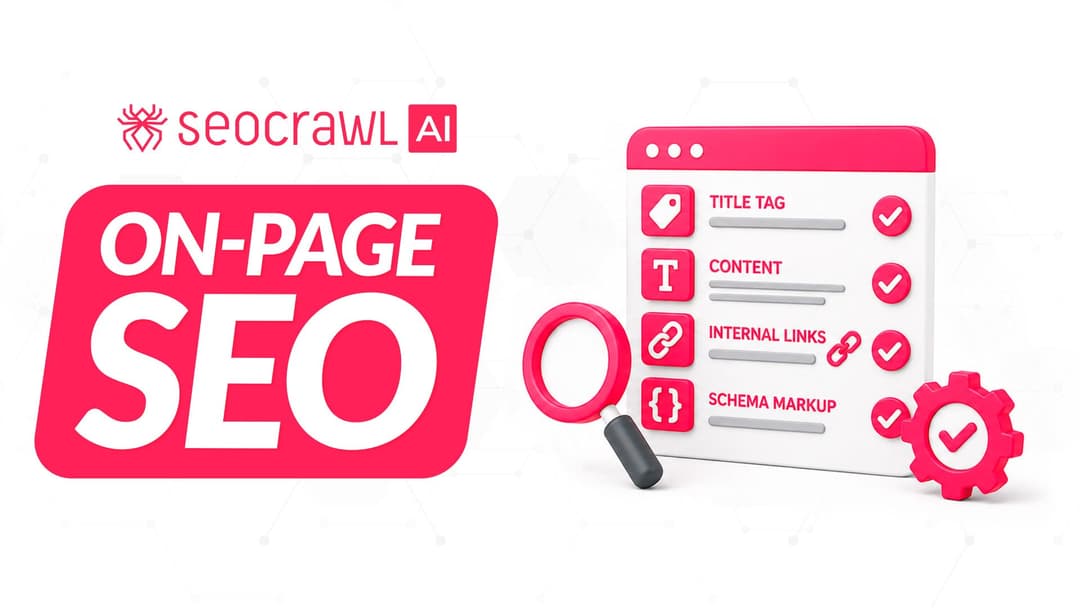
On-page SEO is everything you control on a page: content, title, meta description, headings, URL, images and internal links. Here is a checklist element by element, an audit process and what changes with AI Overviews and AI Mode.