SEO Terms | Glossary with +75 Definitions
CRO, SERPs, backlink… still don't know what these SEO terms mean? Find these and many more in this fully updated glossary of SEO definitions.
Whether you're learning SEO from scratch or already work in the field and need to nail down a few concepts that keep slipping by, this is the dictionary you need. Inside you'll find the most up-to-date vocabulary, with the latest SEO trends and terminology. It will become your essential study or work tool, helping you stay current with everything happening in SEO — one word at a time.
Those of us who do this for a living use a kind of jargon that we've internalized so deeply we forget how opaque it can sound. So when you start hearing about SEO, many of the key concepts you need to grow as a digital marketer in the search optimization space may feel out of reach. With this dictionary, you'll get a global view of the discipline and learn the terms that drive real ranking success.
This dictionary explains, in a clear and practical way, everything you need to know about SEO. You'll find detailed definitions of every word that escapes you and that you need to know to refresh — or build from scratch — your understanding of the field. It's a guide built not only for digital marketing professionals but for anyone who wants to get familiar with a discipline whose main goal is ranking websites well in search engines.
Although this dictionary is useful and accessible to all readers, it's also thorough and contains everything you need to understand and absorb each term. Don't wait — start learning SEO today!
A
ALT attribute
The ALT attribute is the tag that tells Google information about an image — both for context and to display in case the image fails to load.
Anchor text
The anchor text is the visible text added to a link to give the user information about where it leads.
B
Backlinks
Backlinks or inbound links are the links pointing to our site from other pages.
SEO Benchmarking
SEO benchmarking — also known as competitive analysis — lets us identify our competitors' strengths and define a strategic plan to beat them in the search results.
Black Hat SEO
Black hat SEO covers the SEO practices that are frowned upon by the community because they aim to manipulate rankings unethically or by exploiting Google's weaknesses.
Branded SEO
Branded SEO — or branded traffic — includes all the web traffic that captures keywords containing the brand name in what the user is searching for.
Breadcrumbs
Breadcrumbs are a navigation tool that helps users by showing all the categories a page belongs to, and they also improve crawlability for search engines.
SEO Briefing
An SEO briefing is an initial questionnaire of questions and insights provided by the client based on a structured list, designed to deepen our understanding of their business so we can deliver better services.
C
Canonical tag
The canonical tag is the snippet of code added to a page to tell Google which URL we want it to index — that is, the main one.
SEO Checklist
An SEO checklist is a list of items to verify, with the goal of running a thorough audit across each strategic area.
Clickbait
Clickbait is a well-known technique — and one users tend to dislike — in which the author crafts a flashy headline that doesn't always reflect the content, with the goal of attracting more clicks and traffic.
Cloaking
Cloaking is a black-hat technique that consists of showing different content to users and to search engines in order to game rankings.
SEO Consultant
An SEO consultant is a professional whose goal is to improve a site's organic ranking — and with it, its traffic, conversions, and ultimately revenue.
Content curation
Content curation is the process of analyzing and improving older content to lift its ranking and results.
Core Web Vitals
The Core Web Vitals are a set of metrics created by Google to measure web performance and define best practices for building sites.
Crawl budget
The crawl budget is the time and resources search engines spend on our site to crawl and analyze our content.
Crawling
Crawling is the process by which search engine robots/spiders fetch, analyze, and classify our content so it can later be served in the search results.
CTR
The CTR or Click Through Rate is the percentage of clicks over the number of impressions a page gets in the search results.
D
Deindexing
The term deindexing refers to the process of removing a URL from the search results — either because it was indexed by mistake or for other reasons (thin content, duplication…).
Disavow
The disavow is a file uploaded to Search Console to tell Google which links it should ignore — usually because they're artificial, low-quality, or because we believe they could lead to a penalty.
Domain authority
Domain authority is the relative value assigned to a domain or page to measure its relevance.
Duplicate content
Duplicate content refers to text or resources that are repeated across multiple pages of a site, either intentionally or accidentally due to filters or other issues. It can become a serious problem for the site's SEO performance.
Dwell time
Dwell time is the time between when a user visits a site and returns to the search results. It typically signals user dissatisfaction: if the user has to go back, it means they didn't find all the information they were looking for.
E
eCommerce SEO
eCommerce SEO is the optimization strategy applied to online stores to improve their organic traffic and, with it, the project's revenue.
SEO Emojis
Also known as emoticons, SEO emojis are small icons that express emotions or ideas. Used well in SEO, they can help boost your page's CTR.
404 Error
The 404 error appears when a page can't be found — whether by a user or by a search engine. In both cases, the experience is negative. To fix it, we should always indicate whether it's a page that won't return (410) or, instead, redirect it to another valuable page.
F
FAQ Schema
FAQ Schema is a type of data markup whose goal is to increase CTR and visibility in the search results.
Featured snippets
Featured snippets — also known as position zero — are the results Google rewards with a prominent placement at the top of the search results.
Footprints
Footprints are small search shortcuts that many SEO professionals use to filter the searches they want (information in titles, number of indexed pages…).
G
Google penalties
Google penalties are actions taken by Google's team to punish bad practices, lowering a site's rankings and traffic.
H
Hreflang
Hreflang tags are meta tags whose purpose is to tell Google the different languages a page is available in, so it understands they are translations and not duplicate content.
Htaccess
The .htaccess file is a document that lets us collect the main directives and configurations for the server.
HTTP/2
HTTP/2 is a new communication protocol that enables faster file transfer between users and servers.
I
Indexing
Indexing is the process search engines run to include the pages of our site in the search results.
Internal linking
Internal linking is the discipline that studies the transfer of authority between pages and how they connect to one another.
K
Keyword cannibalization
Keyword cannibalization happens when multiple pages from the same site appear in the search results for the same keyword. It can be positive — if both results are valuable to the user and the business — or negative if pages we don't want to promote are showing up.
SEO KPIs
SEO KPIs are the metrics that let us closely track our SEO strategy and properly evaluate its performance.
L
Landing page
A landing page is a page on our site whose goal is to maximize signups or leads for our business (calls, registrations, contact-form submissions…).
Lazy loading
Lazy loading is the concept that defines loading elements as the user scrolls into them, rather than loading the page "completely" the moment it lands.
Link juice
Link juice is the concept that defines the transfer of authority — both internal and external — through links.
Log Analysis
Log analysis is the process of analyzing search engine visits to our server to detect potential improvements in the crawling process.
Long tail
Long-tail keywords are those with relatively low search volume that tend to convert better, since they're more specific and have lower competition.
LSI Keywords
LSI keywords stands for "Latent Semantic Indexing" — keywords that help reinforce the context and semantics of an article.
M
Meta description
The meta description is the SEO tag that holds the description shown in the search results, right under the title.
Meta tags
The meta tags are snippets of code that help us provide additional information to search engines — about images, indexing rules, and more.
Mobile First Index
The Mobile First Index is the process by which Googlebot focuses all its priority on crawling websites with its "mobile" agent rather than its "desktop" one.
N
Nofollow
The nofollow link attribute is a hint we give Google about the authority we want to pass through that link. That said, the search engine ultimately decides how to interpret it according to its own criteria.
Noindex
The noindex tag lets us tell search engines that we don't want a given page (or group of pages) to appear in the search results.
O
Off-Page SEO
Off-page SEO covers all the ranking techniques that don't involve modifying the page itself. Instead, they're external authority campaigns.
On-Page SEO
On-page SEO covers all the practices for improving rankings and traffic by working on our own content (titles, links, images, speed…).
Open Graph
The Open Graph protocol is the set of social meta tags that lets pages render with a better design (title, description, image…) on social networks like Facebook or Twitter.
Organic traffic
Organic traffic refers to all the visits coming from search engines (Google, Yahoo, Bing…).
Orphan pages
Orphan pages are those that aren't linked to and don't form part of the site's main architecture, so they don't get the SEO treatment they should.
P
Page Experience
Increasingly, Google considers Page Experience when scoring webpages, based on three criteria: load speed, user interactivity, and visual stability.
PageRank (PR)
PageRank is a value Google assigns to each website to reflect its authority. Google stopped publishing this value years ago, but it remains as alive as ever.
SEO Podcasts
SEO podcasts are short audio pieces with exclusive content about the industry. In our post, we suggest some of the most interesting ones.
Progressive Web Apps (PWA)
Progressive Web Apps are a technology that lets users browse offline and load pages faster thanks to a special caching system.
R
301 Redirect
The 301 redirect — or permanent redirect — is created when we want our systems to send users and search engines to another page when they visit a given URL: a URL change, the old one no longer exists, etc.
302 Redirect
The 302 redirect — or temporary redirect — is used to divert traffic temporarily from a specific URL: content errors, time-bound campaigns, and so on.
Rich snippets
Rich snippets are code fragments used so search engines can better understand our content, helping us land a more visible and prominent placement in the search results (job listings, books, articles…).
Robots.txt
The robots.txt file is the system used to tell crawler bots which pages they aren't allowed to visit.
S
Sandbox
The sandbox is a concept SEO professionals use to define the period of time between when a project is created and when it actually starts ranking for its target keywords. It's the time during which Google "verifies" the project's true quality.
Search intent
Search intent is the term used to describe the relationship between what the user is looking for and the results the page provides.
SEO
SEO (Search Engine Optimization) — also known as organic search — is the marketing area that studies the organic traffic coming from search engines and all the factors that influence page rankings.
SEO vs. SEM
The main difference between SEO and SEM is that SEO aims to improve the page organically by working on its technical aspects, whereas with SEM, simply paying guarantees the page appears in the top results.
SERP
SERPs — Search Engine Results Pages — are the pages search engines return for our queries with all the results: organic (SEO) and paid (SEM).
Sitelinks
Sitelinks are the extra links shown under the domain in the search results when Google decides there might be more relevant pages than the homepage for a brand search.
Sitemap
The sitemap is the XML file whose purpose is to tell Google all the pages on our site that we want indexed.
Slug
The slug is the part of the URL that names the page being accessed. Within seocrawl.ai/thin-content, the slug would be "thin-content". It's a term used heavily when we work with friendly URLs.
Structured data
Structured data is a type of code markup added to pages to provide search engines with extra information. The most recommended (including by Google itself) is Schema.
T
Thin content
Thin content refers to low-quality or shallow content that isn't optimized for users and can lead to Google penalties.
SEO Tips
Do SEO tips — understood as shortcuts to rank your site faster while skipping the work of building a solid strategy — really exist? Or is that something that's been left in the past?
SEO Title
The SEO title is the meta tag where we define the title shown in the search results — different from the article's classic title or H1, which can be completely different.
W
Web Architecture
Web architecture is the discipline that studies how pages, articles, and categories are structured to maximize user usability and search engine crawling.
Web Stories
Web Stories are a new type of content created by Google with the aim of building a tool that allows sharing multimedia content with great loading speed and good usability.
WPO
WPO — Website Performance Optimization — is the area that handles a site's speed and performance. Its main goal is to analyze and understand all the elements (images, scripts, CSS, JS…) that make up a page and optimize their layout to minimize the resources needed for the site to load as fast as possible.
Author: David Kaufmann

I've spent the last 10+ years completely obsessed with SEO — and honestly, I wouldn't have it any other way.
My career hit a new level when I worked as a senior SEO specialist for Chess.com — one of the top 100 most visited websites on the entire internet. Operating at that scale, across millions of pages, dozens of languages, and one of the most competitive SERPs out there, taught me things no course or certification ever could. That experience changed my perspective on what great SEO really looks like — and it became the foundation for everything I've built since.
From that experience, I founded SEO Alive — an agency for brands that are serious about organic growth. We're not here to sell dashboards and monthly reports. We're here to build strategies that actually move the needle, combining the best of classical SEO with the exciting new world of Generative Engine Optimization (GEO) — making sure your brand shows up not just in Google's blue links, but inside the AI-generated answers that ChatGPT, Perplexity, and Google AI Overviews are delivering to millions of people every single day.
And because I couldn't find a tool that handled both of those worlds properly, I built one myself — SEOcrawl AI, an enterprise SEO intelligence platform that brings together rankings, technical audits, backlink monitoring, crawl health, and AI brand visibility tracking all in one place. It's the platform I always wished existed.
Discover more content about this author
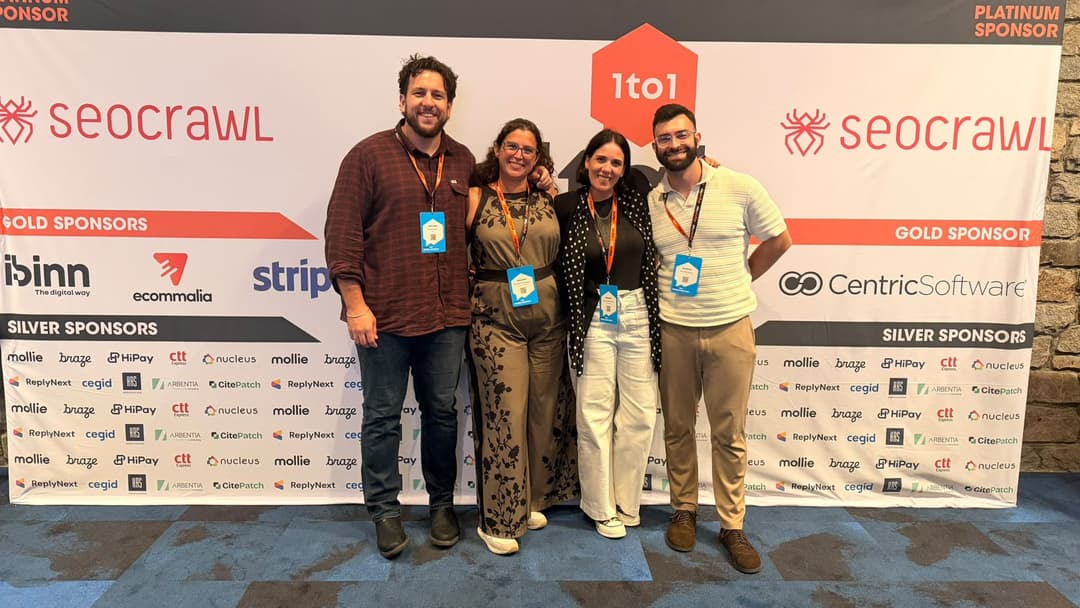
On October 22 and 23 we were at Digital 1to1 Winter in Barcelona as Platinum Sponsor. Here is how it went: the booth, the roll-ups, the 1to1 meetings and the question we heard most: what does AI say about my brand?