ChatGPT Brand Mentions: How to Track, Monitor, and Grow Them
Since its release in 2022, ChatGPT has become one of the most influential recommendation engines on the internet. So why do most brands have no idea whether they're being mentioned in its responses?
That gap is getting more expensive to ignore. As of February 2026, ChatGPT started showing paid ads to free and Go-tier users (clearly labeled and separate from organic responses). OpenAI says ads won't influence what ChatGPT recommends, but it means organic brand mentions and sponsored placements now live side by side in the same interface. If your brand isn't showing up organically, someone else's paid ad is filling that space.
What are ChatGPT brand mentions and why do they matter?
A ChatGPT brand mention happens when ChatGPT references, recommends, or cites your brand in response to a user's prompt. Unlike a Google ranking, ChatGPT's outputs are probabilistic, so the same prompt can produce different responses across sessions, model versions, and user contexts, which makes them harder to track than traditional rankings.
Tracking your ChatGPT brand mentions matters because the users asking questions in your field are typically high-intent buyers. A brand that consistently appears in those responses has a meaningful advantage over one that doesn't, regardless of how it ranks on Google.
How to check and track ChatGPT brand mentions
Manual method and prompt templates
The most common way to check if ChatGPT mentions your brand is to test it directly. Open ChatGPT in an incognito window (this removes any personalization from your chat history) and run category-level prompts your target customers would actually use.
Here are some brand monitoring templates you can copy and test immediately:
- What are the best [your category] tools for [use case]?
- Recommend a [your service] for [team size / industry].
- What are the top alternatives to [your main competitor]?
- Which [your category] platforms do SEO agencies use?
- Compare the best [your category] tools.
Run each prompt three to five times across separate sessions. Since responses vary, a single test tells you nothing reliable. What you're looking for is whether your brand appears in most responses, some, or none.
Tracking at scale: ChatGPT prompt tracking tools
Testing a couple of prompts yourself is useful for a quick audit, but it doesn't give you frequency data, sentiment analysis, competitor comparison, or trend tracking over time.
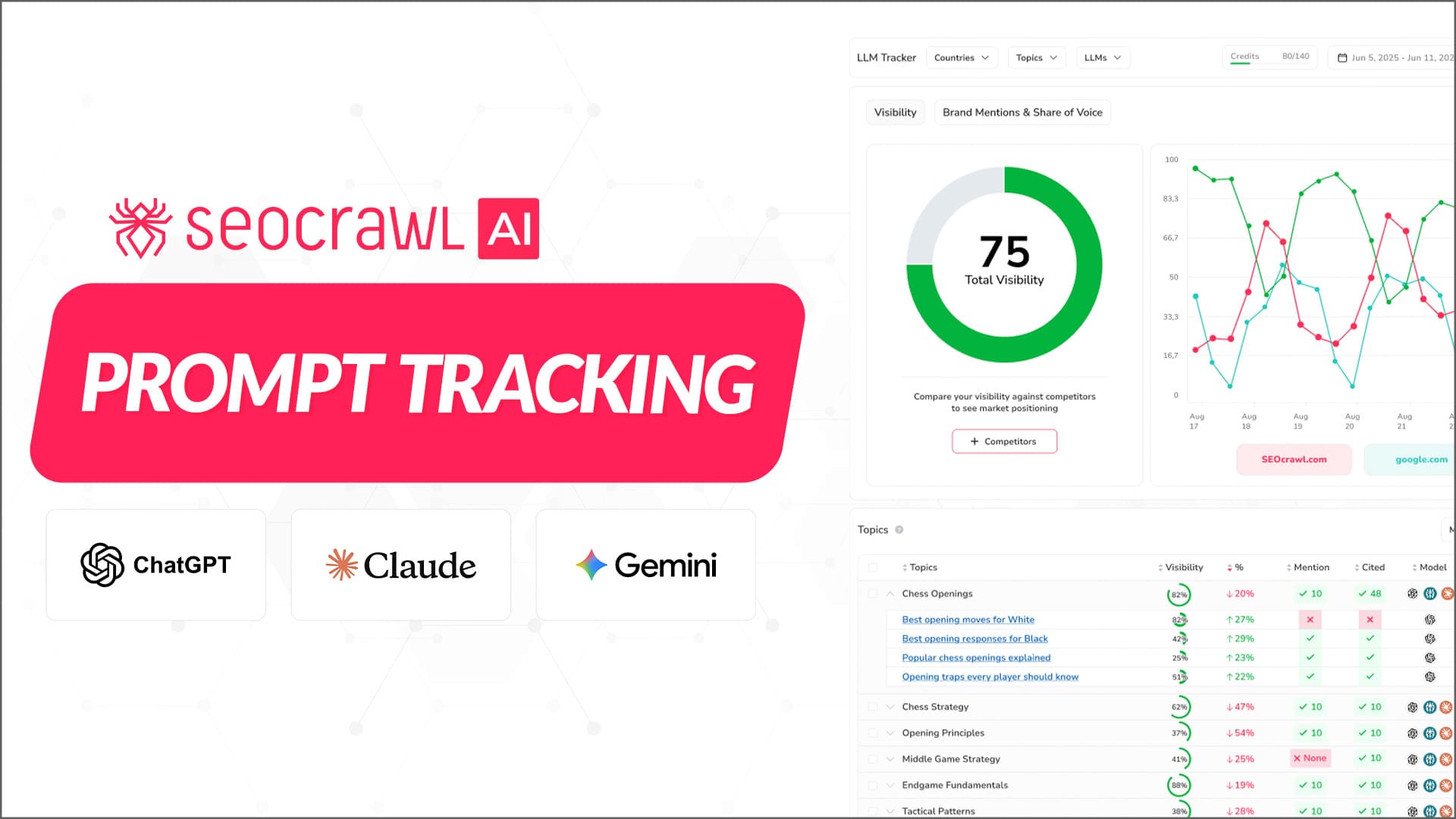
This is where dedicated AI visibility tools come in. SEOcrawl AI's prompt tracking software monitors thousands of prompts daily across ChatGPT, Claude, Gemini, Perplexity, and Copilot, and gives you clear insights on AI visibility, competitor analysis, and new growth opportunities.
How ChatGPT decides which brands to recommend
ChatGPT doesn't have a ranking algorithm like Google. Its outputs are shaped by three overlapping factors. One analysis by Onely found that authoritative list mentions alone drive roughly 41% of ChatGPT's brand recommendations, and that most answers name only three or four brands.
Training data, RAG, and web browsing
Training data is all the text ChatGPT learned before its knowledge cutoff. Brands that appear frequently and authoritatively in that corpus (industry publications, review platforms, Wikipedia, forums) have stronger learned associations. A brand mentioned once in a niche blog has a much weaker signal than one cited consistently across G2, Reddit, TechCrunch, and its own well-indexed site.
Newer ChatGPT versions also use Retrieval-Augmented Generation (RAG) and real-time web browsing. When a user asks a question with search enabled, ChatGPT actively fetches current sources and incorporates them into its response. This means recent content, live reviews, and up-to-date third-party coverage all feed into what gets recommended, not just what was in the training data.
Why your brand may not be appearing in ChatGPT's answers
If you ran the prompt tests and didn't see your brand, here's how to diagnose why:
- Thin online footprint. ChatGPT relies heavily on how often and how authoritatively your brand appears across the web. If you have a website but minimal third-party coverage, you won't appear.
- Missing from sources ChatGPT trusts. Certain sources carry disproportionate weight: Wikipedia, Reddit, G2, Trustpilot, major industry blogs, and authoritative news sites.
- The cold-start problem. New or niche brands often have no presence in LLM training data at all. Even with web browsing enabled, if there's nothing authoritative to retrieve, ChatGPT won't confidently recommend you.
- Brand name ambiguity. If your brand name is a common word, an acronym, or shared with another entity, the model may consistently resolve the ambiguity in favor of the more prominent association.
- Outdated training data. If your brand rebranded, pivoted, or significantly changed its product, the training data may reflect an old version of you.
How to increase your ChatGPT brand mentions
This is where most advice stops short. Tracking is the start, but the goal is improving your content based on what you find.
The key here is incorporating Generative Engine Optimization (GEO). In simple terms, the same signals that build authority for Google (consistent brand mentions across trusted sources, strong E-E-A-T, structured content) also improve AI mention frequency. The difference is that GEO prioritizes third-party validation and question-matching content over keyword density.
You can't "win" ChatGPT the way some people try to "win" search rankings. The model rewards genuine authority signals built over time, not keyword stuffing or low-quality link schemes. If you want to go deeper on the tactics, see our guide on how to rank in ChatGPT.
Analyzing your data: metrics and cadence
Weekly automated tracking is the right default for most brands. Daily tracking can work better for fast-moving or highly competitive categories. As a general rule, run a manual check after major launches, PR campaigns, or significant competitor moves. ChatGPT is just one surface — our guide on AI search monitoring covers tracking visibility across the whole AI landscape.
But tracking ChatGPT brand mentions is only useful if you know what to do with the data. Here's what to measure and why:
- Competitor share of voice: measure whether you appear more or less than your competitors for the same prompts to see where there's room for improvement.
- Sentiment: track whether the model describes your brand positively, neutrally, or with caveats, because a cautionary mention can be worse than none.
- Country breakdown: visibility isn't uniform. You may be strong in the US but absent in other markets. Filtering by model and market tells you where to focus.
- Citation URLs: figure out which of your pages are actually being cited, for which topics, and how often. Changes in your mention rate help guide the content and PR actions you take next.
SEOcrawl AI's Prompt Tracker makes monitoring ChatGPT brand mentions easier by tracking all of this automatically across every major LLM. Spend less time running manual checks and more time acting on what the data tells you.
FAQs
How do I check if ChatGPT mentions my brand?
Open ChatGPT in an incognito window and run category-level prompts your customers would use: "What are the best [your category] tools?" or "Recommend a [service] for [use case]." Run each prompt multiple times across separate sessions. Manual checks are a useful starting point, but they are impossible to scale.
Why isn't ChatGPT mentioning my brand?
The most common reasons are a thin online footprint, absence from authoritative third-party sources (Wikipedia, G2, Reddit, industry press), brand name ambiguity, or being too new to appear in training data. Audit your third-party presence before assuming the problem is your website.
What tools can I use to monitor ChatGPT brand mentions?
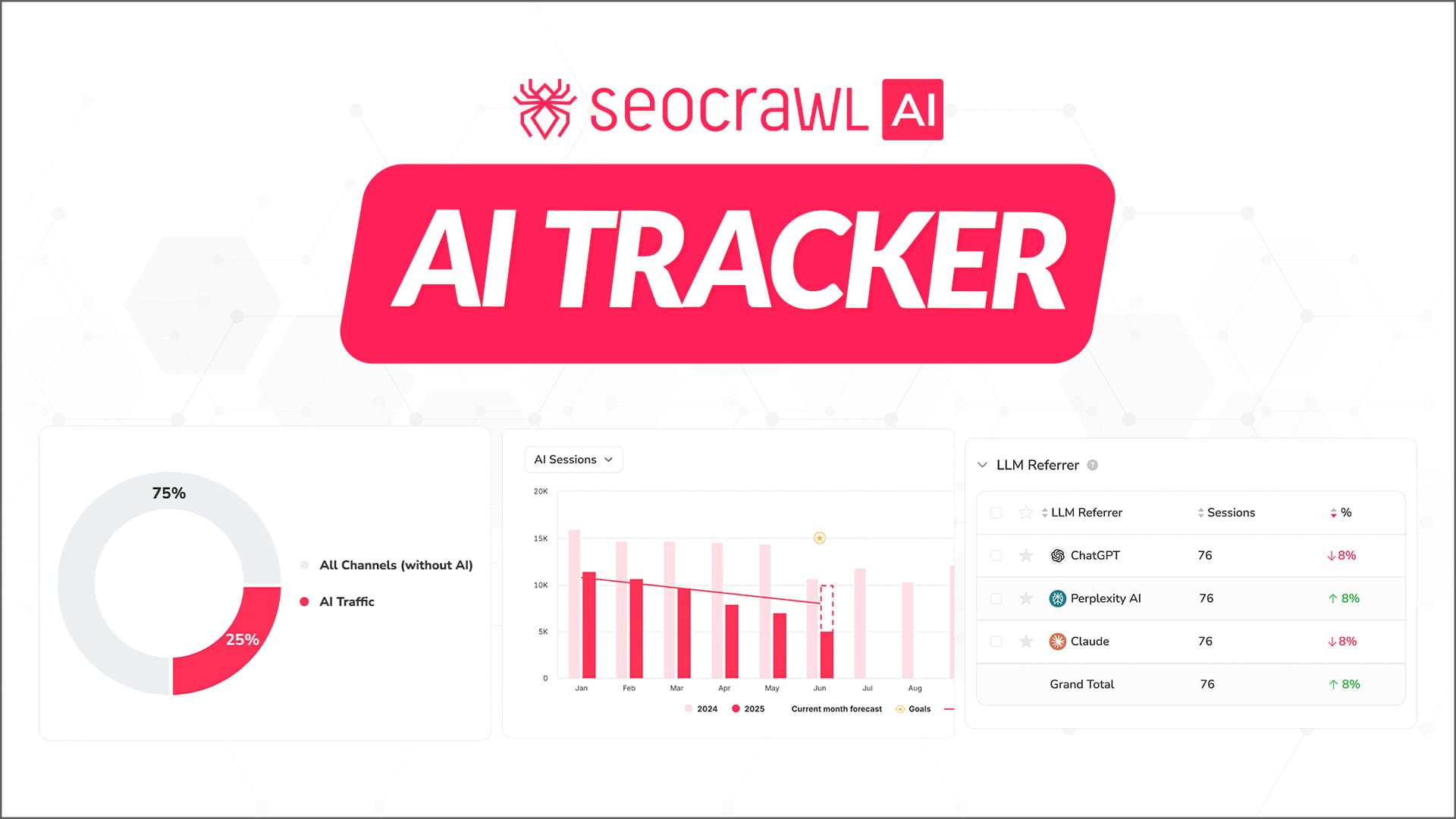
Dedicated AI visibility tools include SEOcrawl AI's AI Tracker, which monitors across ChatGPT, Claude, Gemini, Perplexity, and Copilot in one dashboard, combining AI share of voice with classic SEO metrics.
How often should I check my brand mentions in ChatGPT?
Weekly automated monitoring is the right default for most brands. Daily for highly competitive categories. Always run manual spot-checks after major launches or PR events.
Can I track mentions across ChatGPT and other AI tools like Claude or Gemini?
Yes. Brand visibility varies significantly across models, so monitoring only ChatGPT gives an incomplete picture. Multi-LLM tracking tools cover all major AI platforms in one view.
How can I increase how often ChatGPT mentions my brand?
Build authority on sources LLMs trust (Wikipedia, G2, Reddit, industry press), create content that directly answers the prompts ChatGPT receives, add structured data to your site, and strengthen your E-E-A-T signals. Building genuine brand authority works both for Google and AI, with more emphasis on third-party validation.
What influences whether ChatGPT mentions a brand?
Three factors: training data (how prominently and authoritatively your brand appears in ChatGPT's corpus), real-time web browsing (for models with search enabled), and prompt phrasing. Brands with strong, consistent, multi-source online presences appear most reliably.
Is being mentioned by ChatGPT good for my business?
Generally, yes. An AI mention functions like a high-reach recommendation to high-intent users. But context and sentiment matter. A negative mention or a cautionary citation is worse than no mention, so monitoring sentiment alongside frequency is essential.
Author: David Kaufmann

I've spent the last 10+ years completely obsessed with SEO — and honestly, I wouldn't have it any other way.
My career hit a new level when I worked as a senior SEO specialist for Chess.com — one of the top 100 most visited websites on the entire internet. Operating at that scale, across millions of pages, dozens of languages, and one of the most competitive SERPs out there, taught me things no course or certification ever could. That experience changed my perspective on what great SEO really looks like — and it became the foundation for everything I've built since.
From that experience, I founded SEO Alive — an agency for brands that are serious about organic growth. We're not here to sell dashboards and monthly reports. We're here to build strategies that actually move the needle, combining the best of classical SEO with the exciting new world of Generative Engine Optimization (GEO) — making sure your brand shows up not just in Google's blue links, but inside the AI-generated answers that ChatGPT, Perplexity, and Google AI Overviews are delivering to millions of people every single day.
And because I couldn't find a tool that handled both of those worlds properly, I built one myself — SEOcrawl AI, an enterprise SEO intelligence platform that brings together rankings, technical audits, backlink monitoring, crawl health, and AI brand visibility tracking all in one place. It's the platform I always wished existed.
Discover more content about this author
On-page SEO is everything you control on a page: content, title, meta description, headings, URL, images and internal links. Here is a checklist element by element, an audit process and what changes with AI Overviews and AI Mode.