How to Track AI Visibility: A Step-by-Step Guide for 2026
If you're not tracking AI visibility, you're flying blind on a channel that already drives over a billion monthly referral visits globally.
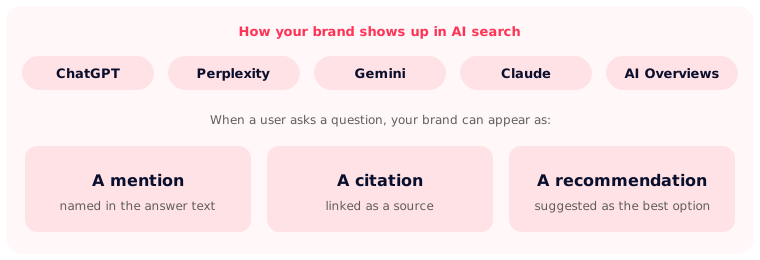
AI visibility means how often your brand appears as a mention, citation, or recommended source in responses generated by tools like ChatGPT, Perplexity, Gemini, Claude, and Google AI Overviews.
Unlike traditional organic traffic, it doesn't show up automatically in Google Search Console. With AI search growing by the minute, you need to start measuring the impact it has on your brand.
5 steps to track AI visibility on your site
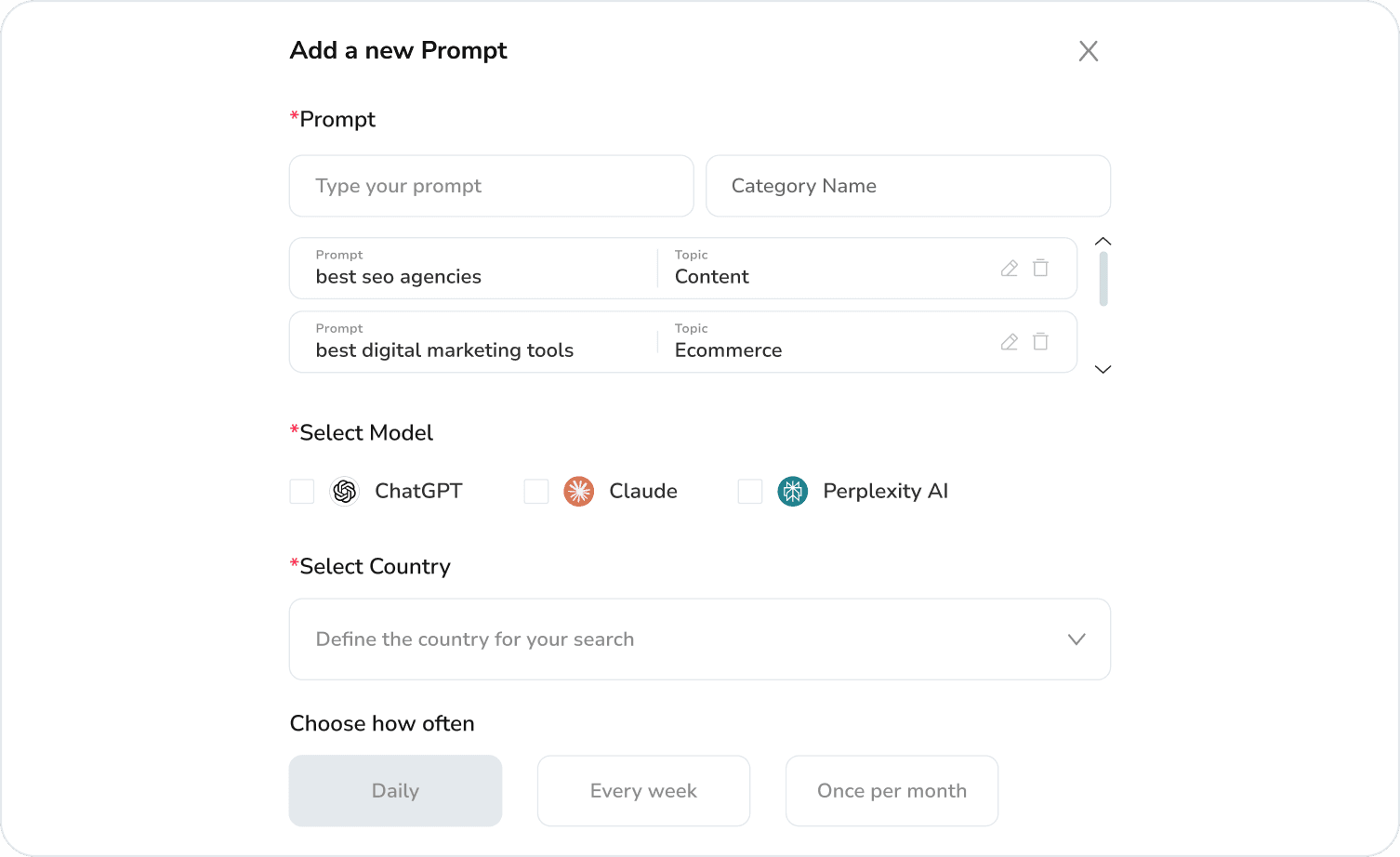
Step 1 — Define your prompt set
What prompts should you be tracking? Most teams either go too broad ("everything about our industry") or too narrow ("just our brand").
Here are three categories every prompt set should cover:
- Brand prompts: direct queries about your company, product, or key people. Example: "What is SEOcrawl AI?" or "Who makes the best AI visibility tracker?"
- Category prompts: queries where a buyer is comparing options in your space. Example: "Best tools to track AI search visibility" or "How do I monitor my brand in ChatGPT?" See our breakdown of SEO vs GEO vs AEO for context on how each discipline maps to different query types.
- Problem prompts: questions your ideal customer asks before they know your product exists. Example: "How do I know if AI is sending traffic to my site?"
Aim for 10 to 30 prompts to start. These become the baseline you'll track over time and compare against competitors.
Step 2 — Choose which AI platforms to monitor
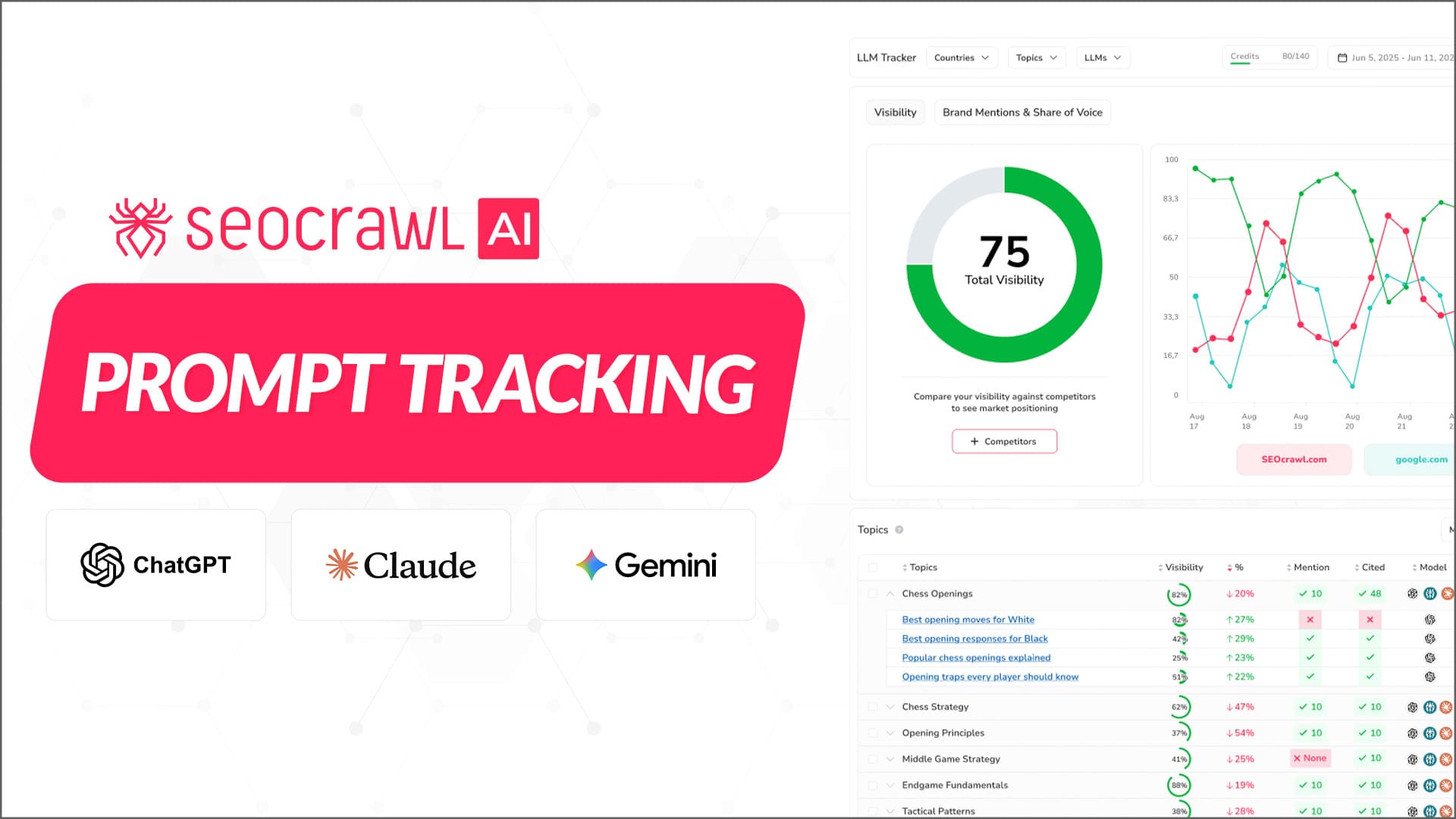
Not all AI platforms behave the same way, and not all of them are equally relevant depending on your audience. These five are the most relevant in 2026:
- ChatGPT: the largest volume of AI-referred traffic, with 55 to 60% share of AI referral traffic (Digital Applied, 2026).
- Perplexity: strong among technical and research-oriented users. Provides explicit citation lists under every answer, making it the most transparent platform for citation tracking.
- Google AI Overviews: triggered on roughly 30% of US queries (SE Ranking, 2026). Directly connected to your existing SEO.
- Gemini: growing fast, now integrated across Google Search, Android, and Workspace. Particularly relevant for B2C and mobile-heavy audiences.
- Copilot: relevant for B2B audiences, especially companies whose buyers use Microsoft 365. Leans heavily on LinkedIn for professional queries.
If you're starting from scratch, prioritize ChatGPT and Google AI Overviews first. They represent the largest combined volume and are the most actionable.
Step 3 — Set up GA4 to capture AI-referred traffic
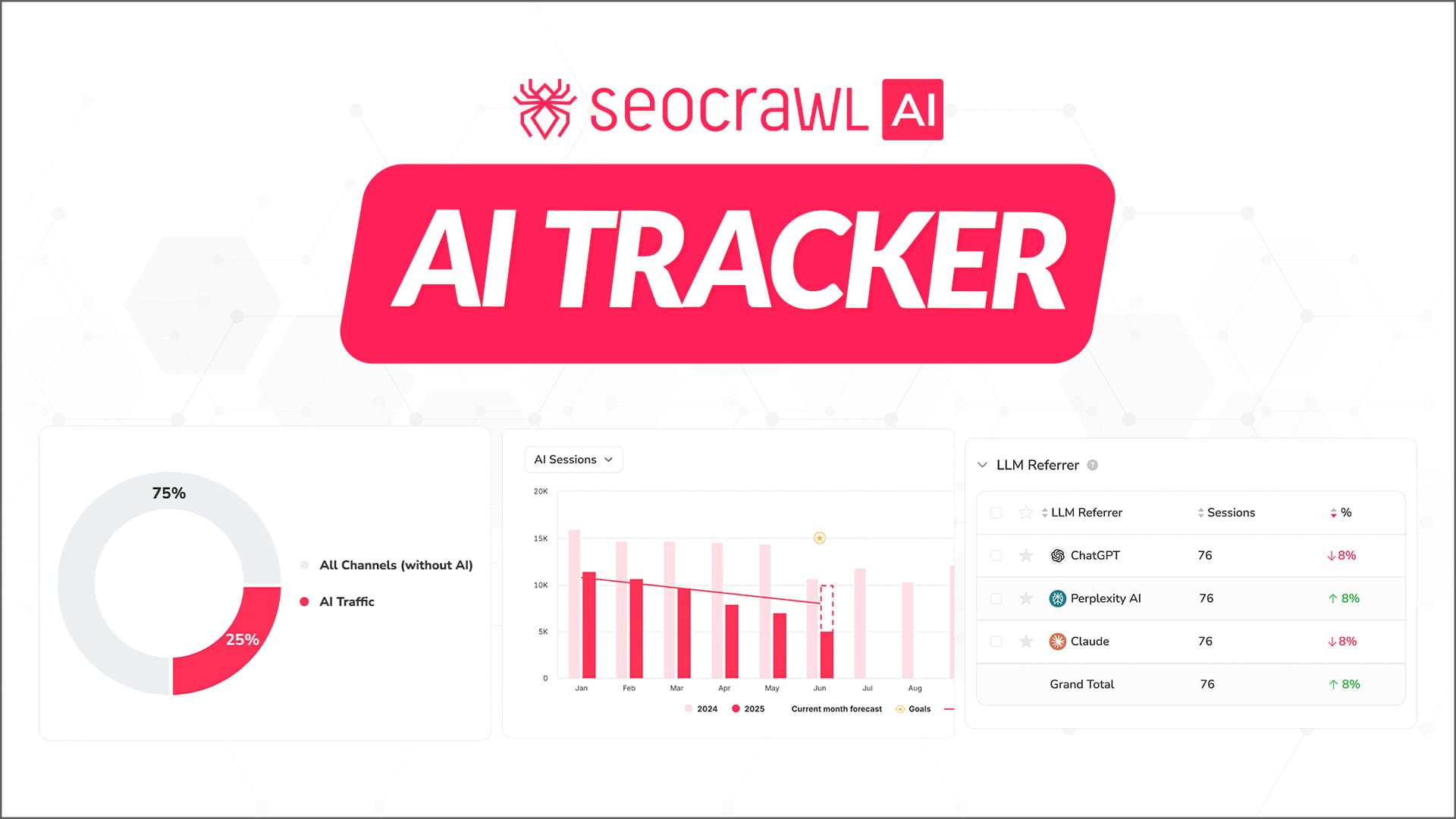
GA4 captures AI-referred sessions, but they don't surface cleanly by default. Here's how to isolate them.
In GA4, go to Reports > Acquisition > Traffic Acquisition. AI-referred sessions typically appear as referral traffic from domains like chatgpt.com, perplexity.ai, gemini.google.com, and copilot.microsoft.com. You can create a custom segment or exploration filtering by session source containing those domains.
The limitation of GA4 alone is that it tells you nothing about the prompts that generated that traffic, the queries where your brand was mentioned but not clicked, or how your share of voice compares to competitors.
Step 4 — Track the right metrics
AI visibility breaks down into five measurable dimensions. These are the same ones that define performance in answer engine optimization:
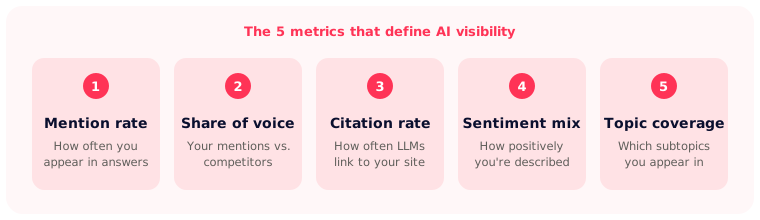
Of these, mention rate and share of voice are the most actionable starting points. Citation rate matters more for content and GEO strategy, and sentiment and topic coverage become relevant as you gain more traction.
Step 5 — Automate and set a tracking cadence
You can always do a manual check by opening ChatGPT and running a few queries. But that's not tracking. You only get a snapshot with no baseline, no trend, and no competitor context.
Weekly tracking is the minimum for competitive categories. Monthly works for early-stage monitoring when you're establishing a baseline. Daily tracking makes sense if you're actively running a GEO campaign or responding to a competitive threat.
AI visibility tracking: platform comparison
Does manual GA4 tracking compare to a dedicated tool? Check it for yourself:
| Manual (GA4 only) | SEOcrawl AI Tracker | |
|---|---|---|
| Setup time | 30–60 min | Less than 5 min (OAuth) |
| Prompt tracking | No | Yes |
| GA4 integration | Native | Automated |
| Competitor share of voice | No | Yes |
| Price | Free | Paid |
GA4 is a useful starting point and should always be part of your setup. But it doesn't cover what's happening inside the LLMs: the prompts, the mentions, the citations, and the competitor landscape. Checking by hand gives you one data point: no trend, no competitor context, and no record of which sources the model used. SEOcrawl AI closes that gap.
Prompt Tracking runs your prompts on a schedule across ChatGPT, Claude, Gemini, Perplexity and Copilot and keeps the full citation history for every answer, so you see the moment a source drops in or out.
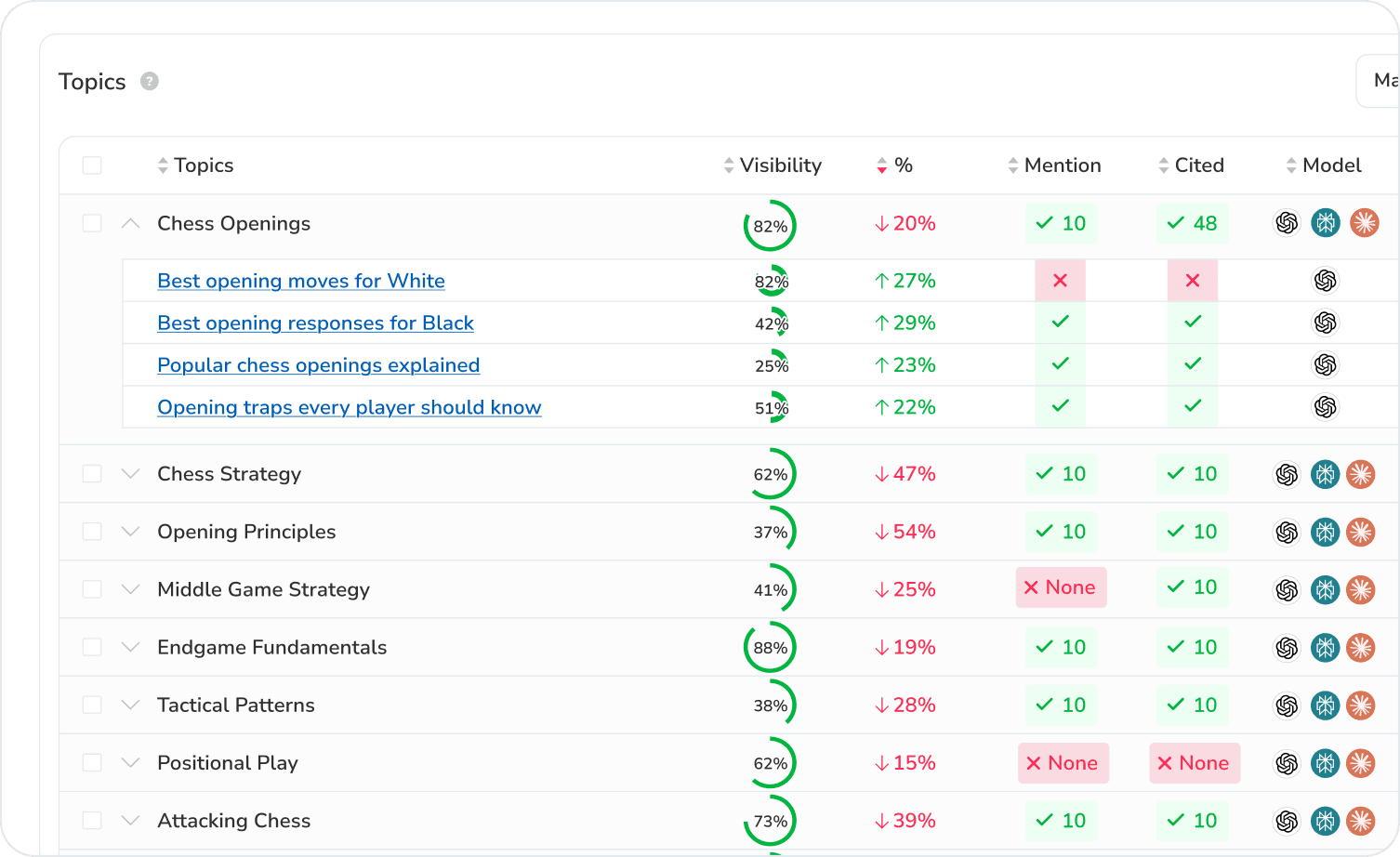
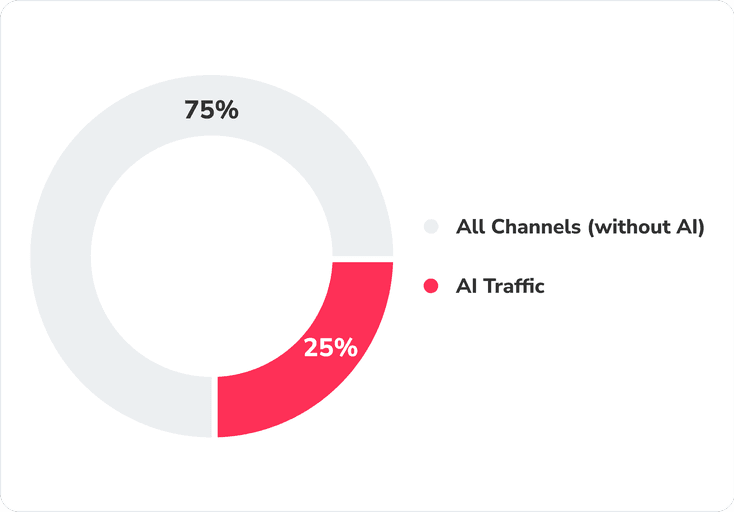
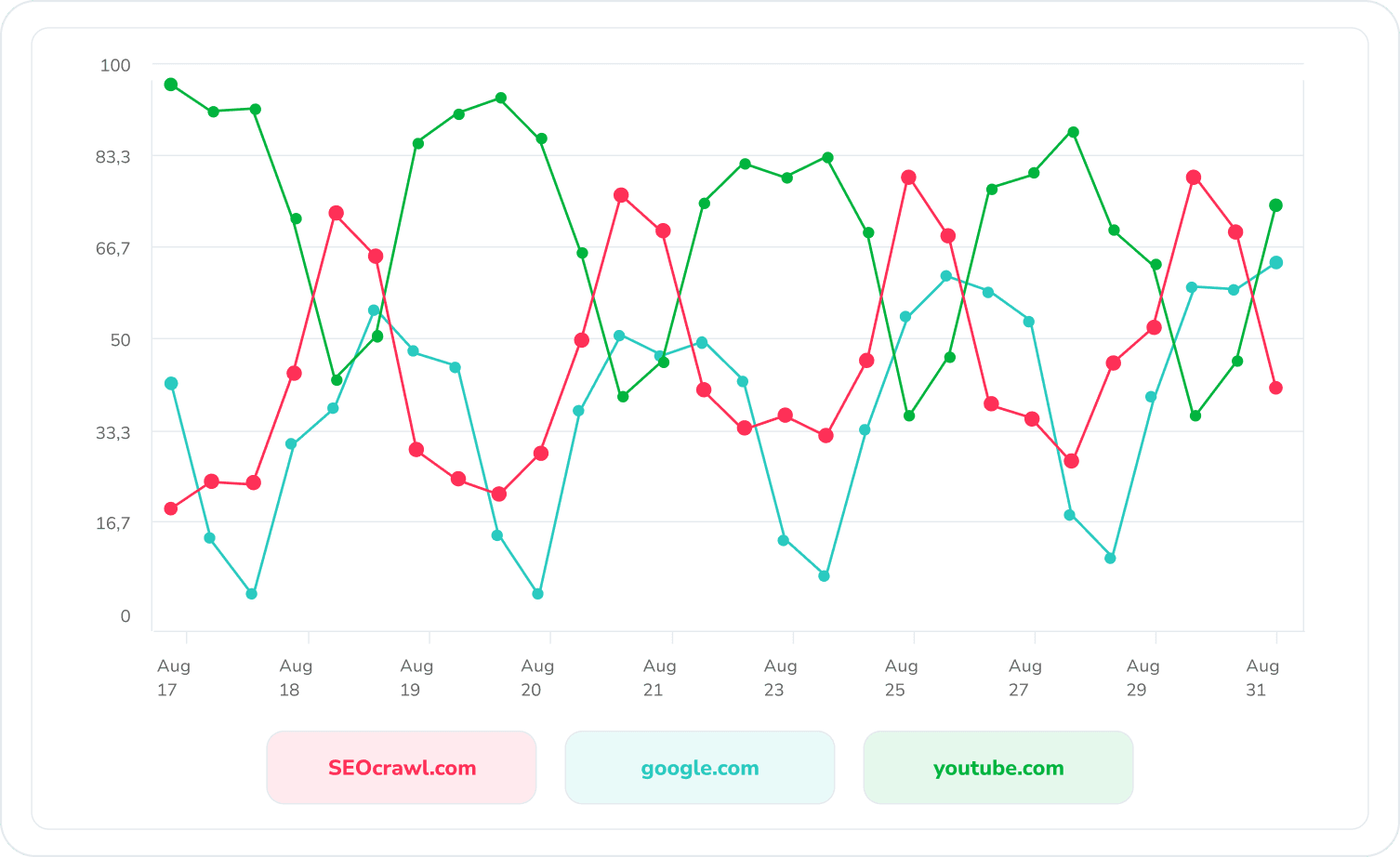
The AI Tracker then ties those mentions to real GA4 sessions, so classic search and AI visibility sit on one screen.
What to do with your AI visibility data
Tracking is only useful if it drives action. Each metric points to a different problem, and a different fix. If a number looks off, use this as a diagnostic:
| Signal | What it means | What you can do about it |
|---|---|---|
| Mention rate is low | LLMs don't know your brand well enough to include it in answers | Build off-site presence: Wikipedia, Wikidata, Reddit, LinkedIn, and earned press. |
| Mention rate is OK, but citation rate is low | Your content is being sourced, but your brand isn't being recommended (ghost citation territory) | This is a brand authority problem, not a content problem. Invest in third-party coverage: press mentions, industry publications, "best of" articles that name you directly. Learn more in our SEO citations guide. |
| You're cited on some topics but not others | Competitors own the subtopics you're missing | Map which topics your competitors appear in that you don't. Build content clusters to close those gaps and interlink them with your existing pages. |
| Sentiment is drifting negative | Something in your web presence is pulling LLM responses toward negative framing | Audit what's being said about you on high-trust sources: review sites, Reddit, industry press, and address the root cause. |
| Share of voice dropped week-over-week | A competitor shifted citations in your category | Identify which prompts you lost and what content is now appearing in your place. That content is your new benchmark. |
AI visibility tracking checklist
Still have doubts on how to check AI visibility? Use this checklist to make sure your setup is complete before you start tracking:
- Prompt set defined: at least 5 brand prompts, 10 category prompts, and 5 problem prompts
- Platforms selected and prioritized (start with ChatGPT and Google AI Overviews)
- GA4 referral segments configured for
chatgpt.com,perplexity.ai,gemini.google.com, andcopilot.microsoft.com - Baseline recorded for all five metrics: mention rate, share of voice, citation rate, sentiment mix, topic coverage
- At least 3 competitors added to the share of voice tracking
- Tracking cadence set and scheduled (we recommend weekly)
- Alert configured for drops in mention rate or share of voice
- Topic coverage map completed: which subtopics do you own vs. competitors?
- First trend review scheduled for 30 days after baseline
FAQs
How do I know if ChatGPT mentions my brand?
The most reliable method is a prompt tracking tool that runs your defined queries on a recurring schedule and stores the full response history. Manual checks give you a single data point with no trend, no competitor context, and no citation history. For a deeper look at how to get your brand cited in the first place, see our guide on how to rank in ChatGPT.
Can I track AI visibility for free?
You can do it, but without getting all the data. GA4 tracks sessions arriving from AI referral sources at no cost, and Google Search Console shows AI Overviews appearances for Google. Manual prompt checking in ChatGPT or Perplexity is also free. What you can't do for free is automate prompt runs, store citation history, or compare share of voice against competitors systematically.
How often should I check my AI visibility?
Weekly is the right choice for most teams. For early-stage monitoring, monthly also works to build a baseline. Daily tracking is worth it if you're running an active GEO campaign, responding to a competitor threat, or operating in a fast-moving category.
How do I track my brand in Google AI Overviews specifically?
Google Search Console includes an AI Overviews filter in the Performance report. For deeper tracking, including which specific URLs are being cited and how your inclusion rate changes over time across most major LLMs, SEOcrawl AI's AI Tracker surfaces that context directly.
How is tracking AI visibility different from traditional rank tracking?
Traditional rank tracking tells you where your pages appear in a list of search results. AI visibility tracking tells you whether your brand is mentioned, cited, or recommended inside AI-generated answers, which don't have positions in the traditional sense. Both matter in 2026.
How do I track competitor visibility in AI?
Define the same prompt set you use for your own brand and run it for your competitors. The metric that matters most is share of voice: your brand mentions as a percentage of total brand mentions across all tracked competitors for a given prompt. SEOcrawl AI's Prompt Tracking includes competitor comparison built into the dashboard, so you can see exactly which prompts they're winning and which ones represent an opportunity.
Author: David Kaufmann

I've spent the last 10+ years completely obsessed with SEO — and honestly, I wouldn't have it any other way.
My career hit a new level when I worked as a senior SEO specialist for Chess.com — one of the top 100 most visited websites on the entire internet. Operating at that scale, across millions of pages, dozens of languages, and one of the most competitive SERPs out there, taught me things no course or certification ever could. That experience changed my perspective on what great SEO really looks like — and it became the foundation for everything I've built since.
From that experience, I founded SEO Alive — an agency for brands that are serious about organic growth. We're not here to sell dashboards and monthly reports. We're here to build strategies that actually move the needle, combining the best of classical SEO with the exciting new world of Generative Engine Optimization (GEO) — making sure your brand shows up not just in Google's blue links, but inside the AI-generated answers that ChatGPT, Perplexity, and Google AI Overviews are delivering to millions of people every single day.
And because I couldn't find a tool that handled both of those worlds properly, I built one myself — SEOcrawl AI, an enterprise SEO intelligence platform that brings together rankings, technical audits, backlink monitoring, crawl health, and AI brand visibility tracking all in one place. It's the platform I always wished existed.
Discover more content about this author