SEO Citations: What They Are and How to Earn Them in AI Search
Most teams think of citations as a local SEO checkbox. You get your business listed consistently across directories and move on. But that view, which made sense five years ago, is already outdated.
What are SEO citations?
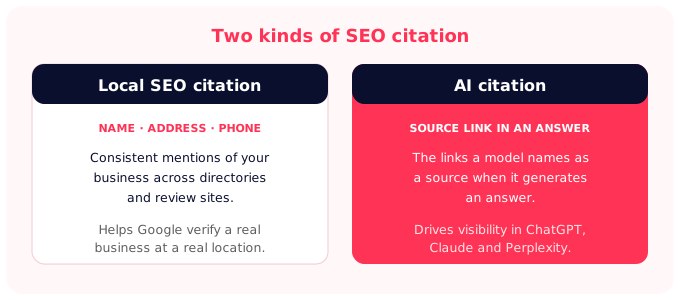
In traditional SEO, a citation is any online mention of a business's name, address, and phone number. In AI search, the term has expanded: an AI citation is when a language model includes your domain or content as a named source in its response.
Both types influence visibility. But AI citations affect whether your brand shows up in the answers millions of people get from AI tools every day, without ever clicking a search result. Across platforms, research analyzing 40,000 AI responses found answers cite roughly ten external sources on average — from about 7 in ChatGPT to 16 in Perplexity. And platforms rarely agree on which sources to trust: an analysis of cross-platform citations found that only 11% of domains are cited by both ChatGPT and Perplexity for the same query, with 71% of cited sources appearing on a single platform.
Local SEO citations: the traditional model
Google uses citation signals to verify that a business exists at a specific location. When your business name, address, and phone number appear consistently across directories, review sites, and local publications, it reinforces the accuracy of your Google Business Profile.
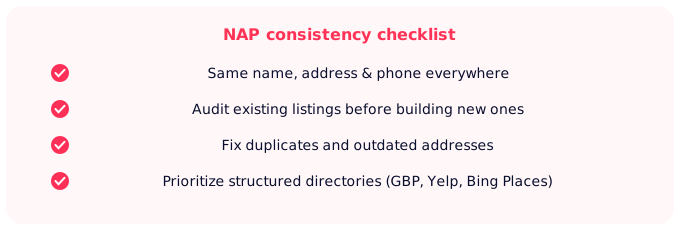
The key in this process is consistency. A discrepancy between how your address appears on Yelp, your website, or Apple Maps builds into a trust-signal problem, not just a formatting issue.
Structured vs. unstructured citations
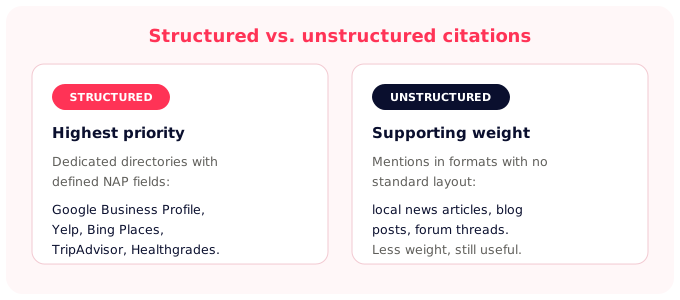
Structured citations appear in dedicated business directories with defined fields for NAP data: Google Business Profile, Yelp, Bing Places, TripAdvisor, and industry-specific platforms like Healthgrades or Avvo. These are the highest-priority citations to build.
Unstructured citations are mentions of your business in contexts that don't have a standard format: a local news article, a blog post, a forum thread. They carry less weight but contribute to your overall image.
How to build local SEO citations
The basics are the ones you'll find in any SEO agency post:
- Claim and complete your Google Business Profile. It is the most important citation you have.
- Audit existing citations for NAP consistency and fix discrepancies before building new citations.
- Submit to core data aggregators (Data Axle, Neustar Localeze, Foursquare). They feed hundreds of downstream directories.
- Add listings to relevant industry and regional directories.
- Earn unstructured mentions by being active in your local community, press, and partnerships.
Once your core citations are clean and consistent, it's not really worth continuing to expand your local SEO citations. The better investment in 2026 is the second type of citation.
AI citations: the new SEO citation that also drives visibility
When someone asks ChatGPT a question like "what's the best project management tool for small teams" or "how do I reduce churn," the model generates an answer and, often, includes links to the sources it drew from. Those links are AI citations, and they are now a measurable traffic channel.
An AI Tracker measures actual traffic coming from AI models like ChatGPT, Claude, and Perplexity with indicators like sessions, users, key events, landing pages, and demographics.
How LLMs choose what to cite
LLMs don't rank pages the way Google does. They used to rely on training data alone, but now more models use retrieval-augmented generation (RAG), where current web content is fetched at query time.
LLM-based systems like Claude, AI Overviews, and ChatGPT favor sources that are authoritative, unambiguous, and easy to attribute.
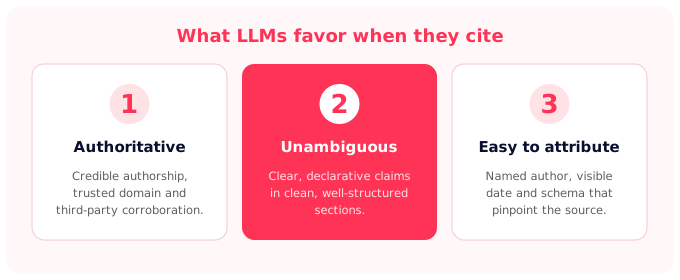
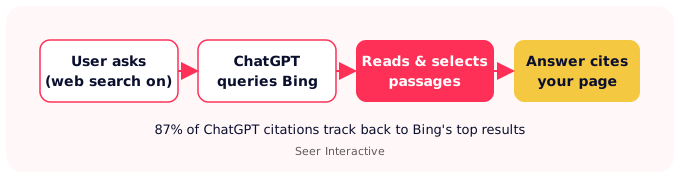
Source: Seer Interactive.
llms.txt: does it help get AI citations?
llms.txt is a plain-text file that you can place at the root of your domain to provide a structured summary that helps language models understand what you publish.
Think of it as a robots.txt for AI crawlers, but informational rather than restrictive.
But does it directly improve citation rates? The file is not significant on its own. Google's May 2026 guide to generative AI search states that AI Overviews and AI Mode do not require llms.txt or any kind of special schema.
That said, it costs almost nothing to implement and may help models that actively parse it (some Perplexity crawlers, for example) understand your content. It's worth adding, but it's not a citation shortcut. SEOcrawl AI's free llms.txt generator creates a ready-to-host file for your site in seconds, no account required.
Structured data and schema for AI citations
Schema markup matters, but not as a direct citation trigger. A well-organized site reduces ambiguity. When you use Article, FAQPage, HowTo, Person, or Organization schema, you give both Google and LLMs a structured representation of who wrote something, what the content covers, and what your organization is.
The easier you make it to pinpoint and quote, the more likely you are to be cited. Priority schema types for AI citation optimization:
ArticleorBlogPostingwithauthor,datePublished, anddateModifiedFAQPagefor any question-and-answer contentOrganizationwithsameAspointing to your verified social and Wikipedia profilesPersonfor attributed authors with linked credentialsHowTofor step-by-step content
How to earn AI citations: practical strategies
1. Build citation-ready content
The structural requirements for AI citation are different from classic SEO. Models need content they can extract cleanly. Here's what works:
- Include direct answers in the opening paragraph. Answer the question in the first two or three sentences, then expand.
- Write short, declarative paragraphs. A model can scan a 40-word paragraph. It can't cleanly extract a 400-word block.
- Use named sections with specific H2s and H3s. Sections like "How LLMs choose citations" are citable; sections like "More information" are not.
- Add original data, statistics, and first-hand examples. Models prefer attributable claims. If your article cites your own survey, case study, or proprietary dataset, it becomes a primary source.
- Include a named author, visible credentials, and an author bio linked via schema. Anonymous content is harder to trust and attribute.
2. Earn presence on the sources AI already trusts
LLMs are trained on the web as it existed at their training cutoff, and are then continuously updated via RAG from a set of trusted sources. Here are some sources AI models tend to lift their answers from:
- Wikipedia: if your company, product, or key topic has a Wikipedia article, ensure it exists, is accurate, and links to your site where policy permits. Wikipedia entries are among the most-cited sources in LLM responses.
- Reddit: participate in relevant subreddits. LLMs frequently cite Reddit threads when they contain firsthand experience. A product recommendation from a real user carries more weight than a branded blog post.
- LinkedIn: publish thought-leadership content and original analysis from named individuals. LinkedIn articles are indexed and cited by several models.
- Earned press and industry coverage: a mention in TechCrunch, Search Engine Journal, or an industry association carries provenance. LLMs treat third-party corroboration as a trust signal.
3. Build topical authority across a cluster
A single well-optimized article rarely earns consistent AI citations.
To be cited on "content marketing strategy," you need more than one article. You should become a valuable resource on the concept with content like what a content strategy is, how to build an editorial calendar, how to measure content ROI, and the difference between topical authority and domain authority.
The basis is that each article reinforces the others, and together they establish your site as the topical authority LLMs associate with that subject. And internal linking is crucial here because it helps both Google and AI crawlers understand the relationship between your pages.
4. Establish entity presence
An entity is a clearly defined, distinguishable thing in the world, like a company, a person, a product, or a concept. And LLMs reason about entities, not just keywords.
The more consistently your brand is represented as an entity online, the more likely models are to confidently cite it. These are some key steps:
- Keep your company name, description, and key attributes consistent across your website, Google Business Profile, Wikidata, LinkedIn, and any press mentions.
- Use
Organizationschema withsameAspointing to all your verified profiles. - Get your key executives mentioned as named authors with a real web presence to reduce attribution uncertainty.
- Ensure your Wikipedia article (if you have one) accurately reflects your current positioning.
5. Distribute content beyond your domain
Content that only exists on your site has a limited range. If that content is referenced, quoted, or syndicated across the web, it creates the kind of cross-domain corroboration LLMs cite more often.
The simplest way to gain those cross-domain references is to contribute guest posts to industry publications with your name and byline, or to create assets (frameworks, data, guides) that become reference material in your field. You can also repurpose content into LinkedIn articles, YouTube videos, and podcast appearances. Each new medium creates an additional indexed mention.
How to track whether you're being cited
Knowing your citation rate is as important as building citations. You need these numbers to tell what's working and spot when a competitor starts winning in prompts you used to own.
The basic starting point is manual checking: you ask ChatGPT, Perplexity, or Gemini the queries you care about and see if your brand appears. It's free and takes seconds, but a sample of two or three queries at a given moment tells you nothing about trends.
For a professional analysis, you need a dedicated tool. SEOcrawl AI's AI Tracker measures actual traffic reaching your site from ChatGPT, Claude, and Perplexity, with sessions, users, landing pages, and demographics.
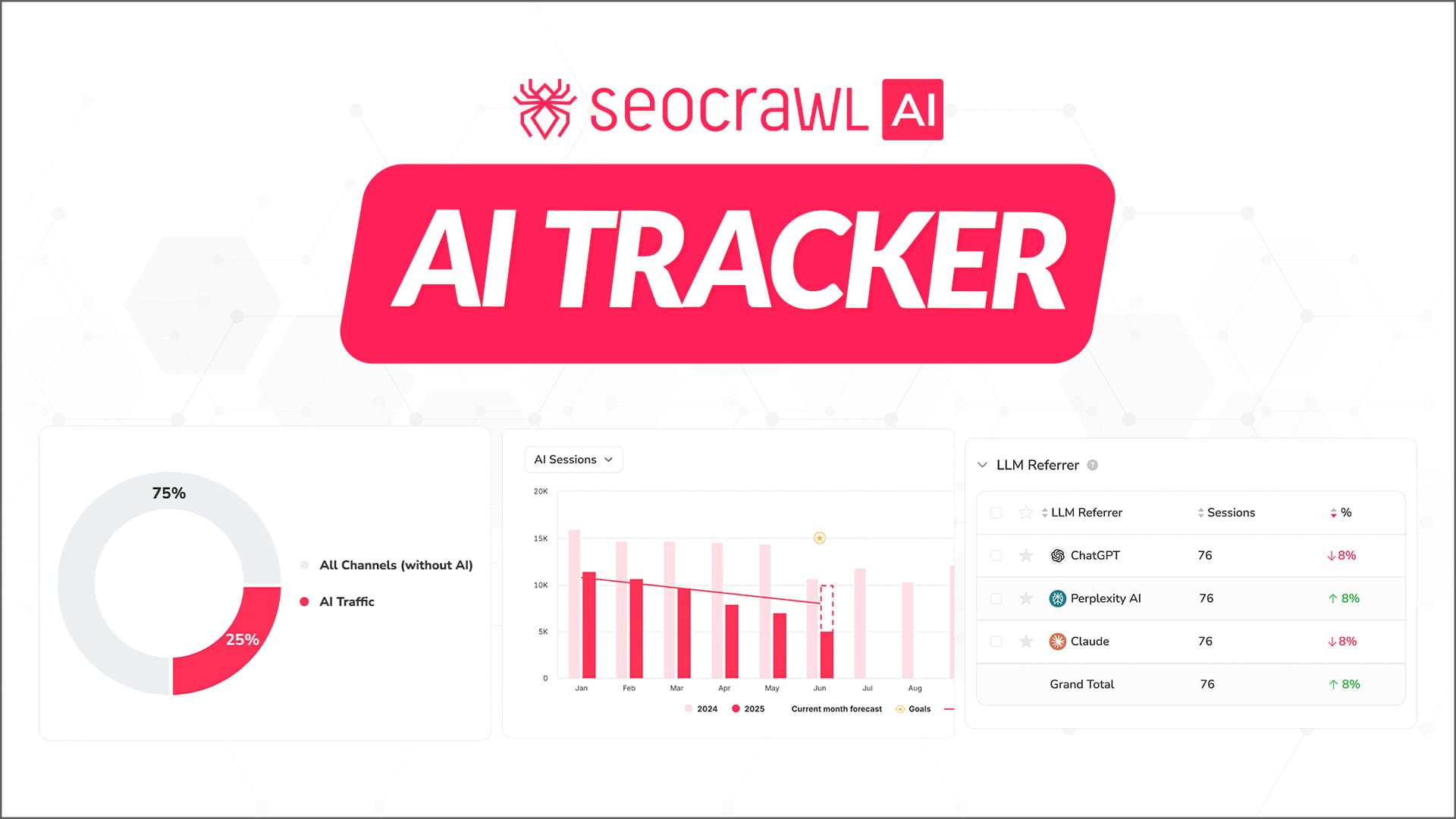
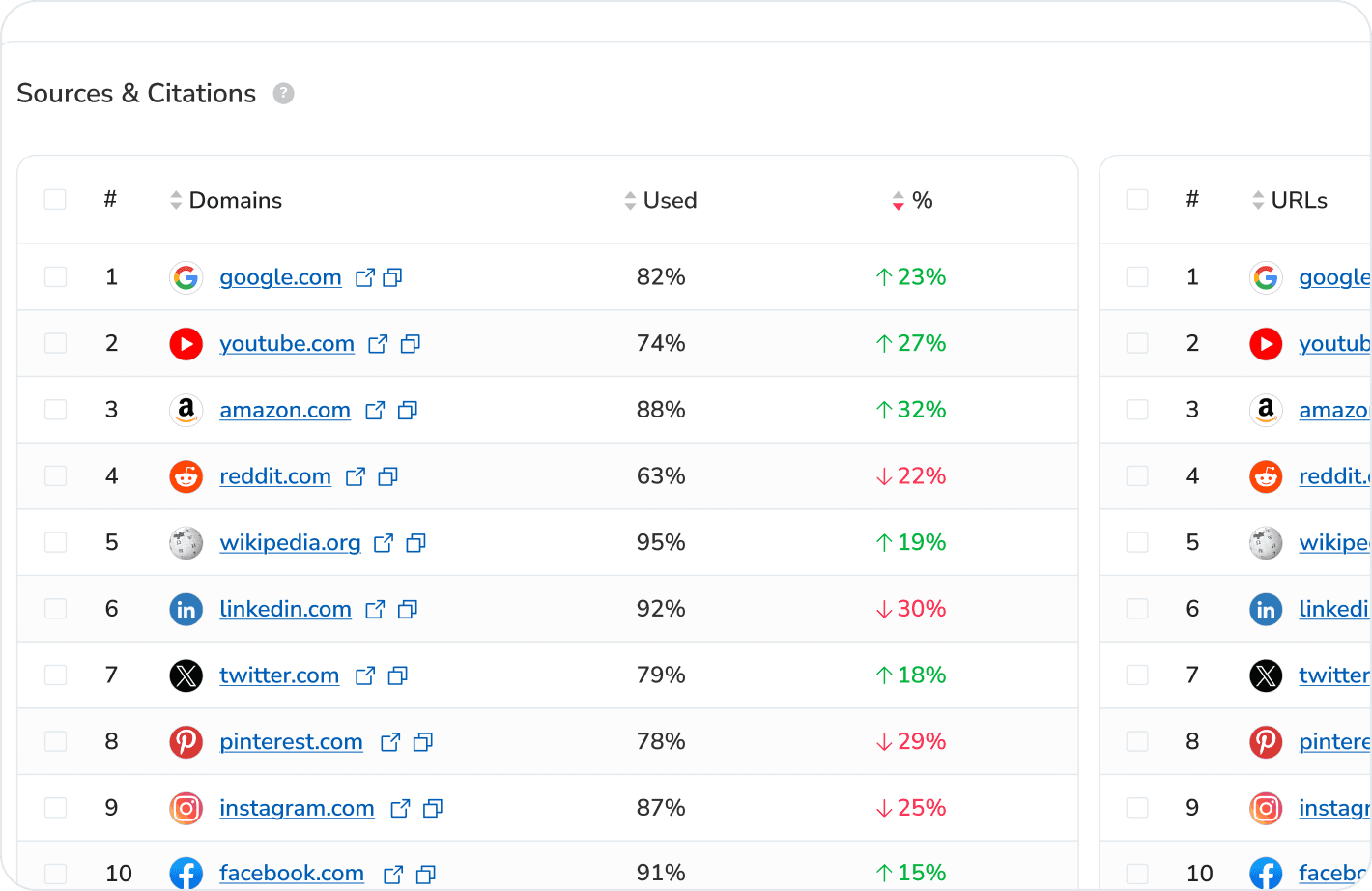
If you also want to monitor your brand citations across LLMs, Prompt Tracking stores the full citation list for every tracked response and lets you compare share of voice against specific competitors over time.
Author: David Kaufmann

I've spent the last 10+ years completely obsessed with SEO — and honestly, I wouldn't have it any other way.
My career hit a new level when I worked as a senior SEO specialist for Chess.com — one of the top 100 most visited websites on the entire internet. Operating at that scale, across millions of pages, dozens of languages, and one of the most competitive SERPs out there, taught me things no course or certification ever could. That experience changed my perspective on what great SEO really looks like — and it became the foundation for everything I've built since.
From that experience, I founded SEO Alive — an agency for brands that are serious about organic growth. We're not here to sell dashboards and monthly reports. We're here to build strategies that actually move the needle, combining the best of classical SEO with the exciting new world of Generative Engine Optimization (GEO) — making sure your brand shows up not just in Google's blue links, but inside the AI-generated answers that ChatGPT, Perplexity, and Google AI Overviews are delivering to millions of people every single day.
And because I couldn't find a tool that handled both of those worlds properly, I built one myself — SEOcrawl AI, an enterprise SEO intelligence platform that brings together rankings, technical audits, backlink monitoring, crawl health, and AI brand visibility tracking all in one place. It's the platform I always wished existed.
Discover more content about this author
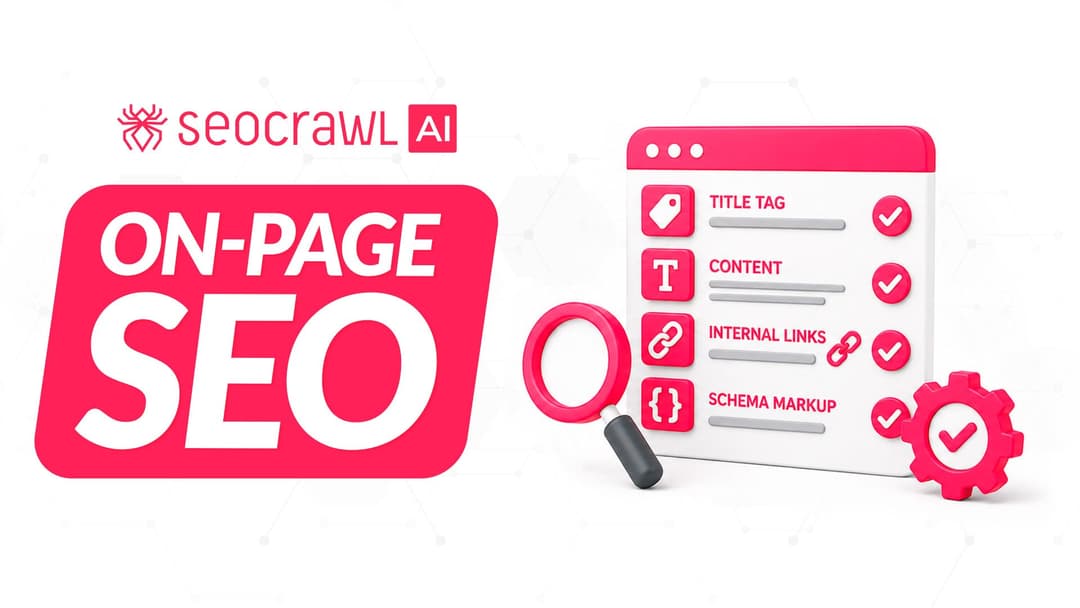
On-page SEO is everything you control on a page: content, title, meta description, headings, URL, images and internal links. Here is a checklist element by element, an audit process and what changes with AI Overviews and AI Mode.