Anchor Text: Best Practices for SEO
We continue with our series of articles for our SEO Dictionary and in this case we bring you another article so you can learn, and we can all learn together, about a very important concept in web positioning: the Anchor Text.
What is Anchor Text?
Anchor Text is nothing more than a piece of text that contains a link, which provides much more information about the content we are going to visit if we click on the hyperlink. At least in theory, that is how it should be.
At a technical level, its functions are mainly focused on two areas:
- At the user level, the goal is to provide context about the topic of the link and try to convey information as transparently as possible so that even before clicking, the user knows fairly accurately what they will find and can decide whether to enter or not.
- At the SEO level, it is true that it is probably not one of the most important ranking factors. Even so, it must be recognized that depending on the anchor text, Google will transmit more or less value to a link. For example, it is not the same to be linked to our website with "click here" as with the anchor "SEO Agency".
Thanks to the continuous improvement of algorithms, search engines like Google have learned to identify whether the anchor text actually matches the content and have begun to penalize websites that manipulate and abuse its use.
Now that we have a clear definition, let's take a detailed look at the types of anchor text that currently exist. Let's get to it!
Types of Anchor Text
- Naked: The naked Anchor Text is one that only shows the URL as it is without text. For example: /blog/. This is especially useful when we link reference articles or other types of citations since this way, the reader can see exactly the source, the article and everything about the page we mention.
- Generic: The generic Anchor Text is one that includes words like 'Click here' 'This blog' 'On the following page' and has the hyperlink placed on it. This practice was very common several years ago and is being used less and less. The great danger of this technique is that we really don't tell Google or the user what they will find. Behind a "click here" there can be both a high-quality page and a fraudulent scam page...
- Brand Name: In the case of the brand name, the links are only made up of text and the goal is for the brand or website to be specifically seen. Example: SEOcrawl AI.
- Keyword: Finally, the keyword anchor text is probably the most important from an SEO perspective since it not only accurately indicates what the user will find but the word used is optimized and is probably a very important one for the business. For example, SEO Services.
As you have seen with its different types, anchor text is one of the most important mechanisms to use in SEO and must be part of all online marketing strategies to improve and optimize the positioning of any website.
While we will control the Anchor Texts of our articles, the same will not happen for the anchors used by external websites when they link to us. So, how can we analyze this information?
Analyzing Anchor Text with Tools
To analyze which anchor texts external websites are using when linking to our website, we have several options.
- The first option would be Google Search Console, which in the links section will provide us with information about which websites are linking to us, to which pages and what text they are using to link to us.
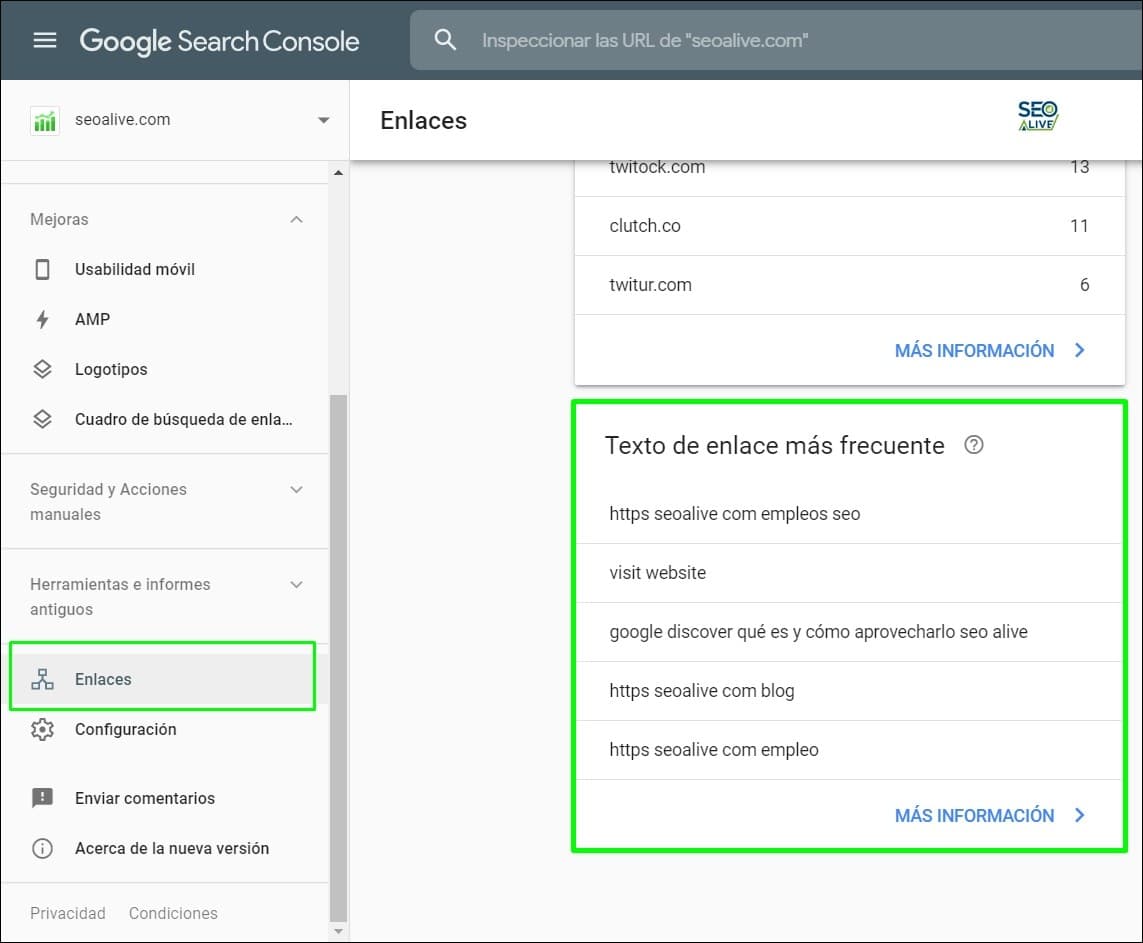
In the links section of Google Search Console, we will see all the information about the linking of our website.
- If we have Ahrefs, the analysis can be much more detailed and we can carry out an exhaustive analysis of Anchors, seeing the anchor text, authority of the domains and much more...
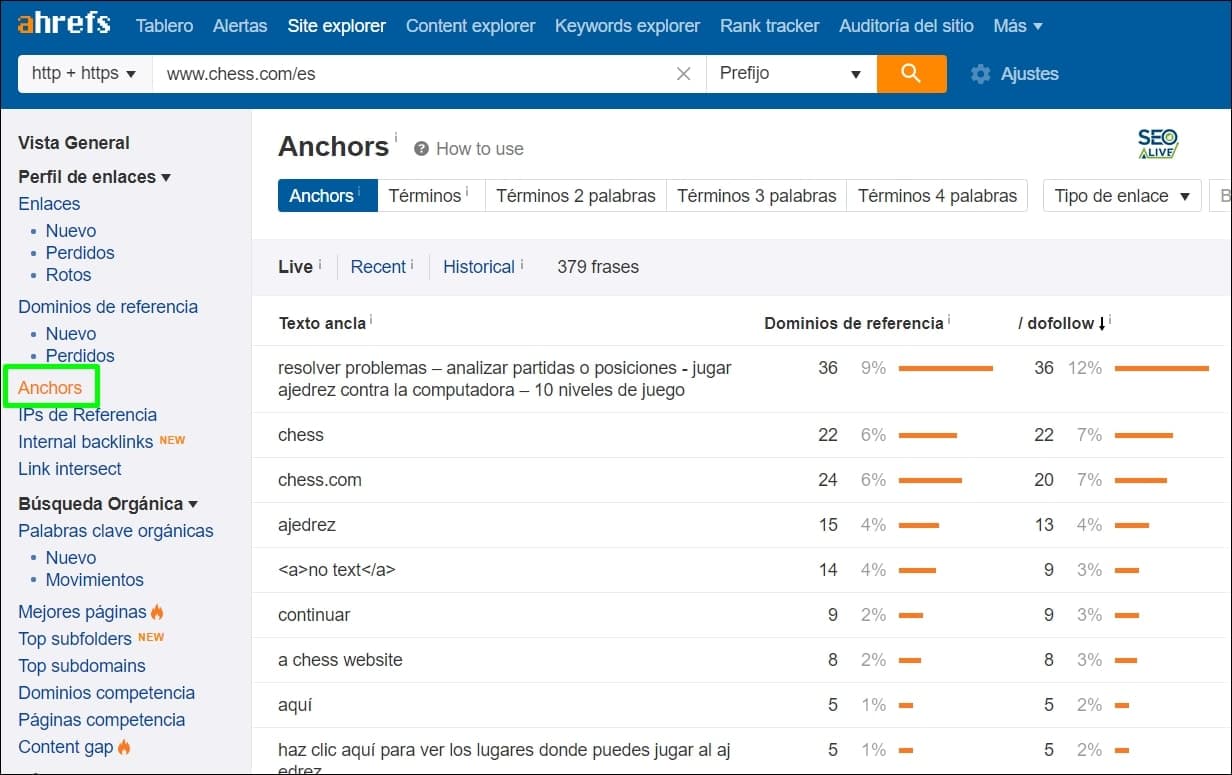
General view of the Ahrefs Anchor Text analyzer
Do you have any questions? We are happy to help!
Author: David Kaufmann

I've spent the last 10+ years completely obsessed with SEO — and honestly, I wouldn't have it any other way.
My career hit a new level when I worked as a senior SEO specialist for Chess.com — one of the top 100 most visited websites on the entire internet. Operating at that scale, across millions of pages, dozens of languages, and one of the most competitive SERPs out there, taught me things no course or certification ever could. That experience changed my perspective on what great SEO really looks like — and it became the foundation for everything I've built since.
From that experience, I founded SEO Alive — an agency for brands that are serious about organic growth. We're not here to sell dashboards and monthly reports. We're here to build strategies that actually move the needle, combining the best of classical SEO with the exciting new world of Generative Engine Optimization (GEO) — making sure your brand shows up not just in Google's blue links, but inside the AI-generated answers that ChatGPT, Perplexity, and Google AI Overviews are delivering to millions of people every single day.
And because I couldn't find a tool that handled both of those worlds properly, I built one myself — SEOcrawl AI, an enterprise SEO intelligence platform that brings together rankings, technical audits, backlink monitoring, crawl health, and AI brand visibility tracking all in one place. It's the platform I always wished existed.
Discover more content about this author