The Future of SEO: Key Trends You Can't Ignore in 2026
SEO is changing faster than ever. Google has dramatically changed what a search result even looks like, AI assistants are pulling people away from the classic results page, and a few tactics we used for years have quietly stopped working. The good news? SEO is more alive than ever. It's just changing fast, and our job is to keep up.
The biggest story of 2026 isn't another core update. It's AI Mode going default. Let's get into it.
AI Mode Is Now the Default, Not a Tab
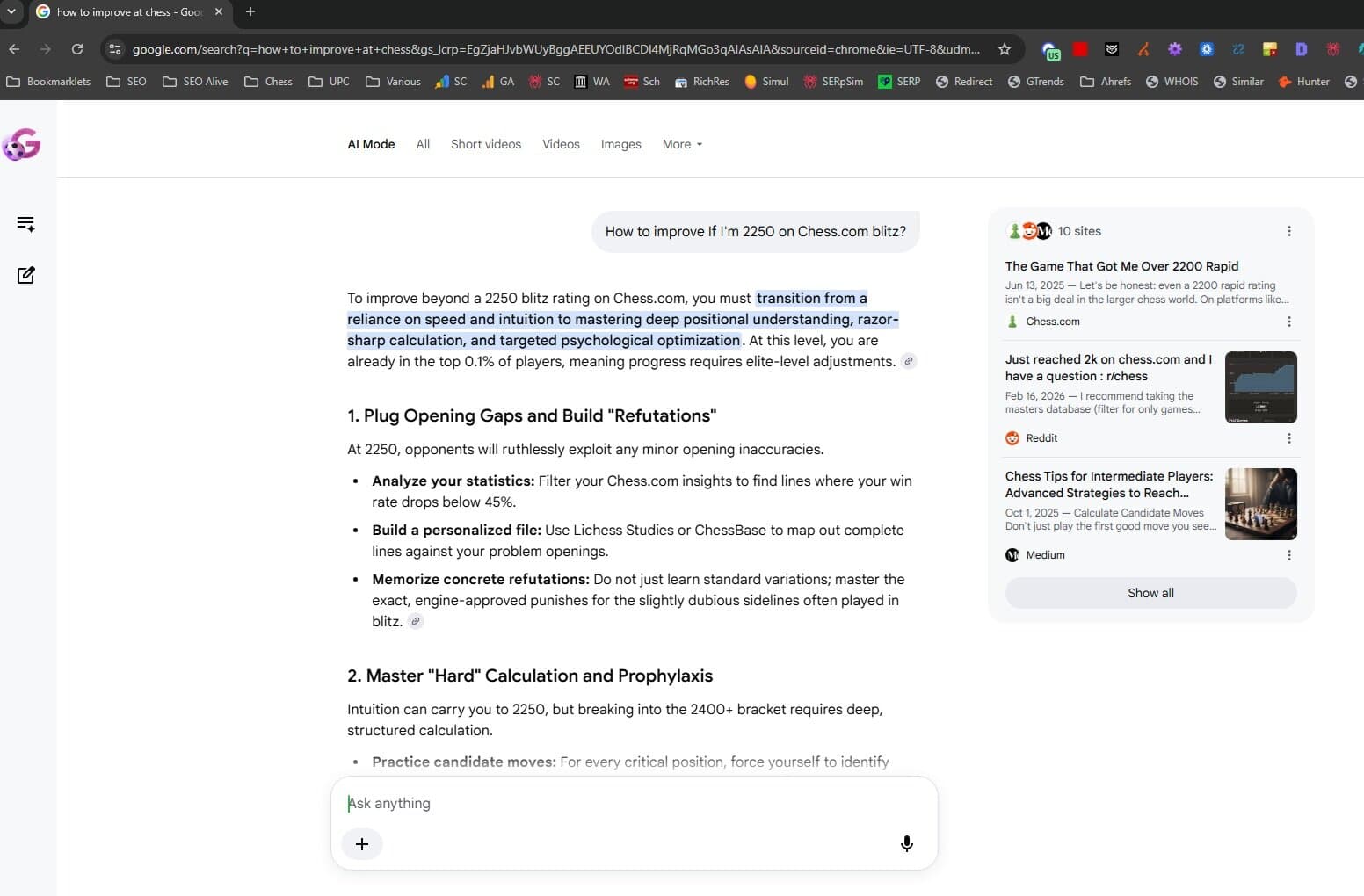
For a while, AI Overviews were the big talking point and AI Mode lived in its own separate tab that you had to choose. That's now over.
At Google I/O on May 19, 2026, Google made AI Mode the default search experience worldwide, running on a new model called Gemini 3.5 Flash. By then, it had already passed a billion monthly users, and Google says AI Mode queries have more than doubled every quarter since launch.
The same day, Google also rebuilt the search box for the first time in over 25 years. It now expands as you type a longer question, accepts images, files, videos, and even open Chrome tabs as input, and replaces autocomplete with AI-powered suggestions.
Here's the part worth being precise about, because plenty of headlines oversold it: the ten blue links are not dead. Google's VP of Search, Liz Reid, said plainly from the stage that the new box doesn't mean you'll only get AI answers. Classic results still exist. But the default path now pulls people into an AI conversation from the very first keystroke.
What this means is that ranking number one no longer guarantees you will show up in the answer.
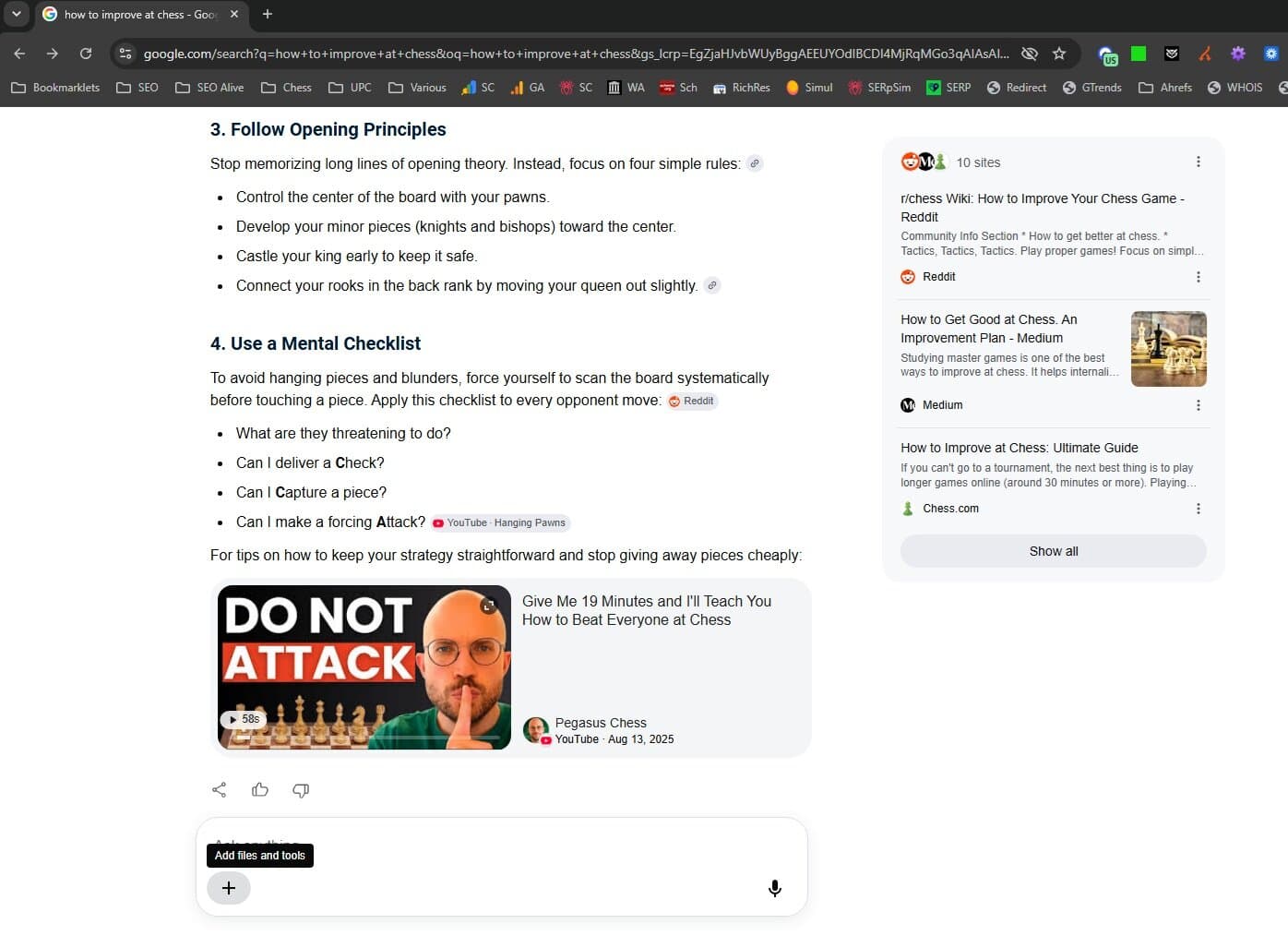
Lots of people search differently these days. Instead of typing:
"best chess openings for beginners"
They describe their whole situation:
"I'm 900 rated, play mostly rapid, and lose to aggressive players. Which opening should I learn first?"
A completely different search behaviour, and AI Mode is built for exactly that kind of long, messy, human question.
The upside I keep coming back to: fewer clicks, but better ones. People who arrive after an AI conversation already have context. They've narrowed things down before they ever land on your site, so they tend to convert better.
How to adapt:
-
Make sure your site is technically clean and easy to parse. Server-side HTML beats content buried in JavaScript every time.
-
Write answer-first. Lead with the direct response, then expand. AI systems pull the clear, confident first sentence.
-
Keep your important pages fresh and accurate, especially anything that changes over time.
The Zero-Click Shift Is Now Severe
Zero-click searches have been an SEO topic and concern since the Featured Snippet days of 2014. In 2026, we're somewhere entirely new.
Because AI Mode answers queries in a conversational format rather than as a page of links, analysts estimate its zero-click rate at around 93%. For those queries, traditional organic reach is close to zero unless your brand is cited inside the AI answer itself.
The broader data backs it up. Pew Research, tracking nearly 69,000 real searches, found people click a result only 8% of the time when an AI summary appears, versus 15% without one — close to a 47% relative drop.
And yet, here's the story Google keeps pointing out: total search volume hit an all-time high. People search more, and longer, than ever.
How to adapt:
-
Treat AI citation as the new "position one." If you're not in the answer, position doesn't help you.
-
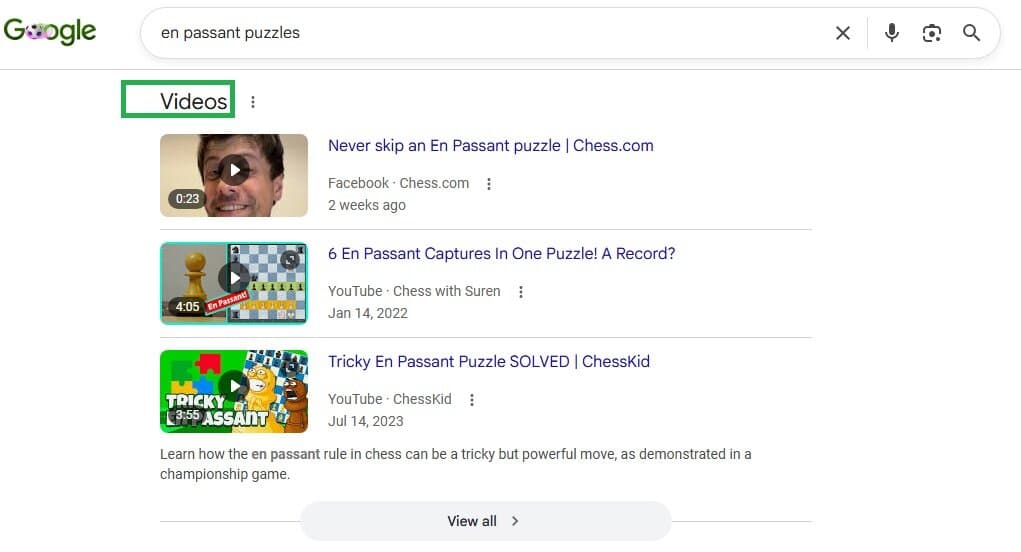
Chase the SERP features that still drive clicks: video results, image packs, the things AI hasn't swallowed yet.
-
Split your keyword list in two: queries that now trigger AI answers (go citation-first) and queries that don't (these are still your click-recoverable set).
It's About Matching Intent, Not Keywords
For years, SEO was about matching keywords. Now it's about matching what the user actually wants. AI-powered search keeps getting better at understanding the reasoning behind a query, which makes search intent mapping a key part of content creation rather than something to consider later.
The data backs this up: numerous studies have found that only a tiny share of AI Overviews contain an exact query match. Ranking well stopped being about stuffing the right phrases in and became about genuinely answering the question.
Knowing whether someone wants information, a product, or a specific answer changes how you write the page. Get that wrong and it doesn't matter how well-optimised the rest is.
How to adapt:
-
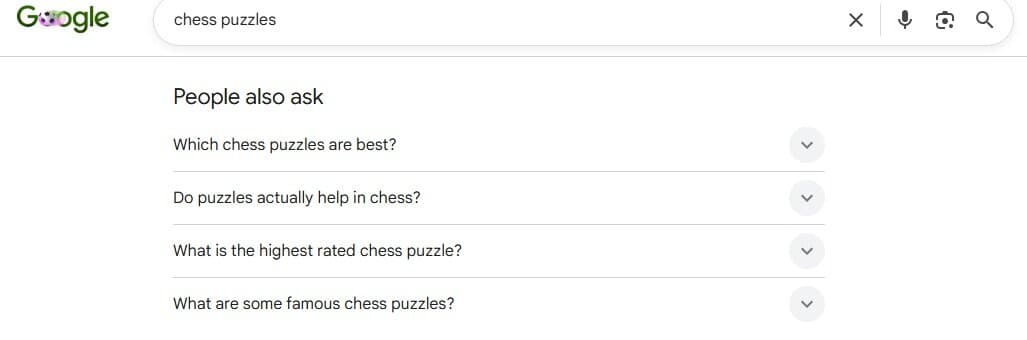
Write content that answers the real questions people ask. The People Also Ask box is a free window into those.
-
Structure pages for easy scanning: clear subheadings, bold where it helps, short paragraphs.
-
Go after long-tail, intent-based searches that map to what users actually need.
Brand SEO Becomes Just... SEO
Ten years ago, you could rank a tiny site with smart keyword targeting and enough backlinks.
Search engines and AI systems increasingly look for trusted entities, not isolated pages. When ChatGPT, Claude, Gemini, AI Mode, or Perplexity decide which sources to cite, they prefer brands they already recognize across the web.
That means brand mentions, reviews, PR coverage, forum discussions, social presence, and YouTube visibility all feed your search visibility now.
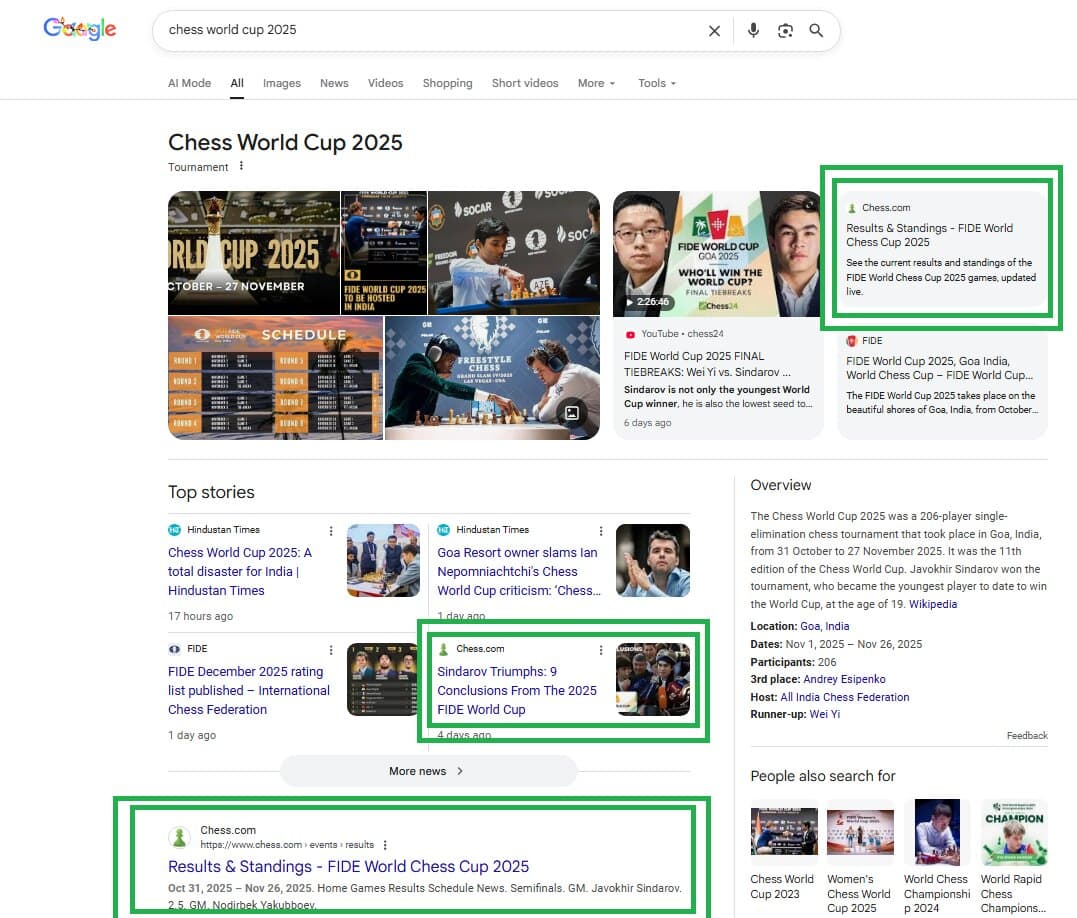
I've seen this firsthand with Chess.com. When people talk about chess online, or search for anything chess-related, Chess.com shows up naturally across Reddit, YouTube, Twitch, news articles, forums, and social media. That constant presence makes it easy for both Google and AI systems to understand that Chess.com is a trusted source on the topic. The visibility on Google feeds the visibility in AI answers, and the two reinforce each other.
There's hard data behind this too. Cyrus Shepard's analysis of 400+ winning and losing sites found that a strong brand was one of the features that consistently predicted organic traffic gains, alongside offering a real product or service and letting users complete a task.
How to adapt:
Building a recognizable brand is now one of the best long-term SEO investments you can make. Focus on:
-
Digital PR
-
Partnerships
-
Genuine reviews
-
Being active on the platforms your audience already uses
Every one of these efforts builds trust over time and strengthens your brand.
The catch is that this work doesn't fit inside one job title anymore. Digital PR, review management, community work and technical SEO used to belong to different teams, and now they all feed the same visibility. For a lot of businesses, the real decision is whether to build those skills in-house or work with an SEO agency that already handles PR, content and technical work together. An in-house team knows your product and customers better, but hiring and training people across all those areas can take a year or more. An outside team moves faster, but it still needs access to your internal experts, since first-hand knowledge is what makes content worth citing. Either way, the goal is the same: one consistent brand story showing up wherever people and AI systems look.
Entity SEO Matters More Than Keywords
Google stopped relying on keywords alone a long time ago. It understands people, companies, products, places, and topics as entities, with relationships between them.
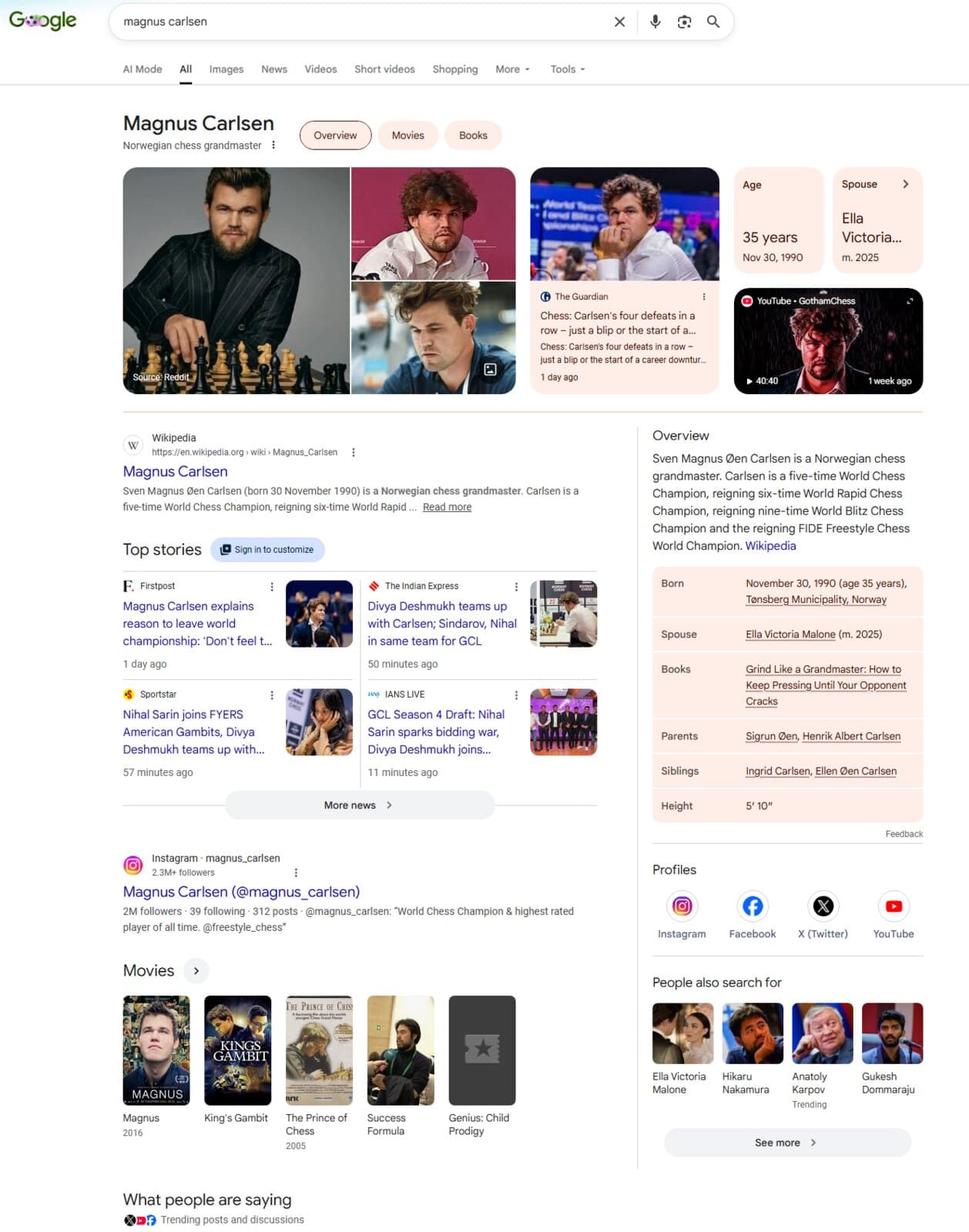
Take Magnus Carlsen (one of the best chess players in history). Google doesn't see two words. It understands a chess player, a former world champion, a Norwegian grandmaster, and his connections to tournaments, games, openings, and other players.
It's the same idea for your business. The more clearly search engines understand who you are and how you relate to your products, authors, and topics, the easier it is to appear in both regular results and AI answers.
How to adapt:
-
Use structured data to spell out what your entities are.
-
Build strong internal links so the relationships between your pages are obvious.
-
Keep your branding consistent everywhere. The goal is simple: make it easy for a machine to understand exactly who you are and what you do.
First-Hand Experience Beats Generic Content
Google's focus on E-E-A-T (Experience, Expertise, Authoritativeness, Trustworthiness) is stronger than ever, and AI search has made it mandatory rather than optional.
The reality is that AI can produce an expert article on almost anything in seconds. What it can't do is:
-
invent a real case study
-
a first-hand result
-
an internal data set
-
genuine expert commentary
That's exactly the kind of fact-rich, lived-experience content that both Google and AI systems now reward, because it's the stuff a model can't produce on its own.
So "publish more articles" isn't the right approach. Publish things only you could write is something else entirely.
How to adapt:
-
Get content written or reviewed by people with real expertise, and show it. Proper author bios with credentials do real work here.
-
Share personal stories, original research, and internal data competitors can't easily copy.
-
Use structured data to reinforce author and organisation credibility.
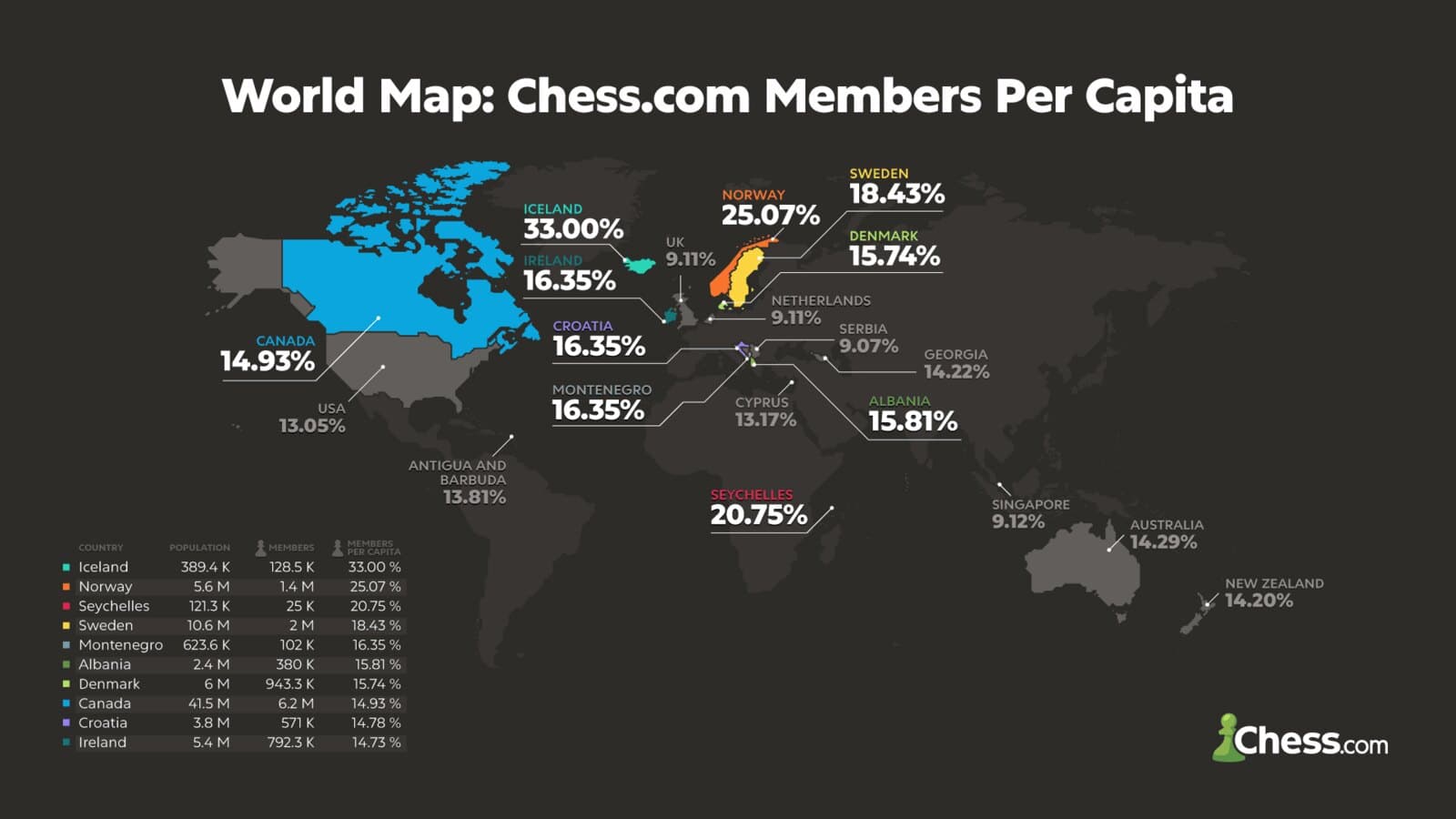
The data project above is a good example: see Countries That Love Online Chess The Most for the kind of original research a model simply can't generate on its own.
The Rise of Agentic Search
Two years ago, this wasn't even a conversation. Now it feels like one of the biggest changes on the horizon.
Search is starting to take action. At I/O 2026, Google launched information agents, which run in the background around the clock, watching blogs, news, social posts, and real-time data, then reporting back when something relevant changes. They went live for top-tier subscribers in June 2026, with a wider rollout planned through the summer.
Alongside that, we're seeing the first steps toward agents that don't just answer but do. Google previewed WebMCP, a browser-level standard (co-developed with Microsoft) that lets a website expose its key actions — booking, checkout, search, lead forms — as structured tools an agent can call directly, instead of clicking around your pages like a human would. It shipped as an early preview in Chrome in March 2026 and is not a finished standard yet.
This changes the challenge a bit. It's no longer enough to convince a human visitor. Your content, and increasingly your site's actions, may also need to be usable by the assistant making a recommendation on that person's behalf.
It's still early, though. Agent traffic is tiny for most sites today, and nobody should be rebuilding their site around WebMCP this week. But the direction is clear enough that it's worth laying the groundwork for the long term.
How to adapt (without overreacting):
-
Get your foundations clean: well-labeled forms, stable checkout and booking flows, predictable navigation, fast pages. This helps humans and agents, so it's never wasted effort.
-
Keep your important content in server-side HTML, not locked inside JavaScript. If a crawler or agent can't read it, it can't act on it.
-
Watch the space through 2026. You don't need to ship anything yet, but you do need to know where it's heading.
Tracking AI Visibility Becomes a Core Metric
Rankings alone no longer tell the full story. For years, we tracked rankings, clicks, impressions, and backlinks. Now there's another question that matters just as much:
"Are AI systems mentioning my brand?"
A page ranking #1 is great. A citation inside an AI answer might be worth just as much, sometimes more. The tricky thing is that measurement is still messy: every platform behaves differently and reporting is not perfect. But ignoring AI visibility today feels a lot like ignoring mobile traffic did ten years ago.
The metrics worth getting familiar with:
-
AI Share of Voice — how often your brand gets recommended for industry or product queries, compared to competitors.
-
Citation Rate — how frequently AI engines link to or quote your pages.
-
AI Referral Traffic — the actual visitors arriving from clicks on citations inside AI interfaces.
How to adapt:
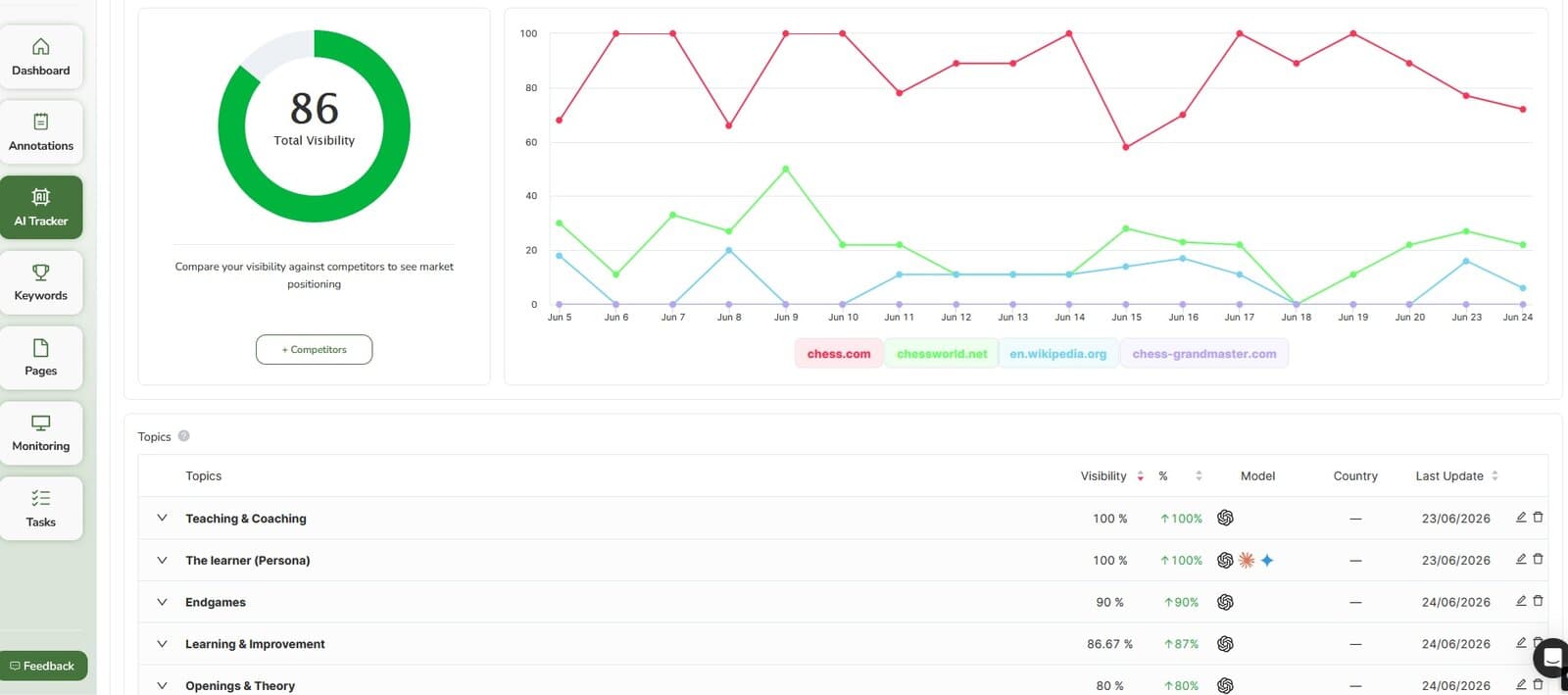
Pick your tools, add your top prompts, and start testing. SEOcrawl AI has its own AI Tracker where you can add the prompts that matter to your business and track how different LLMs respond across them. Genuinely one of my favourite features for staying on top of this.
Multi-Platform SEO: Google Isn't the Only Front Door
Plenty of people now discover brands without ever opening Google. They search on YouTube, TikTok, Reddit, Amazon, and straight inside ChatGPT, Gemini, or Perplexity.
A chess beginner might watch a YouTube tutorial, ask ChatGPT for an opening recommendation, check Reddit for opinions, and only then visit a website. Younger users especially start their research on social platforms first.
That's why focusing only on Google rankings isn't a great idea. Your presence across these platforms can also influence whether AI systems mention you in their answers — it's all connected.
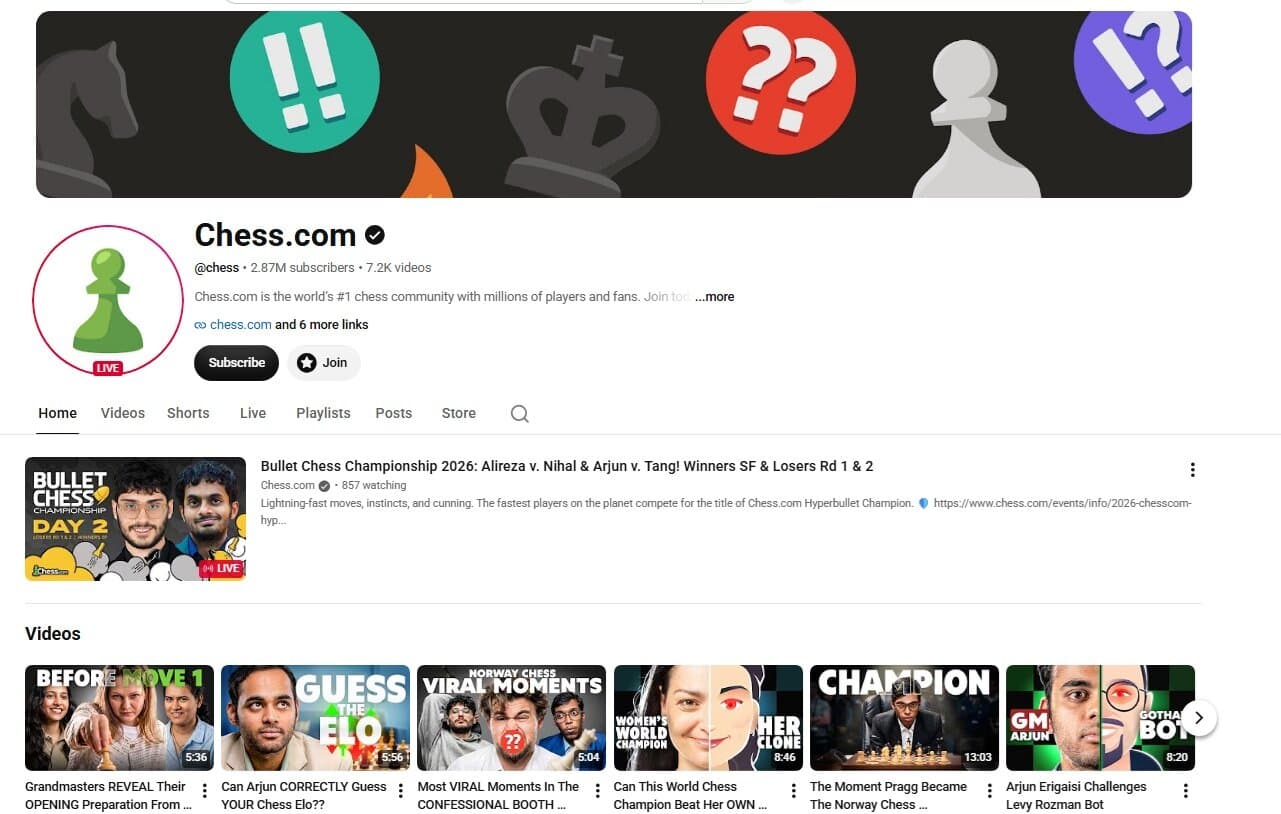
Chess.com invests heavily here, and it shows; its YouTube channel has grown to millions of subscribers (2.8m+ as of June 2026).
How to adapt:
-
Show up on the platforms your audience actually uses, not just the ones you're comfortable with.
-
Repurpose your best content into video and short-form. A strong written guide can become a YouTube tutorial and a TikTok in an afternoon.
-
Treat each platform as both a discovery channel and a signal that strengthens your brand everywhere else.
Community Content: Still Strong, But Read the Room
For a while the story was simple: forums and community content, Reddit above all, showed prominently in Google's results, and you needed to be in those conversations.
The 2026 picture is more complicated, and I'd rather give you the honest version. Across the March and May 2026 core updates, Reddit, Quora, and other UGC platforms saw real volatility, with some sharp visibility drops during the update windows (though several recovered afterward).
At the same time, broader UGC domination across the top 10 — counting Reddit, YouTube, Quora, LinkedIn, and others together — actually climbed during the March window. So community content isn't going away. It's just being fine-tuned, and Google is increasingly favouring the source that owns the thing over the platform that just talks about it.
For us SEOs, the important part hasn't really changed: being present in genuine community discussions still helps your visibility and feeds AI answers. Just don't treat any single platform as a guaranteed traffic source.
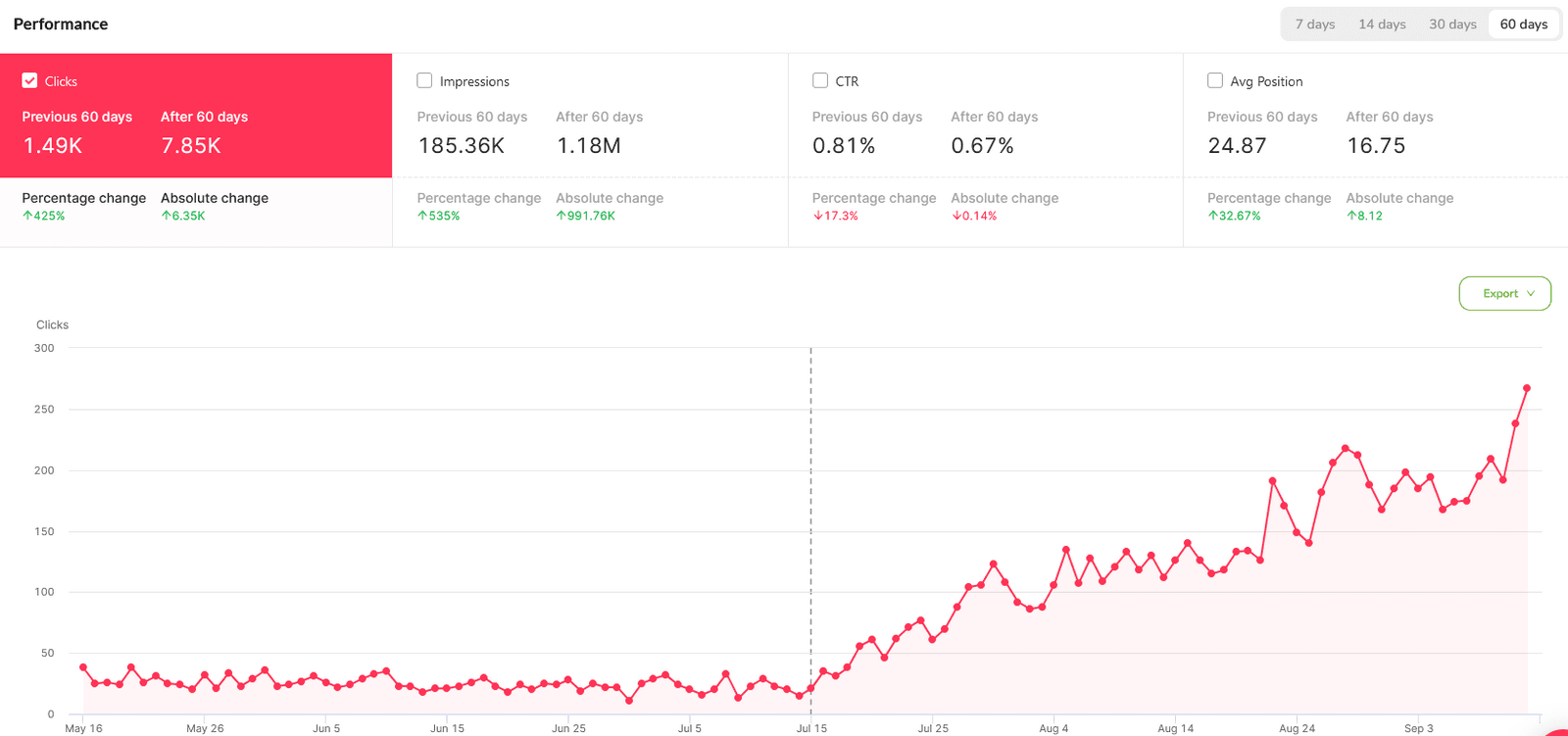
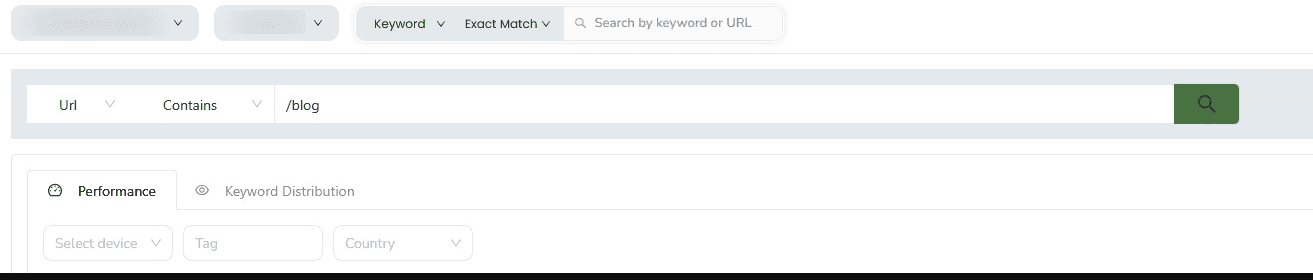
PRO Tip: You can check how your own community pages are performing inside SEOcrawl AI. Use the search bar at the top, drop in your forum folder, and you'll get instant results on your top community URLs and how they trend over time.
How to adapt:
-
Take part in the communities that matter to your audience (Reddit, Quora, niche forums). If you run your own forum, invest in its UX and content quality.
-
Build content around the real questions people ask in those spaces.
-
Encourage authentic reviews and discussion that search engines can surface.
Where SEO Goes From Here
The fundamentals didn't die, they got stricter. AI-driven search, alternative engines, agents that act on our behalf, and people searching across half a dozen platforms have all reshaped how content gets discovered.
Ranking through keyword stuffing and a pile of backlinks is finished. The brands winning in 2026 are the ones who:
-
Provide real value, not just pages that rank.
-
Build genuine brand trust through expertise and community presence.
-
Optimise for AI answers and agents, not only the classic ten links.
SEO is not dead and won't be anytime soon. It's changing, and the key is to change with it, not get left behind.
BONUS: Use SEOcrawl AI to Win in SEO in 2026 and Beyond
SEO is changing fast, new trends and practices emerge, but SEOcrawl AI can be your reliable friend.
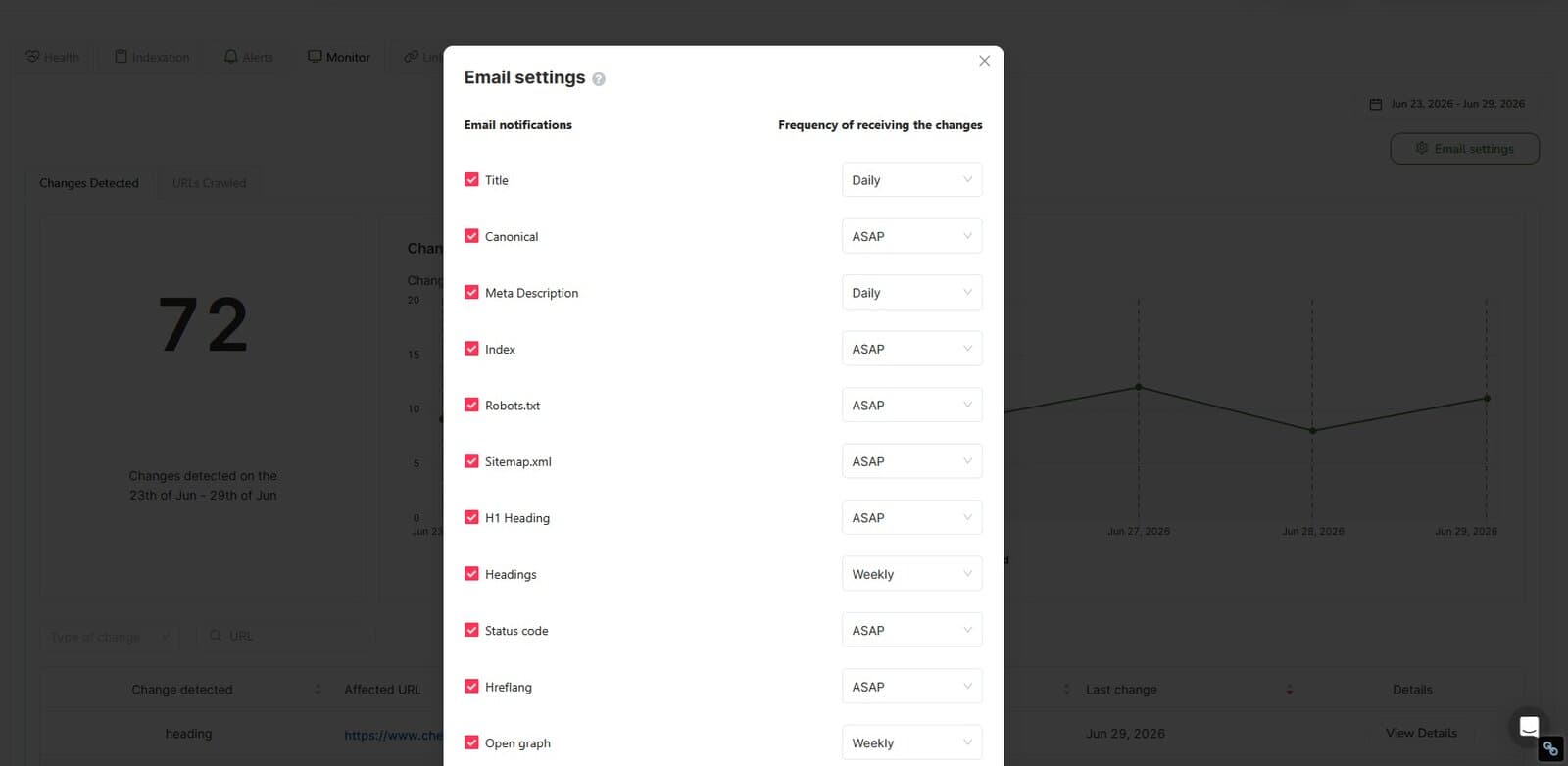
With SEOcrawl AI Monitor, you don't have to worry about something going wrong or missing it. You can be automatically notified of all important SEO changes, so you can take action and respond in time when needed.
Author: Ognian Mikov

SEO first came into my life in 2012, and I've been completely in love with it ever since. For me, it's more than just a job — it's both a passion and a hobby that keeps me motivated to learn and improve. Whether I'm researching new topics, creating content, or diving into technical fixes, I'm always fascinated by the vast world of digital marketing and the many opportunities to boost a website's performance.
In 2021, I joined SEO Alive and SEOcrawl AI — my first remote company — where I've been able to develop new skills and work on exciting projects. Most importantly, I've had the chance to meet and learn from incredible colleagues who have also become friends.
I hold a bachelor's degree in Marketing and a master's degree in PR & Advertising. In my free time, I enjoy spending time with my daughter, as well as playing and watching chess, football (Само Левски & Més que un club), and poker.
Discover more content about this author