9 Elements to Prepare an SEO Strategy
All digital businesses, whether they are e-commerce, service websites, corporate, etc., are currently experiencing a boom that is not going unnoticed by other companies that have not yet dared to join the digital transformation train
A fundamental part of this digital transformation for any company involves SEO, one of the strategies that provides the greatest medium and long-term returns. That's why, at SEOcrawl AI, we aim to help you define the SEO strategy for your company based on our technological background and previous experience with our clients.
Proper selection of project objectives and KPIs
The first step, before delving into more technical and complex aspects, is something as simple and yet as challenging as establishing our project’s main objectives. It is not the same to plan an SEO strategy for a multilingual e-commerce, as it is for a small local business, a service website, a brand visibility strategy, etc.
Before embarking on the following steps, it is necessary to clearly define both the ultimate goals we want to achieve and the key performance indicators (KPIs) that will determine the success or failure of our actions. Failing to do so will weigh us down throughout the project.
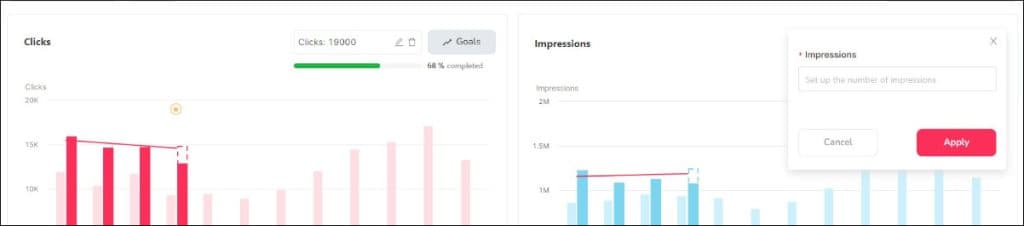
To that purpose, it is essential to meet the different stakeholders in the project and, with the advice of digital experts, outline the different scenarios and objectives to be achieved. It is also important to document this information in a reference file that is periodically reviewed to determine if these goals are still valid.
Roadmap: timeline of actions over time
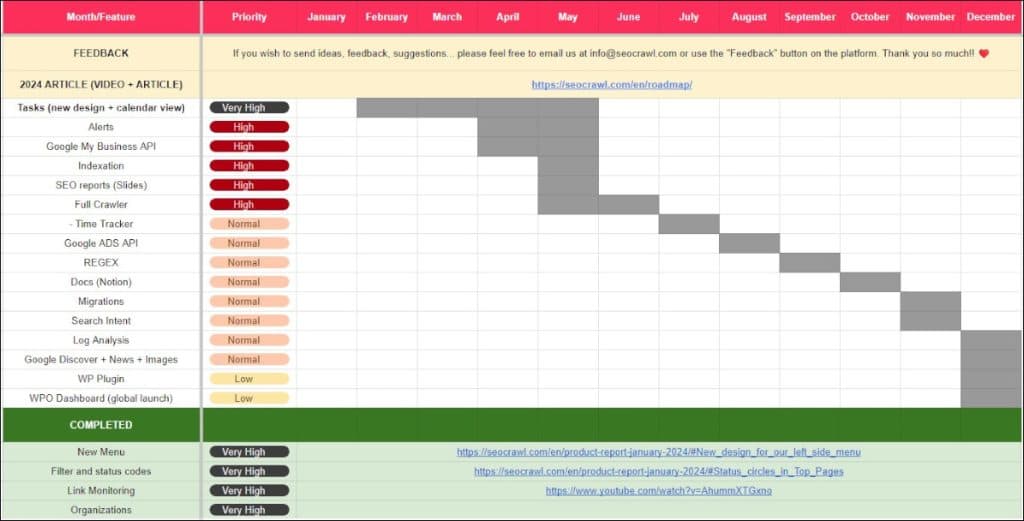
Once the objectives we will pursue are clear, we need to define the temporal context in which we will develop each of the actions in our strategy. As in the previous point, it is not unusual to overlook this step and "jump into the action” without clearly marked and defined phases and how they are interrelated within the project.
Having a clear roadmap is crucial, as many of the actions in it cannot start until others are finished and validated. Many can be worked on in parallel, some will require outsourcing, etc. All this needs to be well documented in a roadmap to adhere as closely as possible to it.
Benchmarking
We can define benchmarking as the process in which we will study, investigate, and gather information from our main competitors and leaders in our market niche to contextualize and relativize our position to them: the difficulties we may encounter, the weaknesses we can exploit, our main areas for improvement, etc.
This study will provide us with a deep understanding of the possibilities that a web positioning strategy will give us: if those competitors dominate the highest results in Google's SERPs, it is because of something they are doing really well, which is worth studying, analyzing, and improving.
Keyword Research and search intent
Now we are getting into more purely SEO material. The initial keyword research will help us in all phases of the digital project, as it will tell us which keywords are most relevant to our business, which ones will provide us with the highest ROI, which ones can be targeted in the short, medium, and long term, etc.
Over the years, Google has incorporated numerous changes into its algorithm in order to be able to "get into our minds" and know, with just a few words entered into its search engine, what the user is really interested in. Gone are the days of endless keyword studies, mass-extracted from analysis tools without context.
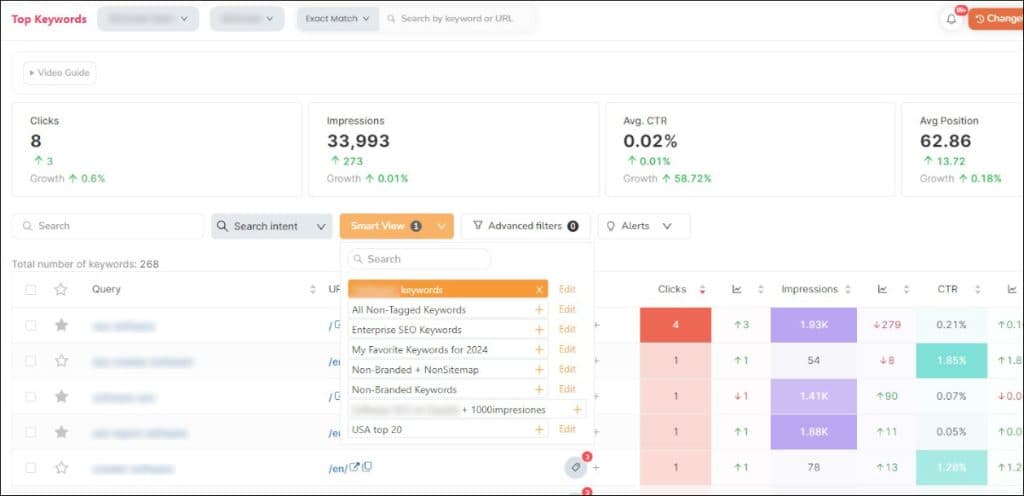
Today, the job of an SEO consultant is to be able to, based on these lists, extract the keywords that really add value to the content we are going to create and that most align with our website's search intent. This task is of paramount importance.
At SEOcrawl AI, we develop keyword research that we subsequently cluster to target them according to the phase of the project we are in and the type of user we want to attract (transactional keywords, informational, corporate, branded, etc.).
On-Page SEO Audit
At this point, we are at the stage of the strategy where we conduct an SEO audit to analyze your website’s current state, based on the results obtained in the previous four points. This allows us to determine our starting point, the main errors that need solving and the improvement points that need addressing.
This audit will allow us to document all the incidents and the necessary solutions for each of them so that our strategy starts in the best possible SEO conditions.
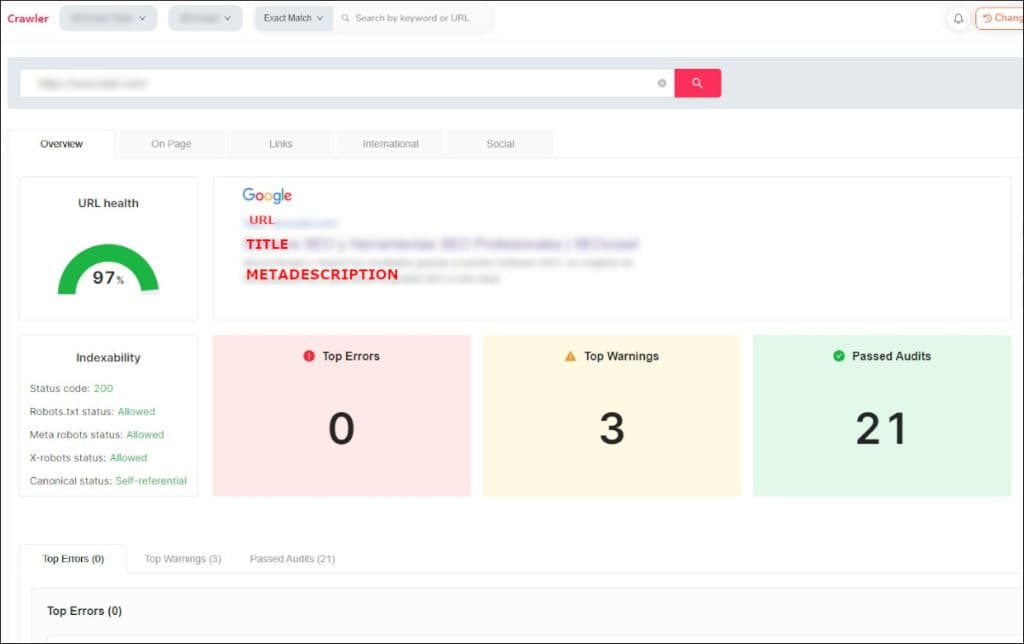
We will analyze in detail points such as tagging, architecture, URLs, loading speed, headers, authority, crawling, indexing, popularity and more, and thus obtain a thorough diagnosis of each of these aspects.
Web Architecture
As mentioned earlier, Google is becoming increasingly "intelligent" and knows how to offer the user what best suits their search needs. But, to achieve that ranking, its “spiders” need to enter each of the existing websites, crawl them, understand them, and then categorize them.
This is why we must provide our digital business with a web architecture that is:
-
clean
-
logical
-
organized
-
capable of being crawled and understood
And, most importantly: this is not only for Google but also (and above all) for users. Most websites today fail due to the poor construction of their web architecture.
Do you want to know how to create the best web architecture for your site? We have a complete post to tell you about it.
Content Marketing
Once the architecture is developed, we have to fill each part of it with content. This content, as we saw earlier, will have to follow a logic thinking about users, but taking into account the target keywords and the way of displaying and organizing them that Google considers optimal.
We must therefore develop our content plan and editorial calendar to meet the needs of our potential customers, adapting to new trends in information search methods (voice searches, etc.).
Business Intelligence
Implementing an SEO strategy without measuring each and every one of its points would leave us with a very biased view of the project.
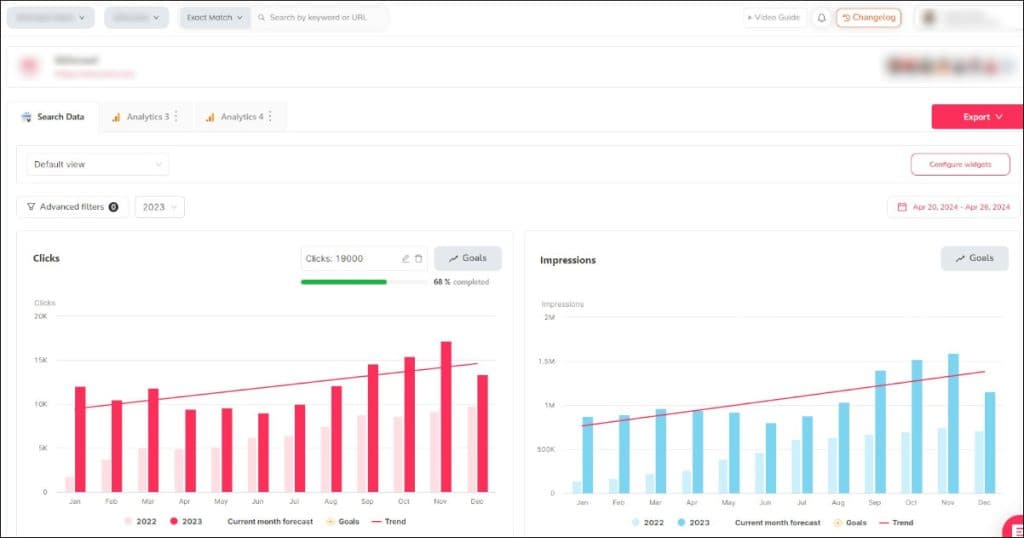
Web analytics is a fundamental step that is transversal to all business areas. Depending on the objectives and KPIs defined at the beginning, we will need more or less complex tools and processes, but they are always necessary to keep track of their performance.
Communication Channels
It is not an exclusive SEO point, but it is necessary, given the number of agents that may be working in parallel on our web positioning project. Establishing the channels and the people responsible for communication, periodicity, members, etc., is as necessary a task as the rest of the points, since, as we already mentioned in the roadmap, many of the phases will be related to each other and will require agile communication between clients, providers, agencies, experts, etc.
Tools like SEOcrawl AI's task manager, which allows categorizing each of the tasks, assigning importance and deadlines, changing the status and responsible party as it progresses, and communicating each status change to the entire team involved automatically, will be very useful to facilitate these communication management tasks.
By following these nine points and correctly developing each of them, you will be able to start developing a successful SEO strategy for your project.
Need help preparing your SEO strategy? Contact us! We're happy to help!
Author: David Kaufmann

I've spent the last 10+ years completely obsessed with SEO — and honestly, I wouldn't have it any other way.
My career hit a new level when I worked as a senior SEO specialist for Chess.com — one of the top 100 most visited websites on the entire internet. Operating at that scale, across millions of pages, dozens of languages, and one of the most competitive SERPs out there, taught me things no course or certification ever could. That experience changed my perspective on what great SEO really looks like — and it became the foundation for everything I've built since.
From that experience, I founded SEO Alive — an agency for brands that are serious about organic growth. We're not here to sell dashboards and monthly reports. We're here to build strategies that actually move the needle, combining the best of classical SEO with the exciting new world of Generative Engine Optimization (GEO) — making sure your brand shows up not just in Google's blue links, but inside the AI-generated answers that ChatGPT, Perplexity, and Google AI Overviews are delivering to millions of people every single day.
And because I couldn't find a tool that handled both of those worlds properly, I built one myself — SEOcrawl AI, an enterprise SEO intelligence platform that brings together rankings, technical audits, backlink monitoring, crawl health, and AI brand visibility tracking all in one place. It's the platform I always wished existed.
Discover more content about this author