How to Analyze the SEO Impact of the 2020 December Core Update
Social media had been fairly quiet on the Google algorithm update front for several months. To the surprise of the SEO world, just yesterday (December 3, 2020) the Google team dropped a bombshell on social media, announcing the rollout of a new global algorithm update with a name and everything (2020 December Core Update).
https://x.com/searchliaison/status/1334521448074006530
As documented in their official guide, Google recommends a series of best practices for dealing with these updates:
-
Focus on the content (original, well-documented information with references, without copying from other sources...)
-
Become a reference (there is no point in rewriting content from other websites. Google wants your content to be written by professionals, to provide trust and reliability in the data, and above all to contain no serious errors or falsehoods, and to make it easy to find who wrote the article and why that person has the authority to do so).
-
Present the content correctly (well adapted to mobile devices, free of grammatical errors, with good formatting...)
-
Differentiate yourself from the competition (there is no point in everyone doing the same thing. Google wants to display the best results, so you need to add value in your content).
-
Focus on the magic acronym E.A.T (Expertise, Authoritativeness and Trustworthiness). Once you prove that you are an authority in your field, both Google and users will start valuing your content more highly and therefore reward you with greater visibility and traffic.
That said, the goal of this article is not to analyze these guidelines but to show you how you can analyze the impact of an algorithm update on your website so you can react in time.
Below you will find the different tools we make available to you:
SEO Visibility Index
The SEO visibility index is probably the most important feature for quickly detecting a shift in trend.
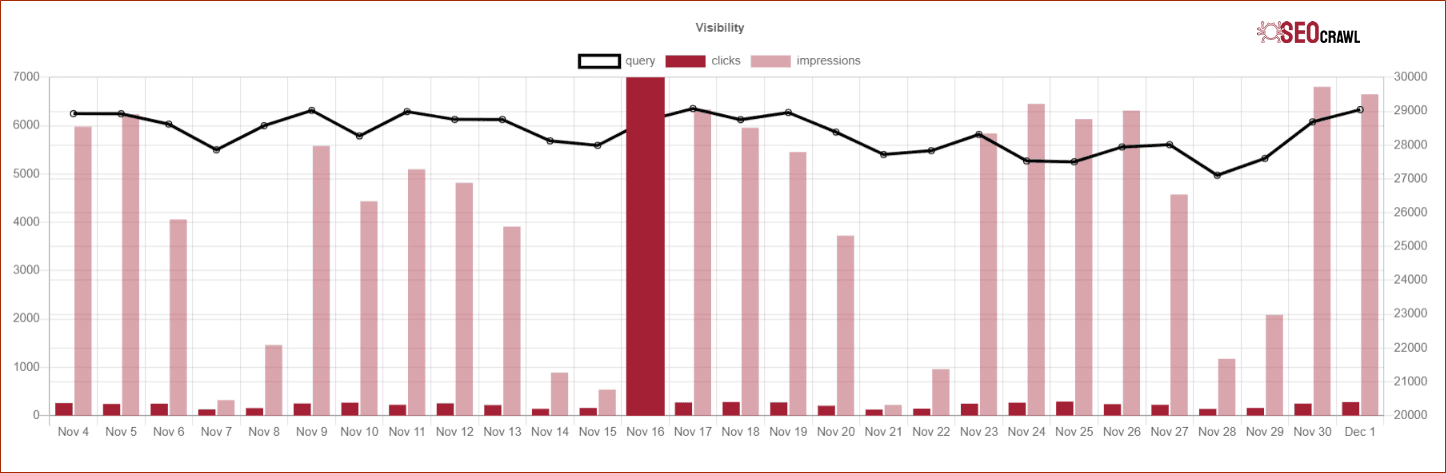
With it, we can detect the number of ranking keywords with at least one impression and correlate this value with the total number of clicks and impressions.
IMPORTANT: You already know you can add your own annotations in SEOcrawl AI to monitor changes. But we want to remind you that we also add ALL Google algorithm updates and this annotation is automatically applied to all your projects and all charts.
So... how can we analyze this data?
What to do if I detect a drop in the number of keywords?
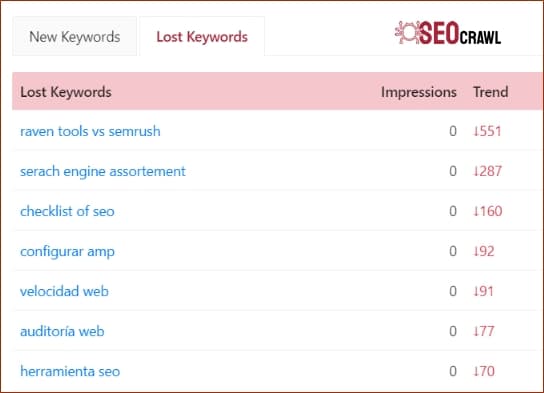
If we detect a drop in the number of keywords with at least one impression, we should go to the new and lost keywords report. This way we can see which keywords used to have visibility and impressions and no longer do, as shown in the screenshot below.
What to do if I detect a drop in the number of clicks or impressions?
If instead of detecting a drop in keyword visibility we are directly seeing a decline in the number of clicks or impressions, then we should go to the "Top Clicks" and "Top Impressions" report. This allows us to detect changes in the number of clicks and see which keywords and URLs have experienced the biggest variations.
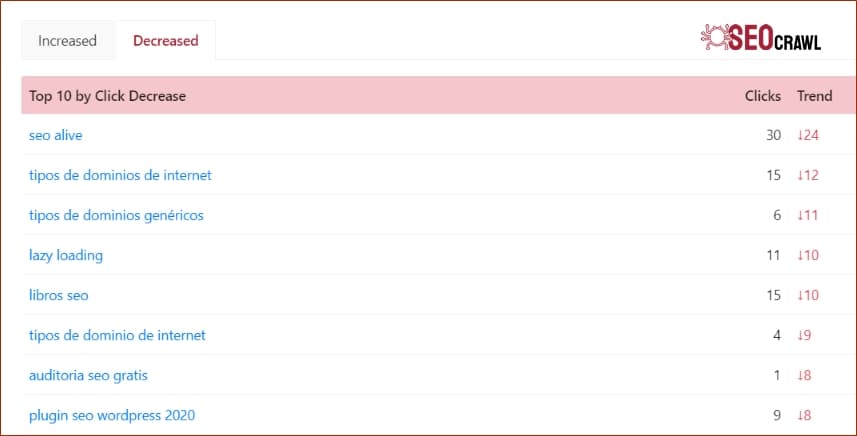
Once identified, we can see whether this drop was caused by:
-
CTR
-
Average position
And act accordingly.
Now it's your turn! Add your project and analyze the impact this algorithm update has had on your results. And if you have any questions, we're here and happy to help :)
Author: David Kaufmann

I've spent the last 10+ years completely obsessed with SEO — and honestly, I wouldn't have it any other way.
My career hit a new level when I worked as a senior SEO specialist for Chess.com — one of the top 100 most visited websites on the entire internet. Operating at that scale, across millions of pages, dozens of languages, and one of the most competitive SERPs out there, taught me things no course or certification ever could. That experience changed my perspective on what great SEO really looks like — and it became the foundation for everything I've built since.
From that experience, I founded SEO Alive — an agency for brands that are serious about organic growth. We're not here to sell dashboards and monthly reports. We're here to build strategies that actually move the needle, combining the best of classical SEO with the exciting new world of Generative Engine Optimization (GEO) — making sure your brand shows up not just in Google's blue links, but inside the AI-generated answers that ChatGPT, Perplexity, and Google AI Overviews are delivering to millions of people every single day.
And because I couldn't find a tool that handled both of those worlds properly, I built one myself — SEOcrawl AI, an enterprise SEO intelligence platform that brings together rankings, technical audits, backlink monitoring, crawl health, and AI brand visibility tracking all in one place. It's the platform I always wished existed.
Discover more content about this author