SEO Title Tag: What It Is and How to Optimize It
One of the most important SEO elements when it comes to ranking organically is the SEO title. Knowing how to write a good title that both delivers a great user experience and wins Google over isn't complex, but there are certain specifications you need to keep in mind to make this marriage work.
Pay attention to the tips we present below, as they will surely help you build the perfect SEO title:
What's New
[August 24, 2021] Google launches an update regarding how it generates titles for web pages.
The search engine has indicated that, from this moment on, page titles will no longer be displayed exclusively based on the SEO title we have defined on the page, nor will they change based on the searched keyword. Google's search team has concluded that their title generation system is capable of accurately describing the content of a document or URL without necessarily showing exactly what we have marked for the search engine.
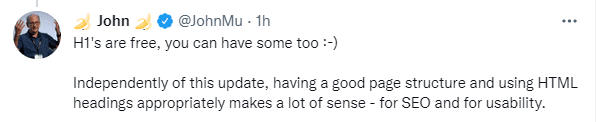
Although SEO teams have traditionally told the bot what the website title should be via the "title" tag, Google has reserved the right to replace it with a more relevant one when deemed appropriate. Going forward, Google has indicated that it will take html tags in the content much more into account, especially the H1 or headline, although it may also look at any other content within the page, or even the anchor text of links pointing to it.
Why Google ignores html tags
Sometimes, it can be frustrating to optimize a page's meta tags and watch Google decide to completely ignore them. Why does that happen? The search engine's own official documentation gives us the reasons:
-
The title tag is too long.
-
It has been over-optimized with an excess of keywords.
-
The title is empty or its content consists of generic words, such as "Home".
However, the search engine emphasizes that good practices when writing a page's title will still be positive, since this is the first source they will take into account when generating it.
Want a refresher? Keep reading! ↓
What is the SEO title?
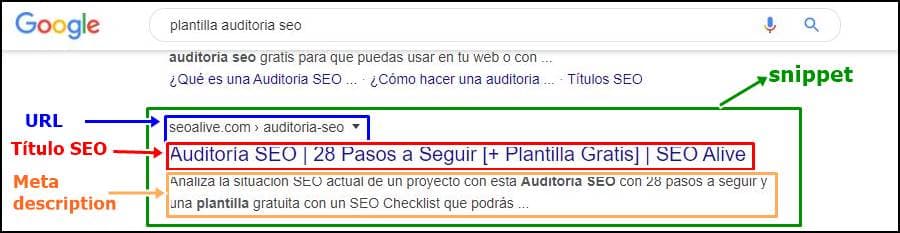
First of all, let's start at the beginning. What is the SEO title? For those who are not yet familiar with what the title tag is, we'll say it's a tag comprising a word or phrase whose purpose is to be displayed in the search results of a search engine's index. That is, in addition to showing a summary of the content in a few words, these are carefully selected so that Google better understands the meaning of its content and classifies it according to that semantics.
Why is it important to optimize the "title tag" element?
To understand why it is so necessary to optimize a title for SEO, we must first explain what a meta tag in SEO is. Without getting into secondary and somewhat more complex technicalities, we'll tell you to keep this in mind: these are SEO tags that appear in the HTML of a URL, which we will use to achieve greater visibility in search results.
Thanks to their optimization, we can help bots better interpret the semantics of each page and improve the on-page SEO of our web projects.
Among the main tags is the <title> or SEO title. And in this sense, it is important to optimize it for two reasons:
-
Google takes the title tag into account as another factor to interpret, control, and rank a page**.** That's why optimizing it will help us gain more relevance with this or any other search engine and will favor us when obtaining a better organic ranking.
-
It helps increase CTR and attract more visits. Including the title tag or SEO title also helps the user understand what content they will find when clicking behind a title seen in the search results. In itself, it incentivizes more users to enter a specific page. So failing to implement this tag or not writing it uniquely should never be an option.
Difference between the SEO title and H1 or article headline
Many profiles just starting out as SEO consultants, or people outside this branch of digital marketing, believe they are the same thing. But they're not! While the title tag is oriented to appear in the search results, the H1 is reserved for labeling the headline of the content shown on the page itself.
As John Mueller of Google mentioned,
"...an H1 heading is not essential for labeling a headline and ranking well."
However, we still believe it is advisable to do so, as this way we will send another signal for Google to understand what our text is about and be more competitive in the SERPs.
If we don't include the SEO title on our page, Google's bot will have a much harder time knowing what the content of it is about than if, on the contrary, we skip the H1. Still, despite the fact that it understands the semantics of our content better and better, it's clear that the easier we make it, the more unambiguous interpretations it will make, and therefore, classify better.
How to create SEO titles to rank URLs?
When writing SEO titles, it's not enough to be creative to capture your users' attention. Focusing on providing a good experience should be our central focus (since that's what Google focuses on, and we want to appeal to this meta-search engine). But we must do an extra exercise to try to optimize them one hundred percent for Google.
Below we leave you a list of ideas to improve titles at the SEO level. If, in addition, you work with plugins like Yoast or Rank Math, you'll see how building them well is much simpler thanks to the suggestions each tool gives you:
-
Implement the main keyword as far to the left as possible.
-
Create a unique SEO title for each URL: they must be unique, different, for each and every one of the pages we consider to have SEO value.
-
Write 'title' tags always thinking of the users. All of the above is great, but we must think above all of the reader. Try to include a single keyword for a single page as far to the left as possible in a natural way.
-
Analyze whether it's worth implementing special characters and SEO emojis to increase CTR. In the vast majority of cases, competitiveness in search results is such that trying to get the user's attention means also implementing unusual characters and emojis.
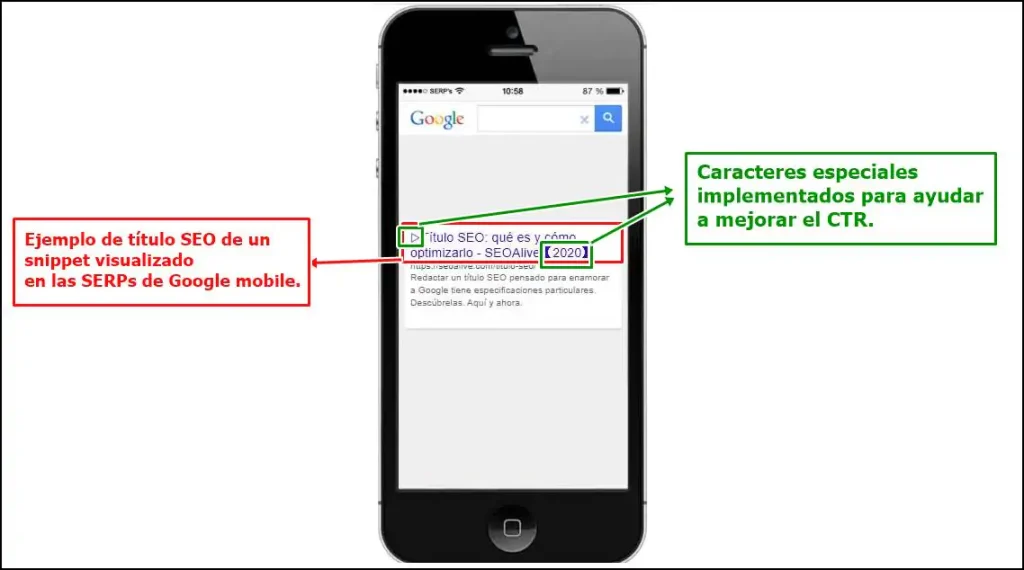
Fictitious simulation of an SEO Title with special characters to improve CTR. Mobile view.
- This recommendation is not always applicable. Like everything in SEO, it depends. Check the SERPs for the keyword you want to rank for, and if you see that the search results don't look like 'a carnival of lights' from so many emojis and special characters, take advantage and do it yourself. You'll stand out from all the others and you can take the click from your competitors, whether they are positioned better or worse within the same results page.
Note from David Kaufmann (CEO of SEOcrawl AI): From our beginnings we have preferred not to implement any type of emoticon or strange characters in our titles or descriptions. We are surely losing some visits because of this, but personally it seems unprofessional to me, we pollute the search results, and we are always on the edge of trying to force the user. For our part, we prefer to follow a classic approach and win the user over in the traditional way, letting the content convince them to visit our result and come back!
-
Use numbers, questions, or catchy phrases. As in the previous tip, the idea is to take that coveted click organically. Another way to try to get it is by using headlines that summarize content in list format and that include the numbered sections to be presented. Also, if you work your SEO title to be creative and encourage reading, all the better.
-
Make the most of the available length. Unlike the headline that is displayed at the beginning of content within a page, the title tag does not allow too many characters. Google displays between 50-70 characters. Beyond that, it won't collect more words and will instead show ellipsis (...). To avoid reaching this situation and wasting the opportunity for users to read the SEO title completely to convince them to click, you can use tools such as online SEO character counters or, if you use WP, directly with the SEO plugins. In addition, you will be able to get an idea of how both the title, URL, and meta-description will look in the SERPs.
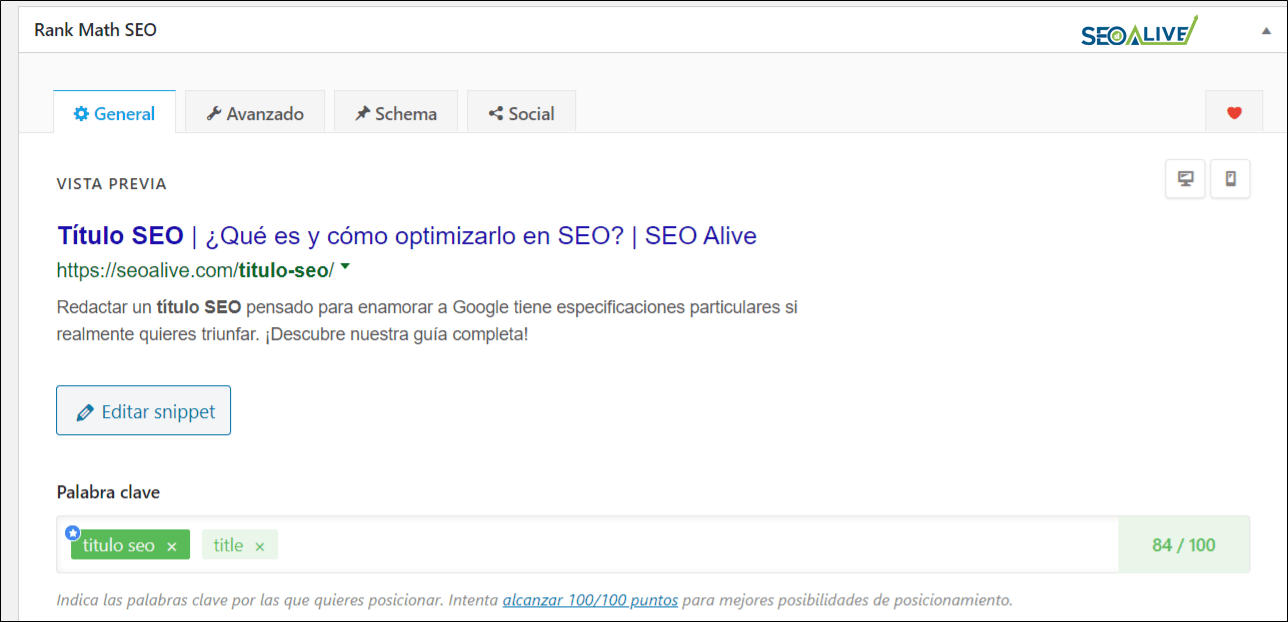
Can we change the SEO title once it's published?
Whether we want to avoid cannibalization problems, because we have detected spelling errors, or because when updating the content of a URL the SEO title no longer makes sense (for example), there is the possibility that we may have to edit it.
In these cases, if we notice that they can be improved and optimized better, not only can we change the phrase and even the keyword of the title, but we should do so.
In a page's life, this is very normal; however, it must be done after a good prior analysis that ensures it is better to make these changes for our organic positioning. Otherwise, if we make a mistake, we could cause Google to push our page to lower positions and see our organic traffic suffer.
And you, what other tactics do you use to optimize a title at the SEO level? Tell us, we'll be happy to hear your opinion!
Author: David Kaufmann

I've spent the last 10+ years completely obsessed with SEO — and honestly, I wouldn't have it any other way.
My career hit a new level when I worked as a senior SEO specialist for Chess.com — one of the top 100 most visited websites on the entire internet. Operating at that scale, across millions of pages, dozens of languages, and one of the most competitive SERPs out there, taught me things no course or certification ever could. That experience changed my perspective on what great SEO really looks like — and it became the foundation for everything I've built since.
From that experience, I founded SEO Alive — an agency for brands that are serious about organic growth. We're not here to sell dashboards and monthly reports. We're here to build strategies that actually move the needle, combining the best of classical SEO with the exciting new world of Generative Engine Optimization (GEO) — making sure your brand shows up not just in Google's blue links, but inside the AI-generated answers that ChatGPT, Perplexity, and Google AI Overviews are delivering to millions of people every single day.
And because I couldn't find a tool that handled both of those worlds properly, I built one myself — SEOcrawl AI, an enterprise SEO intelligence platform that brings together rankings, technical audits, backlink monitoring, crawl health, and AI brand visibility tracking all in one place. It's the platform I always wished existed.
Discover more content about this author
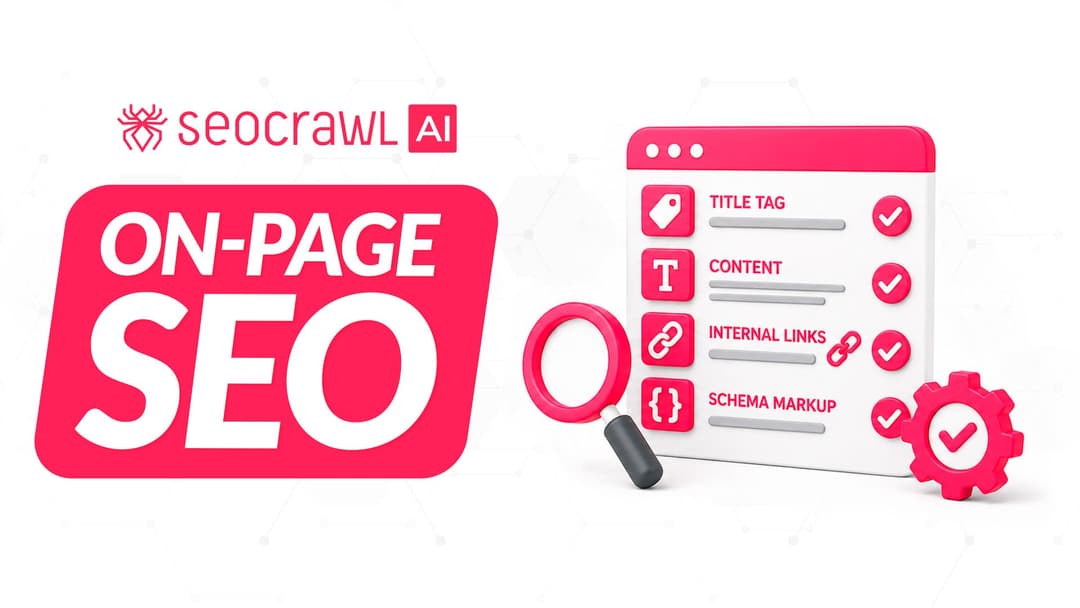
On-page SEO is everything you control on a page: content, title, meta description, headings, URL, images and internal links. Here is a checklist element by element, an audit process and what changes with AI Overviews and AI Mode.