SEO vs SEM: Differences and When to Use Each
A question pops into our head and, as on so many other occasions, we turn to the search engine — that loyal "friend" who's always ready to answer our questions, help us learn, and show us millions of products and services from companies all over the world. We've always assumed that the top results were the ones that bet on quality. However, there are some results that appear above them.
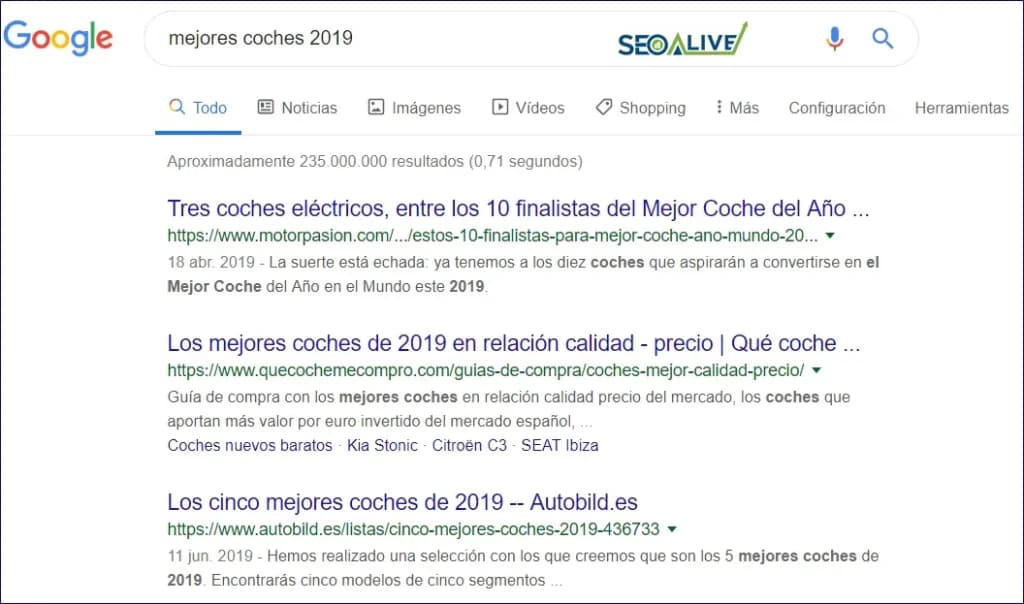
Those pages come from Google Ads — in other words, companies paying Google to appear at the very top. This strategy is called SEM (Search Engine Marketing). Right below those paid results, the organic results begin, the product of ongoing search engine optimization work, better known as SEO (Search Engine Optimization).
In this article, we'll go over the definitions, the similarities and, above all, the differences between these two major branches of digital marketing.
1) What is SEO?
SEO (Search Engine Optimization), or web positioning, refers to the set of practices and optimizations carried out on a website with the goal of appearing at the top of the search engines and winning customers for a business or service. In other words, we could define it as the process of continuous improvement aimed at always trying to satisfy a user's search with the best possible result.
2) What is SEM?
SEM (Search Engine Marketing) is the marketing discipline responsible for paid user acquisition — in other words, it happens when a company pays to place its website in the top results. Google, the most important search engine in the world, currently makes its living from this and is posting extraordinary results year after year.
To put this into perspective, just take a look at Alphabet's (Google's parent company) revenue in 2018, which reached 137 billion euros — 23% more than the previous year.
Basically, a company bids on a series of keywords, and then Google, through its ad management platform, places those results at the very top so users discover them and the tech giant's coffers keep growing.
The big problem with this system is that it contradicts Google's own quality premise. Almost any company can bid and show up in the top results, so the chance that a user won't find what they're looking for on that site — due to lack of quality or any other reason — is fairly high. However, Google doesn't take those factors into account and charges per click, which makes the investment quite risky unless it's paired with proper measurement.
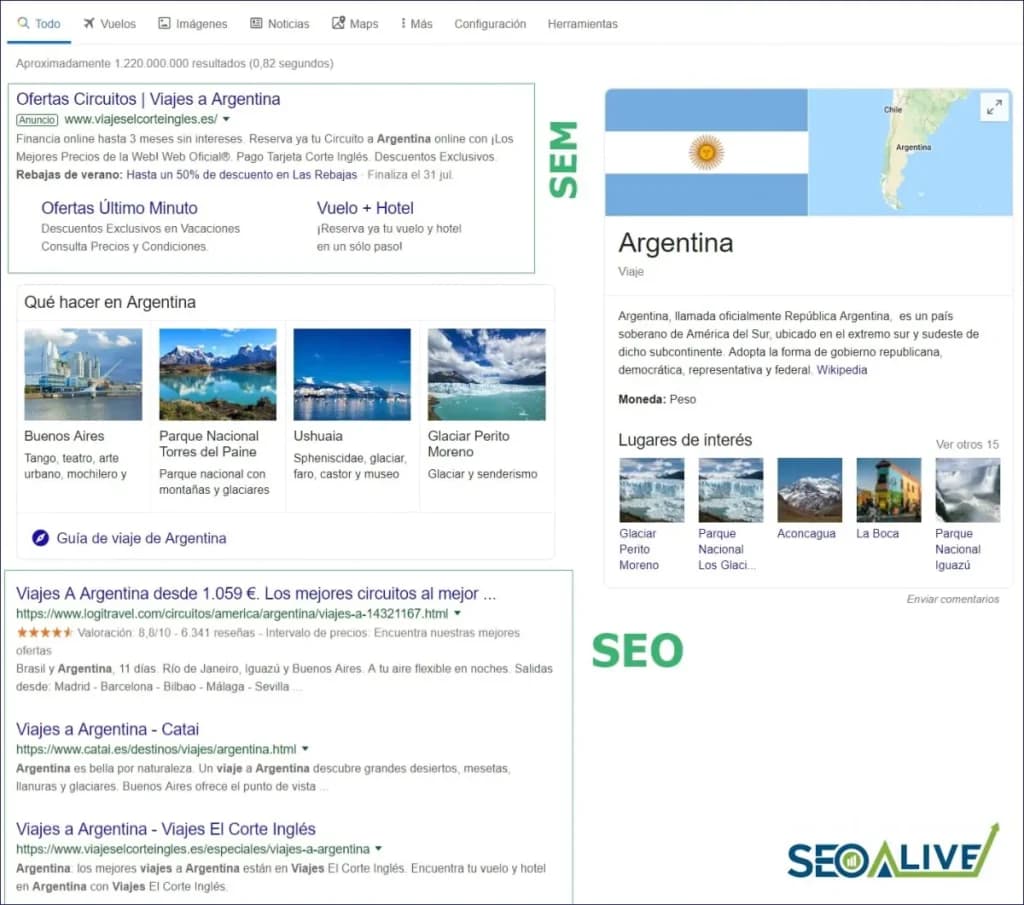
In the example above, we searched "trips to Argentina" from Desktop-Spain. We can see that the first result is an ad from El Corte Inglés. As you've probably noticed, the cue that tells you a result is an ad and not an organic listing is getting more subtle and smaller every year. Questionable, right?
After the paid result, Google shows its own guides built by analyzing other sites and resources and, finally, much further down, we find the first organic results. It's striking how much effort a user has to make to reach the top organic listings, which drastically lowers the click-through rate (CTR) and, therefore, the success of those websites.
3) Differences between SEO and SEM
Even though the differences between SEO and SEM may seem clear and obvious after the previous explanation, there are a few areas where the impact is much more noticeable and that we absolutely need to keep in mind when planning our marketing strategies.
3.1) Cost and Measuring Results
While the cost of a SEM campaign can be accurately tracked through clicks, impressions or any other method, the cost of an SEO strategy is much harder to measure because you can't easily draw a clean cost-to-result attribution. When building SEO strategies, you're usually thinking far more about the long term, about proper site structure and techniques that will help the business down the road. However, if someone asks us to put a number on that, it's genuinely hard.
What value do you assign to keyword research and reworking all of a site's metadata? Hours of the SEO specialist? And how do you measure the return? Keep in mind that those changes, if done well, will keep delivering results over the coming months and years.

Without a doubt, it's not an easy task, which is why many small businesses or companies with limited resources decide to bet on a SEM strategy that lets them quickly quantify the investment and results, rather than on a medium- to long-term SEO strategy.
Smart strategy or short-term win at a long-term cost? What do you think?
3.2) Speed
Closely tied to what we were discussing in the cost analysis of SEO and SEM campaigns, speed is another key factor when it comes to telling these strategies apart. With a SEM campaign on AdWords or any other paid platform, you can get customers almost immediately, which usually isn't the case with SEO, where results can take days, weeks or months. That doesn't mean one is better than the other. It simply means we have to factor this in when planning our action calendar, investments, and so on.
Usually, what companies tend to do — and what we recommend from SEOcrawl AI — is to combine both actions. Maintain a SEM budget that guarantees new customer acquisition while the SEO strategy is being built in depth. Ideally, in a few months or years, we'll be able to cut that SEM budget going to Google altogether, because we'll have managed to position our pages in the top results.
Don't forget that the savings from ranking a page in the top positions for a keyword with a €2-3 bid can be huge. Just imagine a business bidding on tens or hundreds of keywords…
3.3) CTR
Although we already introduced this concept at the beginning of the article, it's worth highlighting again to see the impact ads have on click distribution in the search results. While organic listings can capture 50-60% of clicks if they rank in the top positions, when there's a paid result, most of the clicks will go to it.
It's true that users are increasingly learning to tell paid results apart from quality organic ones. However, Google seems to be making it harder and harder to tell them apart at a glance, especially on mobile devices.
4) Conclusions
The most important takeaway from evaluating SEO and SEM strategies is knowing how to identify the needs of each business at each specific moment. A neighborhood hair salon that needs more customers to keep growing won't follow the same strategy as an e-commerce site or a travel agency planning its 5-year growth roadmap.
"Understanding the client's needs and knowing how they'll benefit most will be key throughout this process."
At SEOcrawl AI, we're big fans of a hybrid strategy, in which the client has a recurring flow of customers through SEM campaigns — especially for the most important keywords for the business — while we build a solid SEO strategy that drives the business to success in the medium to long term.
The final and most important idea, as we mentioned earlier, is to redirect the Google ads budget into our own team and content. If, instead of spending €100 on ads, we can put that budget toward creating an article or any other promotional asset, we'll not only be investing in our own product instead of handing the money to Google, but we'll also be building long-term success — because that article, if done well, will bring us traffic months and years later.
Still have questions? Disagree with any of our points? We'd really appreciate it if you could leave a comment to enrich the debate for everyone. Thanks a lot!
Author: David Kaufmann

I've spent the last 10+ years completely obsessed with SEO — and honestly, I wouldn't have it any other way.
My career hit a new level when I worked as a senior SEO specialist for Chess.com — one of the top 100 most visited websites on the entire internet. Operating at that scale, across millions of pages, dozens of languages, and one of the most competitive SERPs out there, taught me things no course or certification ever could. That experience changed my perspective on what great SEO really looks like — and it became the foundation for everything I've built since.
From that experience, I founded SEO Alive — an agency for brands that are serious about organic growth. We're not here to sell dashboards and monthly reports. We're here to build strategies that actually move the needle, combining the best of classical SEO with the exciting new world of Generative Engine Optimization (GEO) — making sure your brand shows up not just in Google's blue links, but inside the AI-generated answers that ChatGPT, Perplexity, and Google AI Overviews are delivering to millions of people every single day.
And because I couldn't find a tool that handled both of those worlds properly, I built one myself — SEOcrawl AI, an enterprise SEO intelligence platform that brings together rankings, technical audits, backlink monitoring, crawl health, and AI brand visibility tracking all in one place. It's the platform I always wished existed.
Discover more content about this author
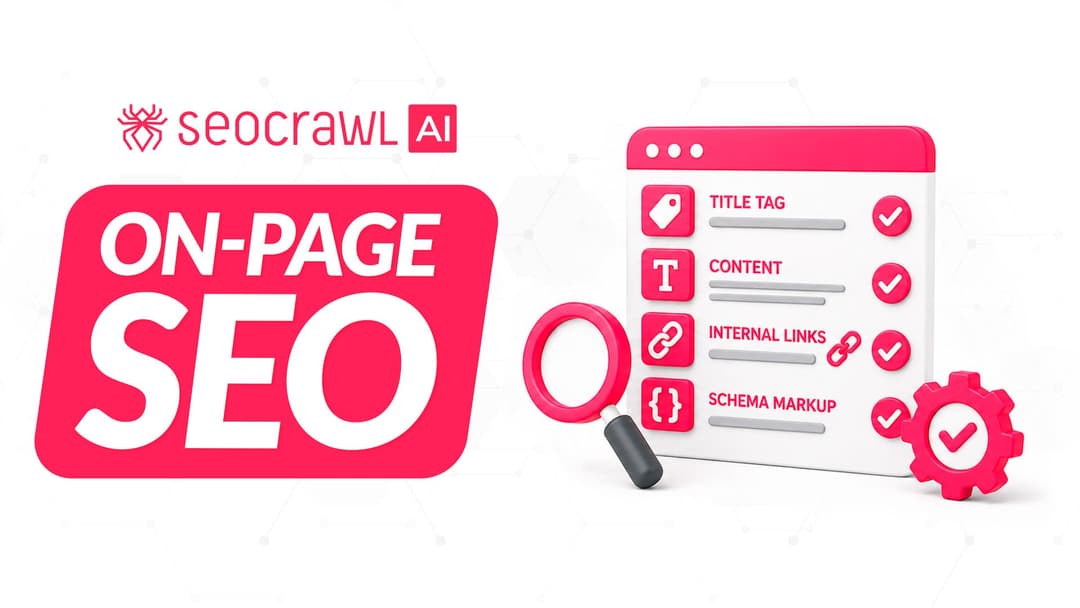
On-page SEO is everything you control on a page: content, title, meta description, headings, URL, images and internal links. Here is a checklist element by element, an audit process and what changes with AI Overviews and AI Mode.