15 Strategies for Link Baiting
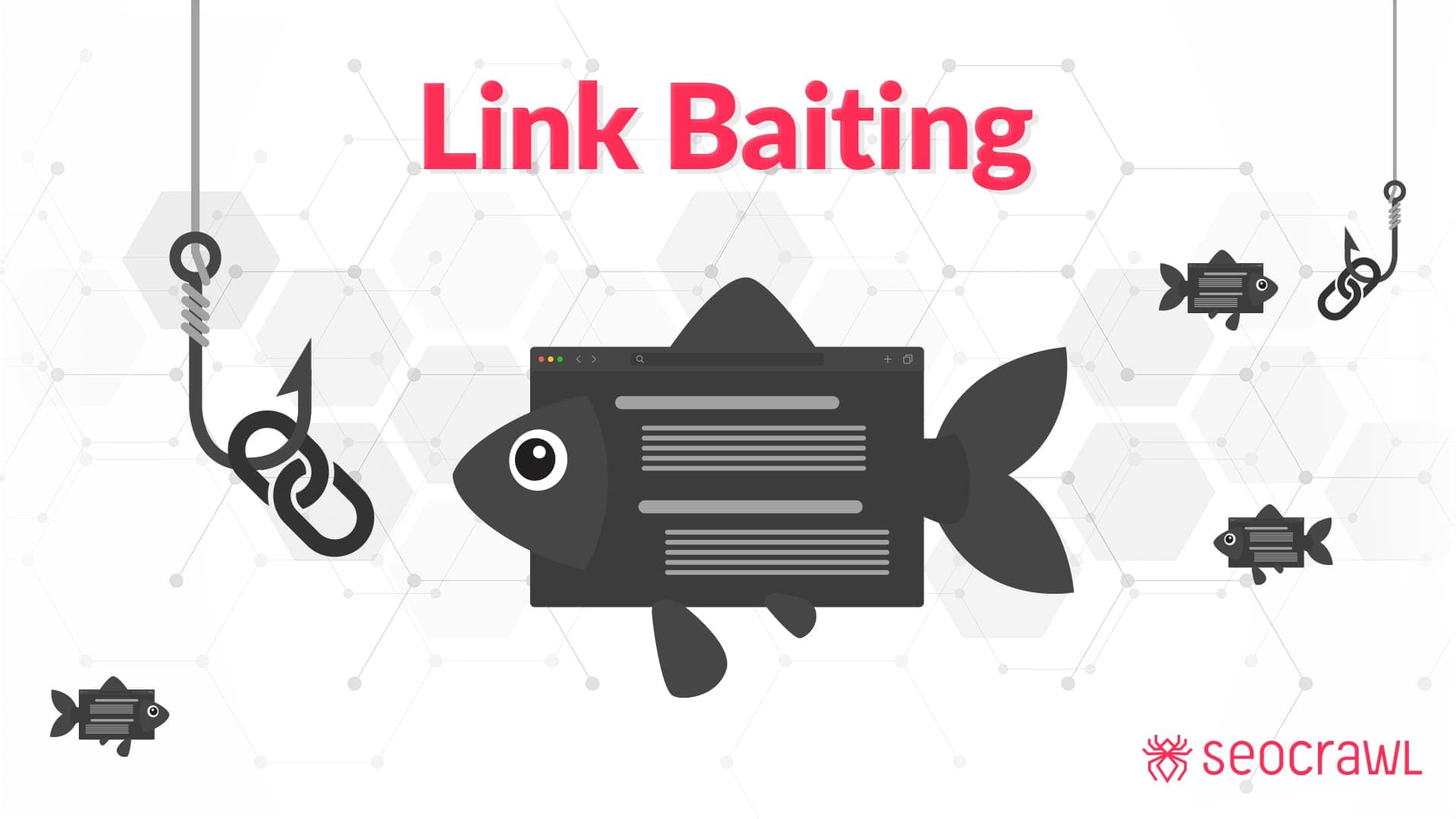
Link baiting is an SEO technique designed to earn external links naturally by creating high-quality content that attracts users' attention, leading them to share that content and/or link to it from their own websites spontaneously.
The difference between link baiting and link building lies precisely in this last concept: while link building involves a PUSH action by the authors of a website to get other external pages to link to them, link baiting is based on the virality of content: generating information or presenting highly creative and interesting ideas will make website owners want to link to that content or share it on social media as a voluntary and natural action.
What is the definition of link baiting?
The definition of link baiting, translated literally, would be something like "creating bait for links." This already gives us an idea of the context of link building SEO techniques (translated as "link creation") that we can find. The fact is that link building and link baiting techniques are closely related. The first is the general discipline and the second is a specific way of doing link building. We hope this definition of link baiting has sparked your interest in this type of strategy, so keep reading to learn more about them.
What is link baiting really?
Link baiting is a way of doing link building through content creation: this way we manage to build a natural link profile "for free" and "passively." In other words, we don't pay to get links on other websites and we don't make a constant effort to obtain them. Link baiting is based on creating content of such quality that because of its relevance it gets shared naturally by other websites.
Examples of link baiting include:
Quality articles
Expert and educational articles
Contests
Reusable content
Affiliate links
Interviews
Industry studies and reports
Events, webinars, or streams
Experiments
Step-by-step guides and tutorials
Online tools
Infographics
Templates
Awards and recognitions
Scoops
Did any of these link baiting examples catch your eye? In this very article we give you tips to carry out all these link building and link baiting strategies. Keep reading!
What link baiting is not
We've already explained what link baiting is and its relationship with link building, but now it's time for you to know what link baiting is not. This will keep your organic link strategy from getting muddled. That way you'll be able to segment each of the strategies and draw conclusions about which of all the link building and link baiting strategies brings you the best results.
Examples of what link baiting is NOT
If you pay to get your website or content published on other websites.
If you put too much effort into organically promoting your content.
If you exchange links or content between your website and others.
If you continuously advertise your content through paid media.
The key to link baiting is that your content has to be so good that it gets shared on its own from other pages. The moment we make an excessive or even paid effort to get that content seen and shared, it stops being link baiting.
How can we encourage link baiting?
We've already talked about what link baiting is and is not, about the different ways we can carry it out, and we've emphasized that it must be of high quality. But how do we achieve that quality? What characteristics should it have to encourage our content to be shared? Here's a summary.
Link baiting content should have one of these characteristics:
Novel
Controversial
Expert
Free
Ephemeral
Exclusive
Practical
If your content has any of these characteristics, you'll be encouraging other internet users to share it on their websites. It can have one, two, or even three of these characteristics at once. For example, a "Free SEO course available for only one week" is expert, free, and ephemeral content. Are you starting to grasp the concept behind link building strategies? Great! Because now we're going to dive deep into each of them.
15 link building and link baiting strategies
The time has come! It's time to give concrete examples of link baiting strategies so that you can start implementing them once you finish this article.
Once you've read them all, if you're determined to put one into action but don't know where to start, we offer a free SEO audit of your website. And if you still have questions, reach out via LinkedIn and Twitter and we'll answer you.
1. Quality articles
"Content is king" is a phrase you've probably heard hundreds of times. But that doesn't make it any less true, and the fact is that quality (along with good SEO) is rewarded and recognized. Having a really good article ranking at the top of search results will ensure that many people see it when they need more references on that topic to create their own content, making it one of the most passive forms of link baiting.
2. Expert and educational articles
Another good way to do link baiting is to generate content that deals with a highly specialized topic in an educational way. This will allow you to reach niches and communities where this type of valuable content is shared among the community. Analyses or case studies on a specific topic are very good examples of this type of SEO content oriented towards link baiting.

3. Contests
Everyone signs up for a good contest! And if it's good enough, you'll not only get a lot of people to sign up, but the most supportive ones will share it on websites, blogs, and forums of all kinds so that it reaches more people. If you want to take your link baiting strategy to the next level, require the contest to be linked from different websites and social networks to get more entries, multiplying the effect.
4. Reusable content
What is reusable content? Well, it's content so useful that you'll always want to have it on hand and even include it in all kinds of articles and guides for its day-to-day usefulness. Examples of this type of link baiting? A list of keyboard shortcuts, computer codes, codes and their meanings, emoji lists, etc. The goal is to create content much less complex than a tool, but useful enough to use day-to-day and be shared as if it were an online tool.
5. Affiliate links
If you're an ecommerce, this link baiting technique will interest you, and although this strategy is on the edge of what we might consider link baiting, it's worth addressing so you know about it. The goal is nothing more than rewarding those users who include certain links on their websites every time you make a sale through those links. This is much more common than you might think and is used by websites like Amazon and Booking.
6. Interviews
Another very good way to generate buzz, while producing educational content from experts, is interviews. With an interview with a renowned professional you'll get not only quality content, but even some exclusives and, above all, quotes that can be used by third parties citing your interview.
7. Industry studies and reports
These are some of the most complex content types oriented towards link baiting and link building to produce, since studies or reports have to be as rigorous as possible to be considered quality content. But the effort is worth it, because if we accompany a good report with press releases, we'll get links to the report (a .pdf that also contains links and transmits authority) and also to the study authors (you).
8. Events, webinars, or streams
Another good way to capture attention and generate buzz is by holding events, whether in person or online. Many pages echo them, and if you record and share the links, you can generate press releases later with the highlighted results.
9. Deals
Believe it or not, there are many websites that crawl every ecommerce in search of deals to republish them later on their forums and apps (Chollómetro is an example). Identify these pages and make sure they crawl all your deals — with a bit of luck you'll get your best deals included in their news feeds and daily roundups.
10. Step-by-step guides and tutorials
This is one of the most classic link baiting strategies, but one that works best. Tutorials or step-by-step guides that are kept updated over time end up being heavily linked thanks to how practical they are. It's not hard to think of the many times when, as experts, we're developing a topic and, rather than stopping to detail it, we link to a good tutorial to save time.
11. Online tools
This is by far the most complex SEO link baiting strategy, because developing a publicly accessible tool and putting it on a website isn't easy. There are dozens of examples, such as a UTM generator for analytics, a net salary calculator, or a snippet previewer.
12. Infographics
Infographics are another classic type of link baiting content. With great appeal in terms of design and the way information is presented, they're widely shared across the Internet. In this case it's important to encourage sharing, but always inviting people to leave a mention to your website. The best thing is to directly include the attribution text indicated below the infographic.
13. Templates
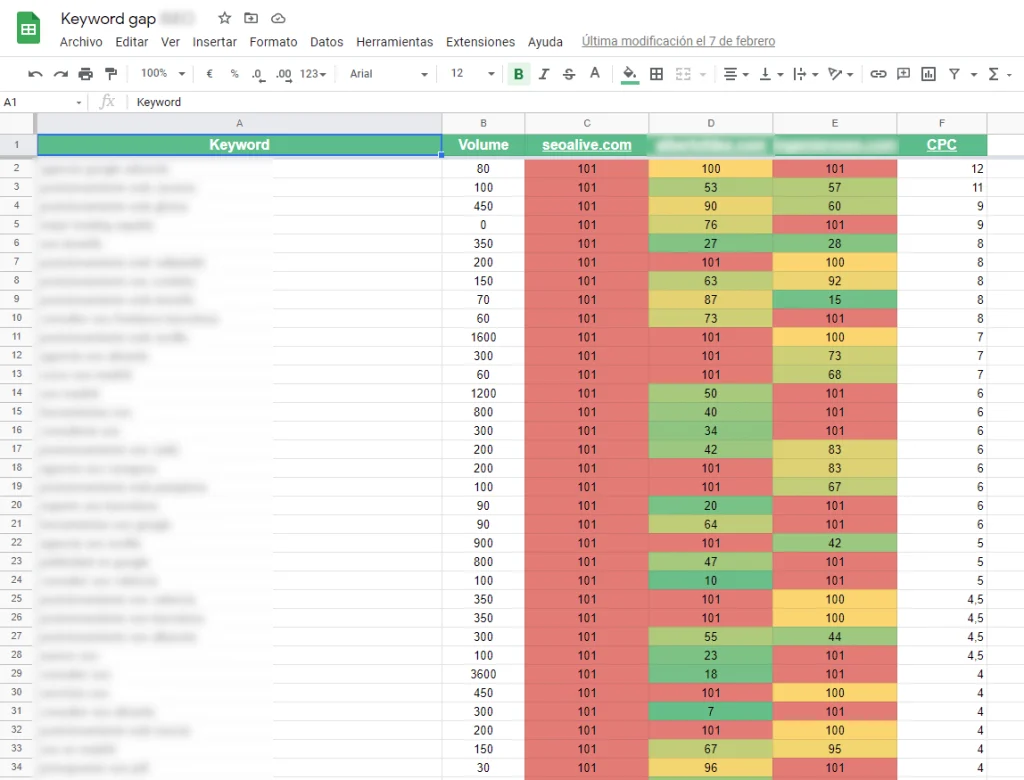
The middle ground between online tools, reusable content, and expert content is templates. There are all kinds, from Excels with formulas, to checklists, dashboards, or templates that help design strategies. If you create a good template and make it available on the Internet, you'll see how you start gradually earning links passively.
14. Awards and recognitions
Halfway between a contest and a report, the goal is to recognize the most positive aspects of whatever you want, from products to companies. For example, you can establish your own criteria and offer content related to "Recognition for the Best Beer TV Ad" or "The Best SEO Agencies in Spain" (we're one of them ;)). This way you'll not only attract the attention of the media, but also of the entities you name.
15. Scoops
We close the list of link baiting and link building strategies with an idea as simple as it is uncommon. The goal is to offer very novel and newsworthy information so that you position yourself as the original source, earning credit and mentions for the scoop.
3 Link baiting success stories
To close this article on link baiting and link building, we couldn't pass up the opportunity to show you how some of the strategies we mentioned earlier have achieved great success in recent years.
The Beginner's Guide to SEO - Moz
The first of our successful link baiting strategy examples is the "Beginner's Guide to SEO." This free content designed by SEO experts not only has more than 2,000 domains linking to it, but ranks in the top 1 for dozens of keywords targeted at people who want to learn SEO. Although being published by Moz gives it a slight advantage over the competition. And many other guides link to this one thanks, in part, to the fact that it's always kept up to date.
National Public Toilet Map

For the second link baiting success story we go to Australia, with a clear example of free and practical content in the form of an online tool. In this case we find an interactive map that leverages the Google Maps API to show the exact location of public toilets in Australia. It's linked by more than 700 domains and climbing.
Flat 101 studies

What better way to end these success examples than with one of Spanish origin. We're talking about the numerous Flat 101 studies, which are published regularly on new topics and are always the center of interest for the entire Spanish community and digital marketing media. Examples from recent years are the latest "Study on conversion in Spanish digital businesses" or "Covid-19 Impact on digital business sectors."
Finally, if you want to stay up to date with all the Google updates and learn new SEO strategies (like the one we just taught you about link baiting and link building), don't hesitate to bookmark our SEO Blog and follow us on our social networks on LinkedIn and Twitter.
Author: David Kaufmann

I've spent the last 10+ years completely obsessed with SEO — and honestly, I wouldn't have it any other way.
My career hit a new level when I worked as a senior SEO specialist for Chess.com — one of the top 100 most visited websites on the entire internet. Operating at that scale, across millions of pages, dozens of languages, and one of the most competitive SERPs out there, taught me things no course or certification ever could. That experience changed my perspective on what great SEO really looks like — and it became the foundation for everything I've built since.
From that experience, I founded SEO Alive — an agency for brands that are serious about organic growth. We're not here to sell dashboards and monthly reports. We're here to build strategies that actually move the needle, combining the best of classical SEO with the exciting new world of Generative Engine Optimization (GEO) — making sure your brand shows up not just in Google's blue links, but inside the AI-generated answers that ChatGPT, Perplexity, and Google AI Overviews are delivering to millions of people every single day.
And because I couldn't find a tool that handled both of those worlds properly, I built one myself — SEOcrawl AI, an enterprise SEO intelligence platform that brings together rankings, technical audits, backlink monitoring, crawl health, and AI brand visibility tracking all in one place. It's the platform I always wished existed.
Discover more content about this author