Google MUM: everything you need to know about the latest big SEO update
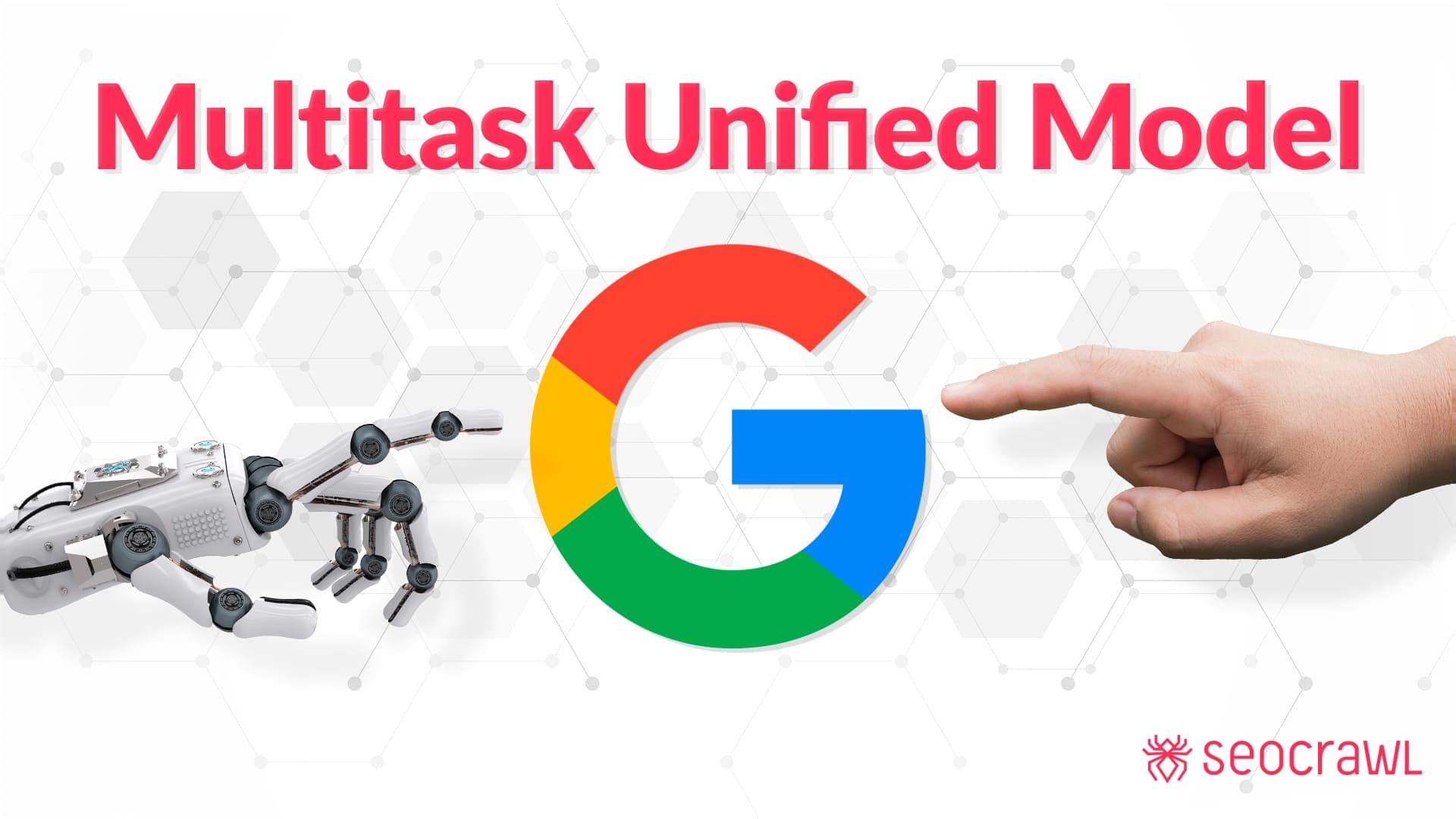
The SEO world is a hotbed of news in which, at times, it's tricky to stay up to date on everything. Google continuously researches how to better serve users' search intent and constantly introduces improvements to its algorithms. Google MUM is the latest major release from the Mountain View giant, and in this post we tell you everything you need to know so it doesn't catch you off guard.
What is Google MUM?
The Multitask Unified Model, or MUM, is the latest version of Google's search algorithm, based on artificial intelligence and a thousand times more powerful than BERT, according to the company, which with this model seeks to get closer to the experience a human has when asking another human a question.
What does this mean? That the search engine will be able to answer users' questions more precisely, removing language barriers and using any resource available in its database (whether text, image, video, podcast, or any other information format available).
What the arrival of Google MUM means
First, Google MUM changes the paradigm of international SEO, since it will be able to find the most appropriate answer to the user's query in any of the languages it has in its database (currently 76), automatically translating the content from the original page into the user's language.
In addition, the model will be able to interrelate users' queries with one another much more powerfully, so that we'll be able to run an initial search and then ask additional related questions, and the search engine will understand the context and provide the most relevant information at each moment.
Is Google MUM going to kill SEO?
Just as every new communication medium is born with the ambition of "killing" the previous one (radio to print press, TV to radio, the internet to television...), it seems that every new change from Google is going to kill SEO.
Will MUM be the end of SEO as we know it? It's unlikely, although it does represent an evolution in how we work: user experience and resolving search intent are increasingly important. What does this mean? That once the algorithm is fully deployed, it will be even more important to generate quality content, focused on responding to the user's needs, in any format.
Do you want us to help you with your content strategies? Contact us!
Will we still base our strategies on keywords?
Since the search engine will be able to better "understand" the context of queries, relating them to one another more intuitively, it's very likely that we'll depend less and less on specific keywords and will have to focus more on resolving the user's search intent in the broadest sense of the word.
What will happen with written content?
With images, videos and podcasts coming into play, along with any other format that may emerge in the future, content strategies will have to expand to deliver information to users through the most appropriate channel for each search, but this doesn't mean that written content will lose its importance: there will always be search intents whose most appropriate resolution is a post or an article.
More competition, more potential traffic
The fact that country and language barriers are eliminated brings two immediate consequences:
- The main drawback is that we'll have more competition, since we'll be battling against SERP results from all over the world.
- On the other hand, the most important advantage is that our potential traffic grows in the same way: well-targeted content can reach many more people.
Increase in voice searches
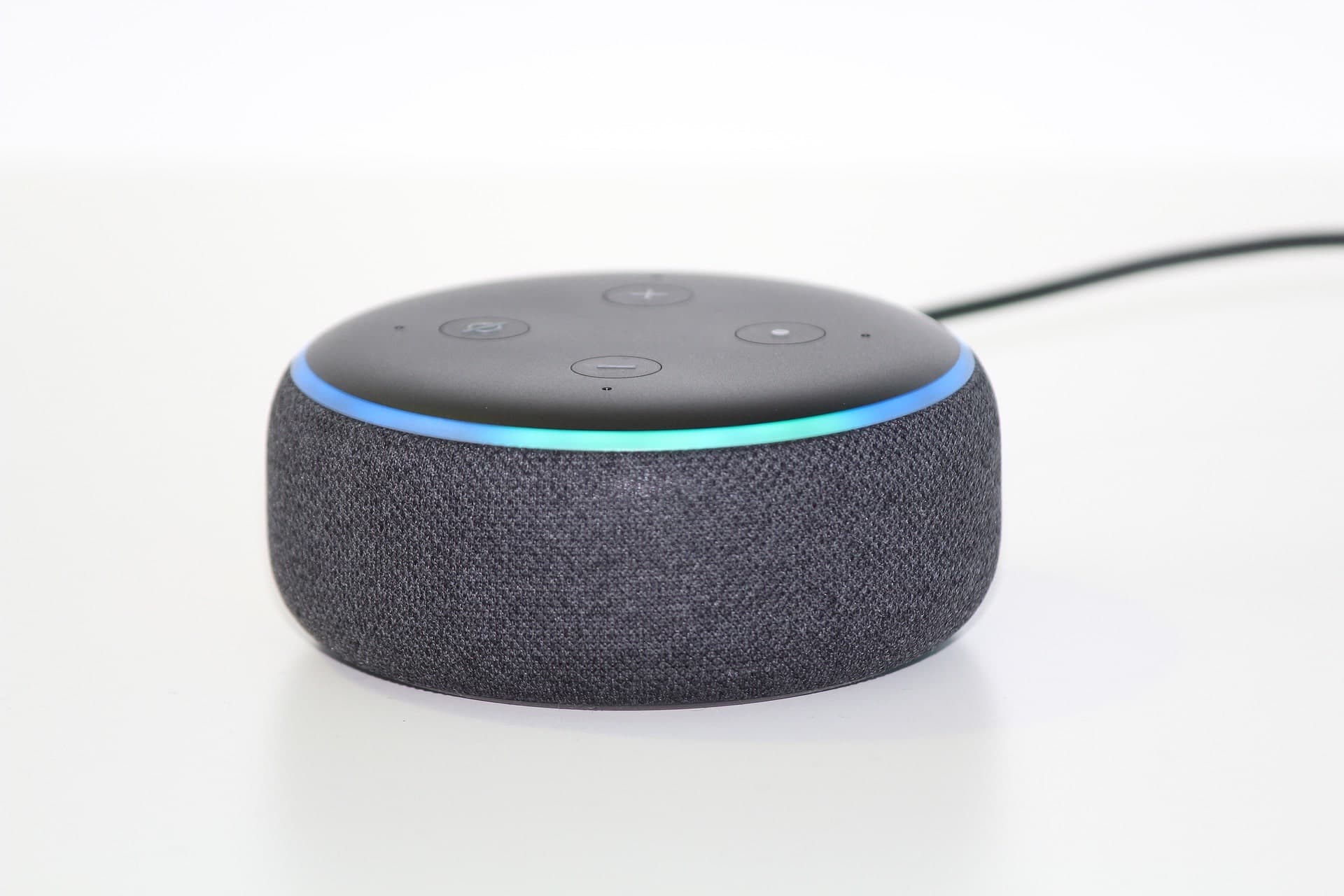
It's an unstoppable trend that MUM only confirms: more and more users are searching via voice commands, whether on their own smartphones or on external devices like Nest or Alexa Echo Dot.
Consequences? As SEOs, we simply need to keep designing our strategies the way we already were: aiming for more natural language that adapts better to users' new way of searching.
MUM vs BERT: how do they differ?
If BERT (Bidirectional Encoder Representations from Transformers) already promised to improve the understanding of human language when performing a search, it seems logical to think that MUM is an update of that algorithm.
However, as we've already pointed out, MUM is actually much more than that: if BERT's main innovation was bidirectionality, that is, the ability to analyze the words before and after the keyword, with MUM we could talk about multidirectionality, since it promises to relate queries to one another, understanding the context, the same way it would happen in a real conversation between humans.
On the other hand, MUM manages to be multimodal, something BERT did not achieve, which makes its search capability and understanding of users' searches up to 1,000 times greater. If we combine this with the ability to interpret information across multiple media and formats... the possibilities are endless.
How do I prepare for MUM?
In reality, with the information we have right now, it's very difficult to predict new SEO strategies related to this launch. Our advice, and what we're doing at SEOcrawl AI both with our own project and with our clients, is to keep generating excellent-quality content, capable of resolving users' search intent in the best possible way.
In addition, given the announced changes, working on branding as well as brand authority and recognition can make the difference when MUM is fully operational.
Benefits for users
Whenever Google launches a new version or update of its algorithm, it announces it as an improvement for users: it happened with Panda and duplicate, low-quality content, with Penguin and link spam, with BERT and a better understanding of search queries...
In that sense, if MUM delivers on what's been announced, it will represent an incredible revolution: according to the company's own examples, users will be able to take a photo of a pair of boots and ask Google whether they're suitable for mountain climbing, and they'll get a reasoned answer immediately. Can you imagine?
The fact that the algorithm is able to answer complex questions taking context into account, interpret information in a multitude of formats to serve the most appropriate one for the query, and work in more than 70 languages at once represents an unprecedented revolution.
When will Google MUM launch?
And now, the million-dollar question: when will this new version of the search engine be available? For now there's no official date; in fact, according to the Google blog, some of its functions are still in beta testing, although it seems MUM will be rolled out throughout 2022.
The good news is that, as SEOs, getting to know the information little by little, ahead of the changes being implemented, gives us the opportunity to prepare our projects to respond with maximum reliability to the algorithm's demands.
And you, are you already preparing for Google MUM?
Author: David Kaufmann

I've spent the last 10+ years completely obsessed with SEO — and honestly, I wouldn't have it any other way.
My career hit a new level when I worked as a senior SEO specialist for Chess.com — one of the top 100 most visited websites on the entire internet. Operating at that scale, across millions of pages, dozens of languages, and one of the most competitive SERPs out there, taught me things no course or certification ever could. That experience changed my perspective on what great SEO really looks like — and it became the foundation for everything I've built since.
From that experience, I founded SEO Alive — an agency for brands that are serious about organic growth. We're not here to sell dashboards and monthly reports. We're here to build strategies that actually move the needle, combining the best of classical SEO with the exciting new world of Generative Engine Optimization (GEO) — making sure your brand shows up not just in Google's blue links, but inside the AI-generated answers that ChatGPT, Perplexity, and Google AI Overviews are delivering to millions of people every single day.
And because I couldn't find a tool that handled both of those worlds properly, I built one myself — SEOcrawl AI, an enterprise SEO intelligence platform that brings together rankings, technical audits, backlink monitoring, crawl health, and AI brand visibility tracking all in one place. It's the platform I always wished existed.
Discover more content about this author